


I am happy with the bulbs I received and looking forward to them flowering. Very prompt delivery.
Hippeastrum ‘White Nile’ Amaryllis Bulb | White Trumpet Flower


Couldn't load pickup availability
Shipped from Wardell, NSW. Shipping is calculated at checkout by weight, cubic weight and location.
Standard delivery is usually 2–8 business days. WA, NT and TAS may take 14–30 business days due to biosecurity inspection.
Free Local Pickup: Enter 1335 Wardell Road, Wardell NSW 2477 as the delivery address at checkout to display this option. Free delivery is available within 2 km. Travelling through or need something urgently? Contact us first, as some items may need to be ordered in.
If you aren't happy with your order. we accept returns.
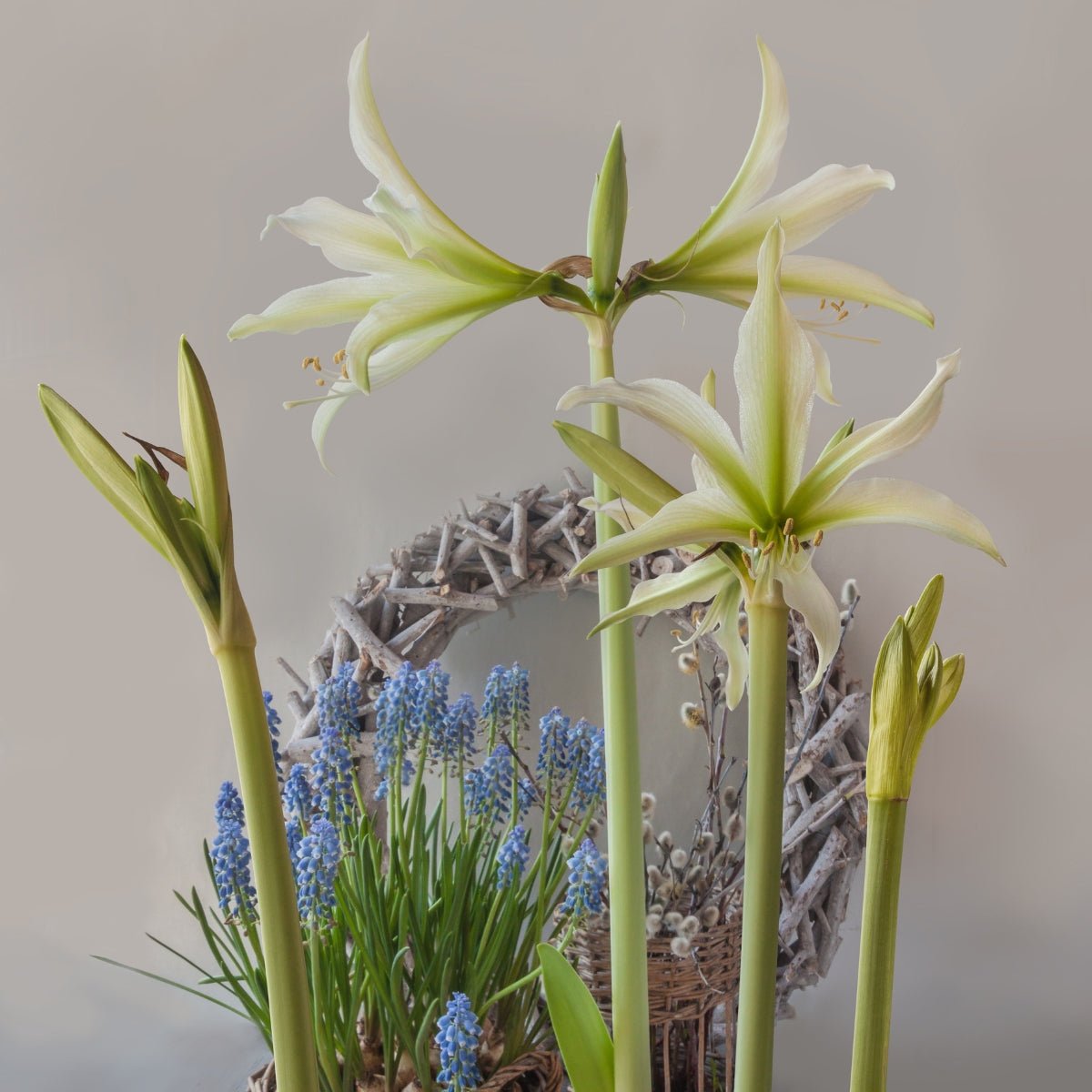

Add crisp colour and elegant flower form to your garden with Hippeastrum ‘White Nile’, a distinctive variety producing white trumpet-shaped blooms with fresh lime-green centres.
The narrow, gently waved petals give each flower a light, almost spider-like appearance, while the prominent green throat creates a cool white-and-green display. Although its flower form resembles some Cybister varieties, ‘White Nile’ is classified as a Trumpet Hippeastrum.
Flowers may reach approximately 14cm across, rising on upright stems approximately 40–60cm high under suitable growing conditions.
Supplied as one Hippeastrum bulb.
Bulb circumference, outer layers, root development and seasonal appearance will vary naturally. Bulbs may arrive dormant or may already be developing roots, leaves or a flower scape.
Flowering time depends on climate, planting time, bulb maturity and growing conditions. The presence of a flower scape is not guaranteed when dispatched.
Plant Hippeastrum bulbs from July to October, or when suitable for your local climate.
Choose a position in full sun to part shade with fertile, well-drained soil. In hot climates, protection from harsh afternoon sun can help flowers last longer.
Plant with the roots facing downward and leave the neck or upper section of the bulb exposed above the soil. Avoid planting the entire bulb deeply, particularly in areas receiving heavy summer rainfall.
Water lightly after planting. Once active growth appears, water more regularly while allowing the soil or potting mix to drain between applications.
For pots, select a container with drainage holes and use a free-draining premium potting mix. Hippeastrums generally flower well when reasonably snug in their containers.
Grow in full sun to part shade outdoors. In warmer climates, morning sun with afternoon protection is ideal.
Indoors, place the plant in a bright position with plenty of filtered light. Move it outdoors after flowering if the indoor position does not provide enough light for long-term growth.
Water moderately while the bulb is actively growing and flowering. Allow excess water to drain freely and avoid keeping the bulb continually wet.
Reduce watering if the bulb becomes dormant, particularly during cool weather.
Use fertile, free-draining soil or premium potting mix. Heavy or poorly drained soil can increase the risk of bulb rot.
Improving the soil with compost and coarse drainage material may be beneficial where drainage is limited.
Apply a suitable bulb fertiliser during active growth. Feeding after flowering helps replenish the bulb and supports future flowering.
Always follow the fertiliser label directions.
Remove spent flowers before seed pods develop unless you intend to collect seed.
Once the entire flower stem has finished, cut it back near the bulb. Leave the foliage in place while it remains green, as the leaves help the bulb store energy for the following season.
Remove leaves only after they have naturally yellowed or died back.
Hippeastrum ‘White Nile’ is best suited to tropical, subtropical and warm-temperate climates.
In cool-temperate regions, grow it in a protected garden position or container and protect the bulb from heavy frost. Pots can be moved beneath cover during cold or excessively wet weather.
Botanical Name: Hippeastrum ‘White Nile’
Common Name: White Nile Amaryllis
Family: Amaryllidaceae
Product Type: Flowering bulb
Flower Group: Trumpet Hippeastrum
Flower Type: Single
Flower Colour: White with a lime-green to chartreuse throat
Flower Form: Trumpet-shaped with narrow, gently waved petals
Approximate Flower Size: 14cm across under suitable conditions
Approximate Height: 40–60cm
Position: Full sun to part shade
Indoor Position: Bright, filtered light
Soil: Fertile and well drained
Water Needs: Moderate during active growth
Flowering Period: Spring to summer, depending on climate and planting time
Climate: Tropical, subtropical and protected warm-temperate
Frost Tolerance: Frost sensitive
Suitable For: Pots, garden beds, indoor displays and cut flowers
Fragrance: Not generally regarded as fragrant
Toxicity: Bulbs are harmful if eaten
No. ‘White Nile’ is classified as a Trumpet Hippeastrum, although its narrow, waved petals give the flowers a light, spider-like appearance.
The flowers are crisp white to creamy ivory with a prominent lime-green or chartreuse throat.
Individual blooms may reach approximately 14cm across under suitable growing conditions.
Flowering generally occurs from spring into summer. Bulbs may flower earlier in subtropical areas, while those grown in cooler climates may flower later.
Yes. ‘White Nile’ is well suited to pots with drainage holes and a free-draining potting mix. Leave the upper portion of the bulb exposed.
Yes, provided it receives plenty of bright, filtered light. Indoor plants may benefit from being moved outside after flowering so the foliage can rebuild the bulb.
No. Keep the leaves while they remain green, as they help replenish the bulb. Remove them only once they naturally yellow or die back.
Not necessarily. Bulbs may arrive dormant or actively growing depending on the season. Flowering time varies with bulb maturity, climate and growing conditions.