


Giant Blue Walking Iris ‘Regina’ | Neomarica caerulea Plug
- Regular price
-
$7.50 - Regular price
-
$10.00 - Sale price
-
$7.50
Couldn't load pickup availability
Shipping information & Pickup
Shipped from Wardell, NSW. Shipping is calculated at checkout by weight, cubic weight and location.
Standard delivery is usually 2–8 business days. WA, NT and TAS may take 14–30 business days due to biosecurity inspection.
Free Local Pickup: Enter 1335 Wardell Road, Wardell NSW 2477 as the delivery address at checkout to display this option. Free delivery is available within 2 km. Travelling through or need something urgently? Contact us first, as some items may need to be ordered in.
Returns
If you aren't happy with your order. we accept returns.


Description
Bring lush tropical foliage and unusually detailed blue-purple flowers to shaded garden areas with Giant Blue Walking Iris ‘Regina’.
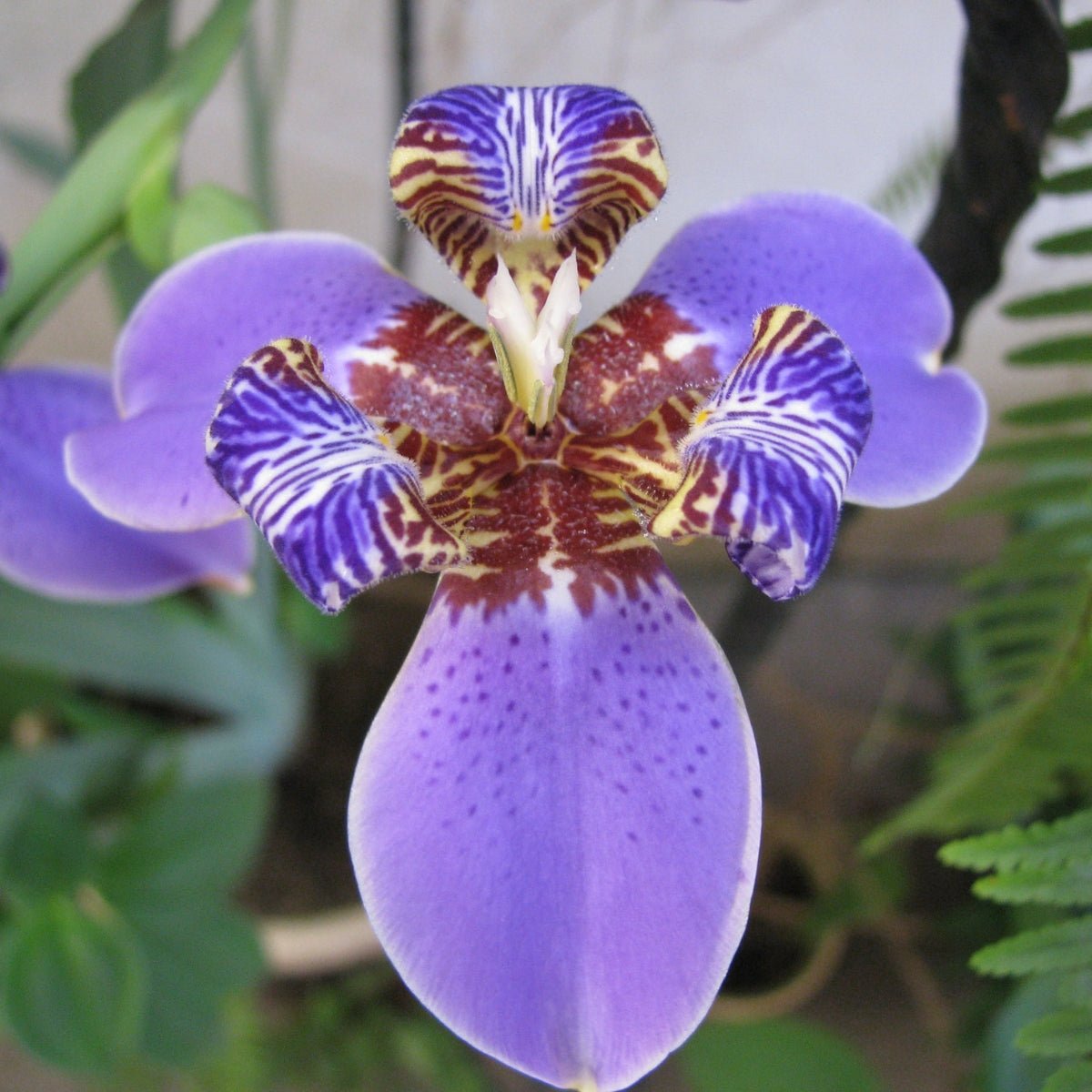
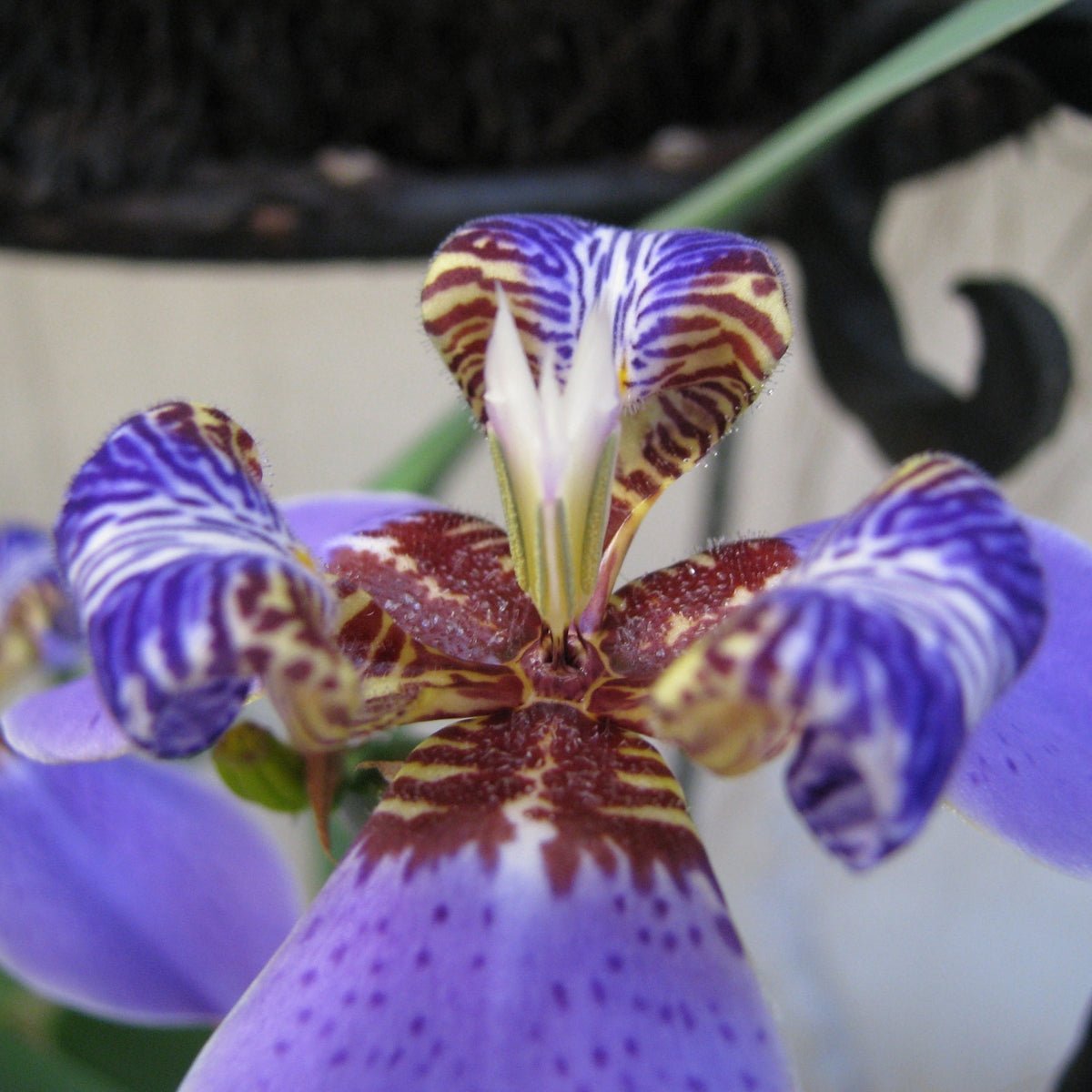
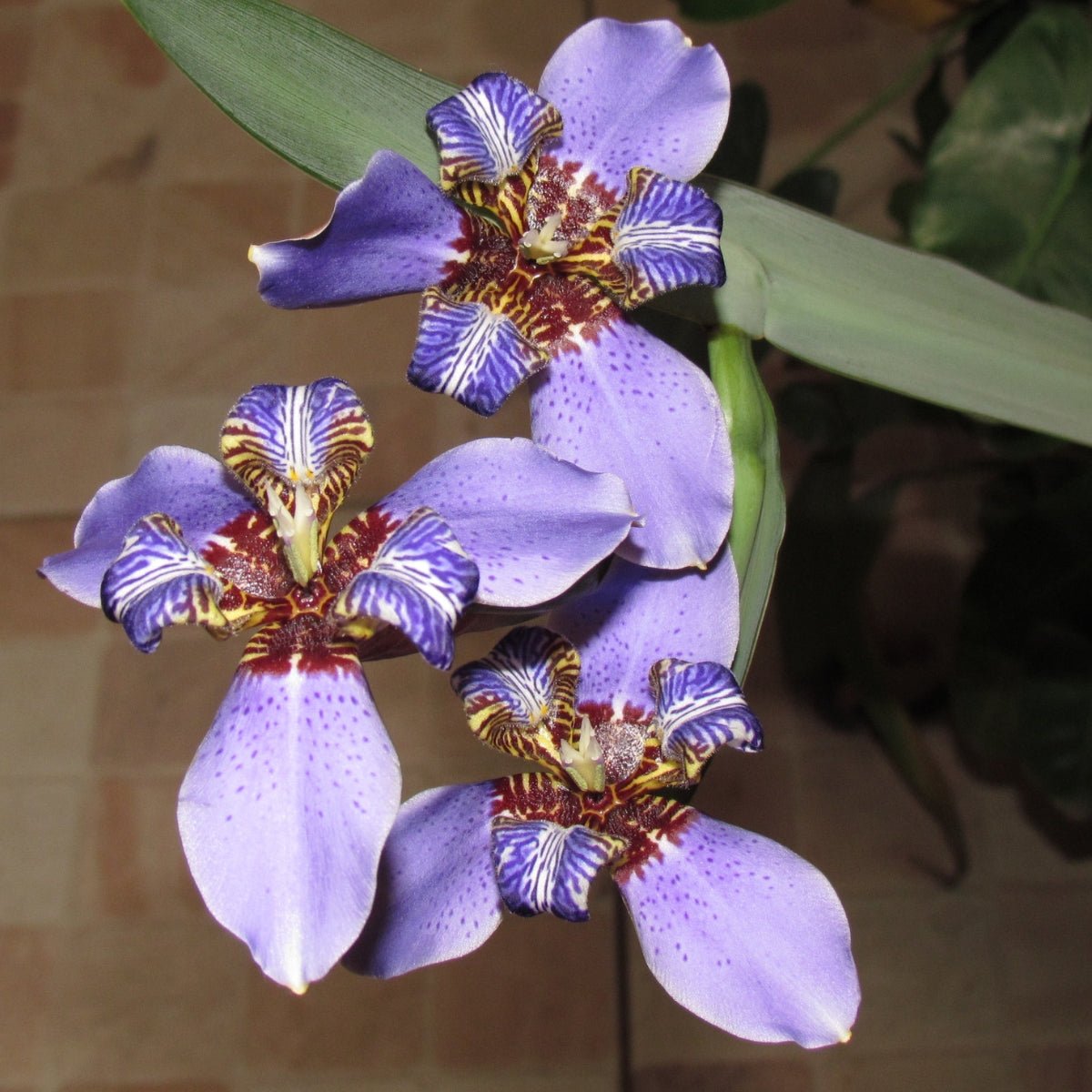
Neomarica caerulea ‘Regina’ is a tall, clumping perennial with broad, upright, sword-shaped leaves. Mature plants produce large blue to purple-blue iris-like flowers with intricate white, brown and patterned markings near the centre.
Each individual bloom is relatively short-lived, often lasting only around a day, but established plants can produce successive flowers over an extended period. The flowers may also carry a light fragrance.
Growing approximately 1–1.2m high and up to 1m wide, ‘Regina’ is larger and more upright than the commonly grown white Brazilian Walking Iris. It is well suited to tropical and subtropical gardens, shaded borders, pathways, feature planting and large containers.
Plant Size Note
Supplied as a young plant in a plug.
Plants supplied in plugs are small starter plants and will require growing time before reaching the mature size shown in example images.
Plants may not be flowering when dispatched. Height, leaf number, foliage length and seasonal appearance will vary naturally between individual plants.
Features
- Neomarica caerulea ‘Regina’
- Commonly known as Giant Blue Walking Iris
- Large blue to purple-blue iris-like flowers
- Intricate white, brown and patterned flower centres
- Lightly fragrant blooms
- Successive flowers produced over an extended season
- Broad, upright, sword-shaped green foliage
- Larger and taller than common Walking Iris varieties
- Dense clumping growth habit
- Mature height approximately 1–1.2m
- Mature width up to approximately 1m
- Performs best in part shade or bright filtered light
- Suitable for borders, pathways and mass planting
- Can be grown in large pots
- Suitable for warm, humid gardens
- Supplied in a 42mm tube
Botanical Name
The plant is commonly sold as:
Neomarica caerulea ‘Regina’
It may also be listed under the botanical synonym:
Trimezia caerulea ‘Regina’
Neomarica and Trimezia are closely related groups within the Iris family, and botanical references may use either classification.
Planting & Care
Plant Giant Blue Walking Iris in part shade or bright filtered light.
It can tolerate a range of light conditions, but protection from harsh afternoon sun is recommended in hot climates. A position receiving morning sun and afternoon shade is generally suitable.
Choose rich, slightly acidic and free-draining soil. Improve sandy or poor soil with compost or well-rotted organic matter before planting.
Although this plant enjoys regular moisture, the roots should not remain in constantly waterlogged soil.
Water thoroughly after planting and maintain consistent moisture while the young plant establishes. Water regularly during summer and extended dry periods, then reduce watering during cooler weather when growth slows.
Apply mulch around the root zone to retain moisture, regulate soil temperature and reduce weeds. Keep mulch slightly away from the base of the foliage.
Feed lightly during spring with a balanced controlled-release fertiliser. Avoid excessive feeding, particularly with high-phosphorus products.
Flowering Time
Flowering generally occurs during the warmer months, often from summer into autumn.
The exact timing can vary according to climate and growing conditions. Some plants may begin flowering earlier or continue flowering later in warm subtropical gardens.
Each flower is short-lived, but mature plants can produce multiple blooms in succession over an extended period.
Walking Habit
Walking Irises receive their common name because some forms develop young plantlets near the ends of old flowering stems.
As the plantlet becomes heavier, the stem may bend towards the soil, allowing the new plant to take root away from the parent clump.
‘Regina’ generally has a more upright, clumping habit than many common Walking Iris varieties, so the walking behaviour may be less frequent.
Remove finished flower stems if you do not want new plantlets forming or spreading beyond the original clump.
Landscape Uses
Giant Blue Walking Iris ‘Regina’ is suitable for:
- Tropical and subtropical gardens
- Shaded garden beds
- Part-shaded borders
- Pathway planting
- Mass planting
- Courtyards
- Poolside gardens
- Understorey planting
- Feature clumps
- Large pots and containers
- Rockeries with regular moisture
- Areas beneath open-canopied trees
Allow approximately 60cm–1m between plants, depending on the desired density and how quickly you want the foliage to form a continuous display.
Growing in Pots
‘Regina’ can be grown successfully in a large pot.
Transfer the young plant into a container only slightly larger than its current root system. Gradually increase the pot size as the plant develops.
Use a premium free-draining potting mix enriched with organic matter and select a container with clear drainage holes.
Position the pot in part shade or bright filtered light.
Container-grown plants require regular watering, particularly during warm weather, but the potting mix should not remain constantly saturated.
Mature plants develop broad foliage and may require a stable, generously sized container.
Climate
Giant Blue Walking Iris performs best in warm, humid, frost-free or lightly frosted climates.
It is especially suited to subtropical and tropical regions.
Established plants may tolerate a light frost, but foliage can be damaged by colder conditions. Protect young plants from hard frost and cold drying winds.
In cooler climates, grow it in a warm, protected position or a movable container.
Product Details
Botanical Name: Neomarica caerulea ‘Regina’
Botanical Synonym: Trimezia caerulea ‘Regina’
Common Names: Giant Blue Walking Iris, Regina Walking Iris, Giant Apostle Iris
Plant Family: Iridaceae
Plant Type: Evergreen rhizomatous clumping perennial
Supplied As: Young live plant in a 42mm tube
Flower Colour: Blue to purple-blue with white and brown centre markings
Fragrance: Light fragrance
Foliage: Broad, upright, sword-shaped green leaves
Growth Habit: Upright and clumping
Mature Height: Approximately 1–1.2m
Mature Width: Up to approximately 1m
Flowering Time: Generally summer into autumn, depending on climate
Flower Duration: Individual flowers are short-lived, with successive blooms possible
Aspect: Part shade or bright filtered light
Soil: Rich, slightly acidic and free-draining
Watering: Regular during establishment and warm weather
Frost Tolerance: Light frost tolerance once established; protect from hard frost
Uses: Borders, pathways, shaded gardens, mass planting and large pots
Important Note
Images show established mature plants in flower and are provided as examples only.
You will receive a young starter plant in a 42mm tube. It may have only a small number of leaves and is unlikely to be flowering when dispatched.
Foliage length, plant height, branching and seasonal appearance will vary naturally. Leaves may also be trimmed before dispatch where required for safe transport.
Biosecurity & Shipping
State, territory and regional biosecurity restrictions may apply to live plants.
Please check whether this plant can be sent to your delivery address before ordering. Orders placed for restricted destinations may need to be cancelled and refunded.
Biosecurity requirements can change without notice.
FAQ
What colour are Regina Walking Iris flowers?
The flowers are blue to purple-blue with detailed white, brown and patterned markings near the centre.
How large does it grow?
Established plants generally grow approximately 1–1.2m high and up to 1m wide.
What size plant will I receive?
You will receive a young starter plant supplied in a 42mm tube.
Will it arrive in flower?
Not necessarily. Plants supplied in 42mm tubes are young and may require several growing seasons before reaching flowering maturity.
How long does each flower last?
Individual flowers are short-lived and may remain open for only around one day. Mature plants can produce additional flowers in succession.
Are the flowers fragrant?
Yes. The flowers may have a light fragrance.
When does it flower?
Flowering generally occurs during the warmer months, often from summer into autumn. Timing will vary with climate and seasonal conditions.
Does it actually walk?
It may develop plantlets near the ends of old flowering stems. The stems can bend towards the soil, allowing the plantlets to establish away from the parent plant.
‘Regina’ tends to remain more upright and clumping than many other Walking Iris varieties.
Can unwanted plantlets be removed?
Yes. Remove finished flower stems before plantlets establish if you want to keep the plant confined to its original position.
Does it grow in full sun?
It may tolerate sun where conditions remain moist, but part shade or filtered light is generally preferable, particularly in hot climates.
Can it grow in shade?
Yes. It grows well in part shade and bright shaded positions. Very dark shade may reduce flowering.
Is it suitable for subtropical gardens?
Yes. It is particularly well suited to warm and humid subtropical gardens.
Can it tolerate frost?
Established plants may tolerate light frost, but hard frost can damage the foliage. Protect young plants in colder areas.
What soil does it prefer?
It performs best in rich, slightly acidic and free-draining soil with regular moisture.
How often should it be watered?
Water regularly while the young plant establishes and during hot or dry weather. Reduce watering during cooler periods.
Can it grow in a pot?
Yes. Use a large, stable container with quality free-draining potting mix and place it in part shade.
Is this the same as the common white Walking Iris?
No. ‘Regina’ is a taller, broader-leaf form with large blue-purple flowers. The commonly grown Neomarica gracilis generally has white flowers with blue markings.
Is it a true Iris?
It belongs to the Iris family, Iridaceae, but it is not part of the genus Iris.