


I would have preferred it in a pot even if it was a little black pot as it was a house warming present


Couldn't load pickup availability
Shipped from Wardell, NSW. Shipping is calculated at checkout by weight, cubic weight and location.
Standard delivery is usually 2–8 business days. WA, NT and TAS may take 14–30 business days due to biosecurity inspection.
Free Local Pickup: Enter 1335 Wardell Road, Wardell NSW 2477 as the delivery address at checkout to display this option. Free delivery is available within 2 km. Travelling through or need something urgently? Contact us first, as some items may need to be ordered in.
If you aren't happy with your order. we accept returns.

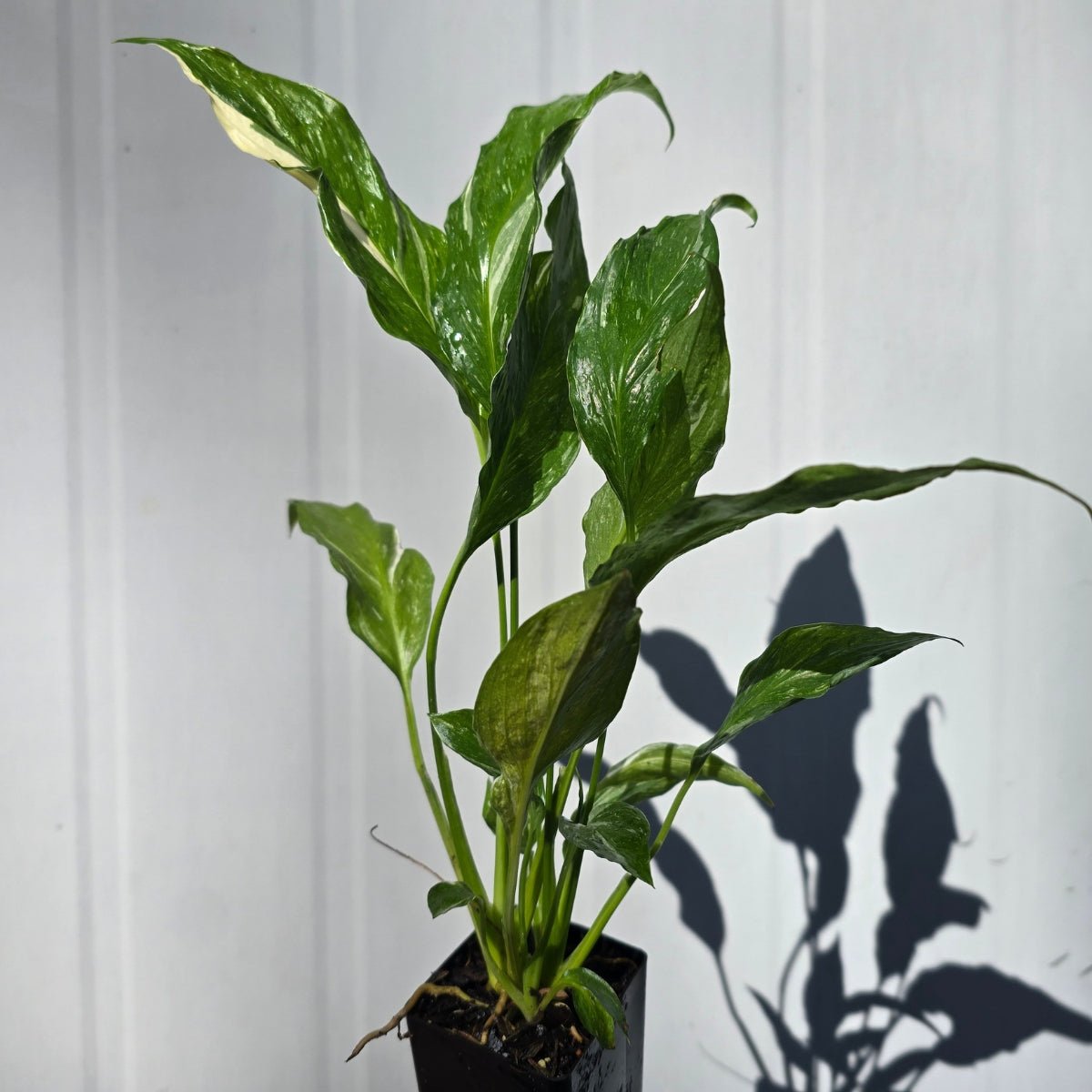


Add striking foliage to an indoor plant collection with Peace Lily ‘Domino’, a variegated form of the popular Peace Lily.
Its glossy green leaves are decorated with irregular pale-green, cream and white markings. Every leaf develops its own pattern, giving each plant a naturally individual appearance.
Mature plants may also produce elegant white spathes surrounding a central flower spike. ‘Domino’ is well suited to homes, offices and other protected indoor positions with bright, filtered light.
SUPPLIED IN A 100MM POT: This product is a young live plant supplied in a 100mm nursery pot. Plant size, leaf number, variegation and root development will vary naturally. The supplied plant may not be flowering when dispatched.
Grow Peace Lily ‘Domino’ in bright, indirect or filtered light.
It can tolerate lower-light positions, but growth may become slower and the variegation may appear less pronounced. Protect the foliage from strong direct sunlight, which can cause bleaching or scorched patches.
Water thoroughly when the upper layer of the potting mix begins to dry.
Allow excess water to drain completely and do not leave the pot standing permanently in water. Peace Lilies prefer relatively consistent moisture but can develop root problems when the growing medium remains continually saturated.
Watering frequency will depend on temperature, light, humidity, pot size and season.
Moderate indoor humidity is generally suitable.
Plants grown in very dry air may develop brown leaf tips. Position the plant away from drying heaters, air conditioners and strong draughts.
Use a quality indoor plant potting mix that retains some moisture while still draining freely.
Avoid dense garden soil or potting media that remain wet for extended periods.
Peace Lily ‘Domino’ prefers warm, protected conditions.
Protect it from frost, cold draughts and sudden temperature changes. In cooler climates, keep the plant indoors during winter.
Apply a diluted indoor plant fertiliser during active growth.
Avoid excessive or concentrated fertiliser, as accumulated salts can damage roots and cause brown leaf tips. Reduce feeding during cooler periods when growth slows.
Repot when roots have filled the container or the potting mix has deteriorated.
Move the plant into a container only slightly larger than its current pot and ensure the new pot has adequate drainage holes.
Wipe the leaves occasionally with a soft, damp cloth to remove dust.
Avoid applying leaf-shine products, which may leave residue on the foliage.
Botanical Name: Spathiphyllum wallisii ‘Domino’
Common Name: Variegated Peace Lily
Family: Araceae
Plant Type: Tropical evergreen perennial
Supply Format: Young live plant in a 100mm nursery pot
Foliage: Green with irregular pale-green, cream and white variegation
Flower Colour: White to greenish white
Growth Habit: Upright and mounding
Mature Height: Approximately 30–90cm under suitable conditions
Position: Bright, indirect or filtered light
Water Needs: Moderate; keep lightly moist without waterlogging
Soil: Organic-rich, free-draining indoor plant mix
Climate: Warm, humid and frost-free
Frost Tolerance: Frost sensitive
End Use: Indoor pots, offices, covered patios and decorative plant displays
Peace Lilies contain insoluble calcium oxalate crystals and should not be eaten.
Chewing the plant may cause irritation of the mouth, lips and tongue, excessive drooling, vomiting or difficulty swallowing. Keep it away from children, cats, dogs and other animals likely to chew plants.
Contact a veterinarian or medical professional if ingestion is suspected.
‘Domino’ produces glossy green leaves marked with irregular pale-green, cream and white variegation. Standard Peace Lilies generally have solid-green foliage.
No. The amount and placement of variegation vary naturally between plants and individual leaves.
Not necessarily. The supplied product is a young plant in a 100mm pot. Flowering depends on maturity, light, temperature and general growing conditions.
It can tolerate lower-light positions, but growth may be slower and flowering less frequent. Bright, filtered light generally supports stronger growth and more attractive variegation.
Water when the upper layer of potting mix begins to dry. Always check the growing medium rather than watering according to a fixed schedule.
Brown tips may result from inconsistent watering, very dry air, excessive fertiliser, salt accumulation or unsuitable water quality.
No. It contains insoluble calcium oxalate crystals and may cause painful oral irritation if chewed by cats, dogs or other animals.
No. Peace Lilies belong to the Araceae family rather than the true-lily genus Lilium. However, the foliage should still not be eaten.
Overall rating: 4.6 / 5 from 5 reviews.
I would have preferred it in a pot even if it was a little black pot as it was a house warming present

Was packed excellent arrived full of moisture and very healthy. Thanks
Beautiful plant, healthy. Carefully packaged. Would order again from here. ☺️
Carefully packed, arrived in excellent condition, always a happy customer 😀
Glad i found this site. Lots of plants to choose from, good prices and speedy delivery.
Overall rating: 4.6 / 5 from 5 reviews.
I would have preferred it in a pot even if it was a little black pot as it was a house warming present
Was packed excellent arrived full of moisture and very healthy. Thanks
Beautiful plant, healthy. Carefully packaged. Would order again from here. ☺️
Carefully packed, arrived in excellent condition, always a happy customer 😀
Glad i found this site. Lots of plants to choose from, good prices and speedy delivery.