


Crepe Myrtle ‘Lipan’ (Lagerstroemia indica × fauriei) | Lavender Flowering 50mm Tube
- Regular price
-
$9.95 - Regular price
-
- Sale price
-
$9.95
Couldn't load pickup availability
Shipping information & Pickup
Shipped from Wardell, NSW. Shipping is calculated at checkout by weight, cubic weight and location.
Standard delivery is usually 2–8 business days. WA, NT and TAS may take 14–30 business days due to biosecurity inspection.
Free Local Pickup: Enter 1335 Wardell Road, Wardell NSW 2477 as the delivery address at checkout to display this option. Free delivery is available within 2 km. Travelling through or need something urgently? Contact us first, as some items may need to be ordered in.
Returns
If you aren't happy with your order. we accept returns.

Description
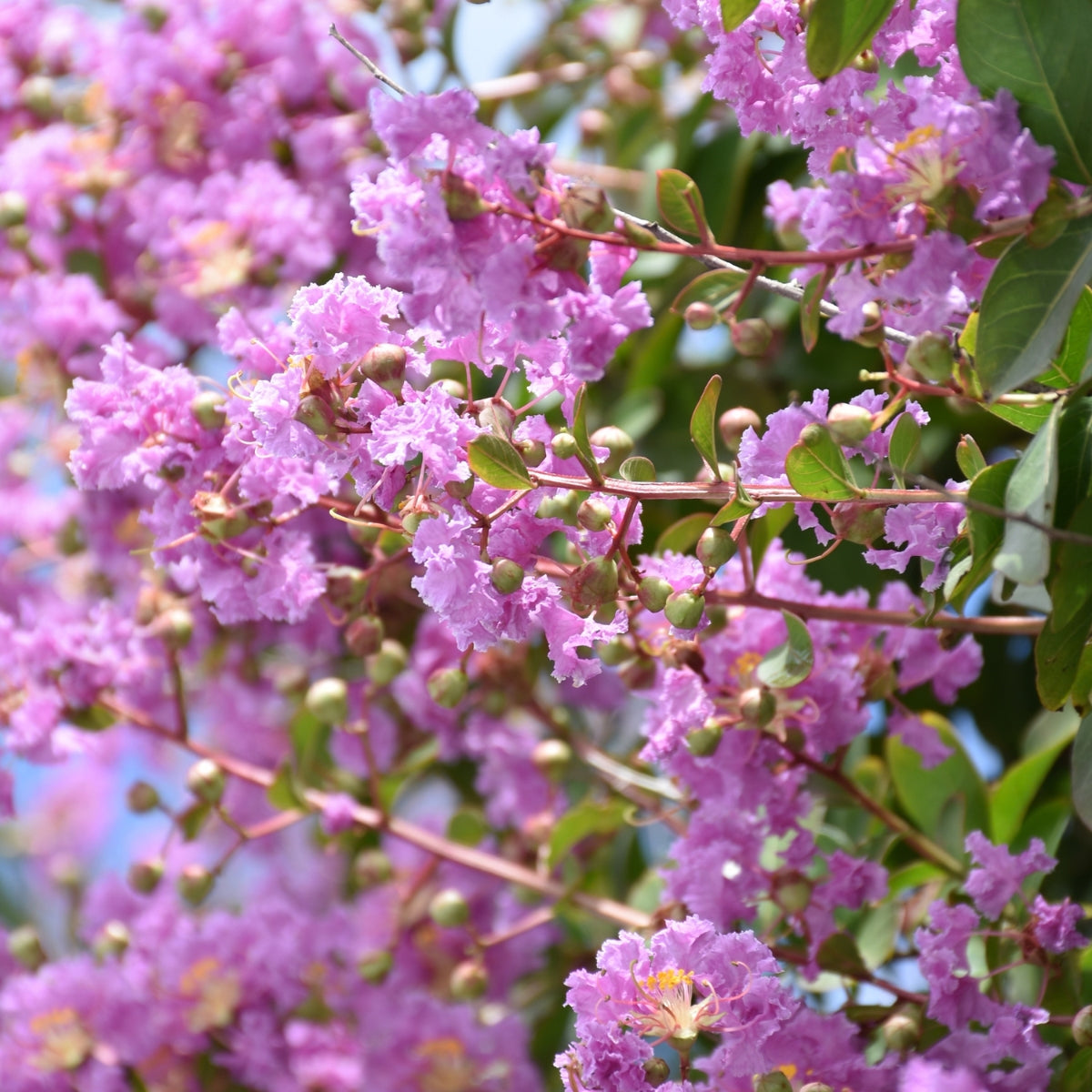
Bring long-lasting summer colour and year-round ornamental interest to the garden with Crepe Myrtle ‘Lipan’, a compact deciduous tree producing masses of medium-lavender flowers.
The large flower panicles appear on the current season’s growth throughout summer, creating an impressive display above the dark green foliage. As the weather cools, the leaves develop attractive light-orange, russet and muted red tones before falling.
‘Lipan’ also develops highly decorative bark as it matures. The darker greenish-grey outer bark gradually exfoliates to reveal smooth whitish-beige tones beneath, providing attractive structure and colour during winter.
With its upright, vase-shaped habit and slightly spreading crown, ‘Lipan’ is well suited to feature planting, garden borders, fence lines, driveways and informal screening. It was selected for its improved resistance to powdery mildew and performs reliably in warm Australian conditions.
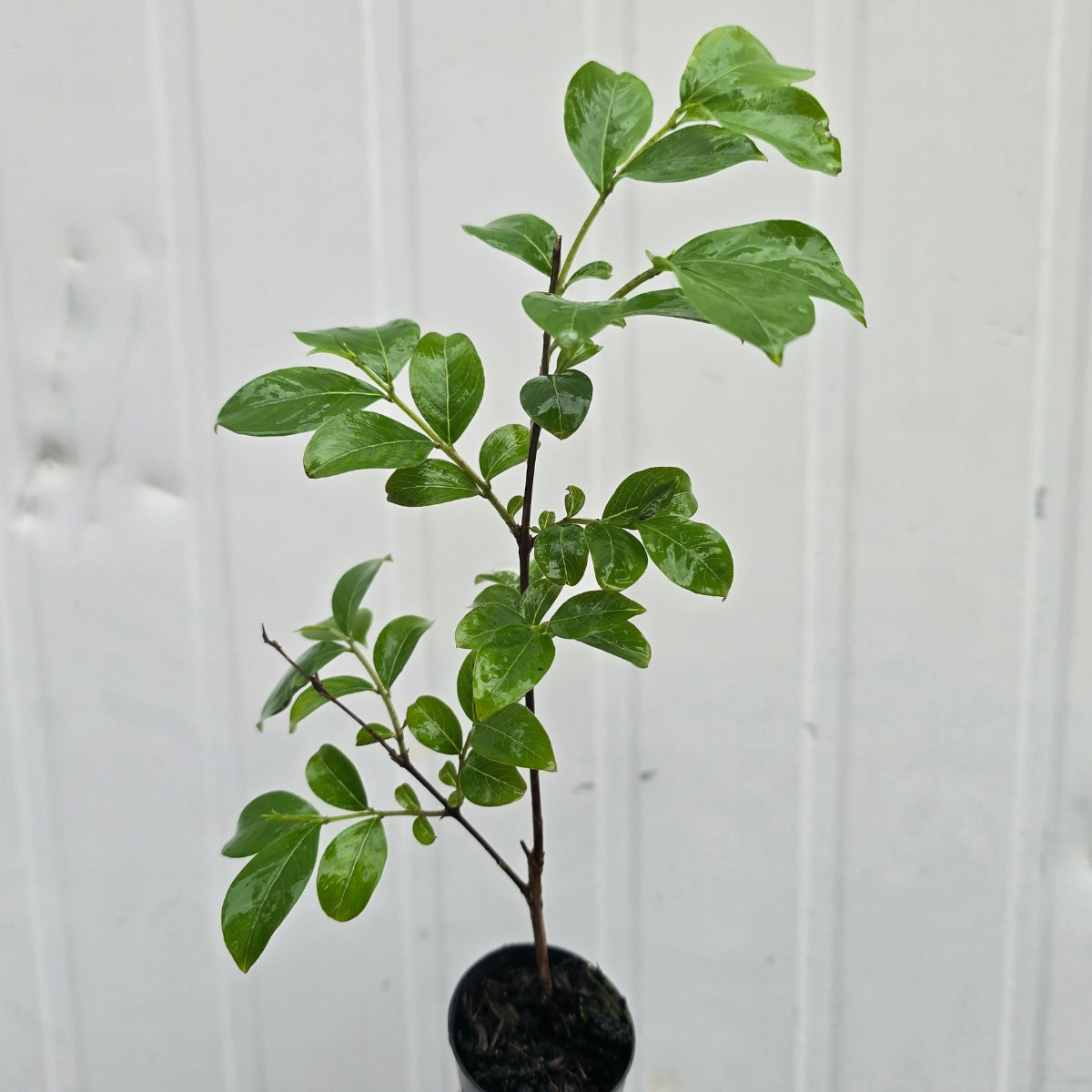
EXAMPLE IMAGE ONLY: Images show an example of the mature plant, flowers, foliage and bark. The supplied product is a young plant growing in a 50mm nursery tube—not a mature or flowering tree. Flower colour, autumn foliage, bark development and plant size will vary according to climate, season and growing conditions.
Flower, Foliage and Bark Characteristics
-
Medium-lavender flowers
-
Flowers may appear lavender-purple or pinkish-lavender under different lighting
-
Large flower panicles produced during summer
-
Crinkled, crepe-like petals
-
Flowers develop on the current season’s growth
-
Dark green foliage throughout the growing season
-
Light-orange, russet and muted-red autumn colour
-
Dark greenish-grey outer bark
-
Smooth whitish-beige underbark develops as the plant matures
-
Upright, vase-shaped growth habit
-
Slightly spreading crown
-
Can develop as a multi-stemmed shrub or compact ornamental tree
-
Improved resistance to powdery mildew
Supplied in a 50mm Tube
Supplied as a healthy young Crepe Myrtle ‘Lipan’ plant growing in a 50mm nursery tube.
The 50mm measurement refers to the width of the nursery container—not the plant’s height or spread.
Plant height, branching, foliage and root development will vary naturally according to the season and production cycle. Plants supplied during winter may be dormant or have few to no leaves because this variety is deciduous.
Key Features
-
Named Crepe Myrtle cultivar ‘Lipan’
-
Hybrid of Lagerstroemia indica and Lagerstroemia fauriei
-
Medium-lavender summer flowers
-
Large, showy flower panicles
-
Long seasonal flowering display
-
Attractive orange-to-russet autumn foliage
-
Decorative exfoliating bark
-
Upright, vase-shaped form
-
Slightly spreading crown
-
Grows approximately 4m high and 3m wide
-
Slow-to-moderate growth rate
-
Improved powdery mildew resistance
-
Heat tolerant once established
-
Moderately drought tolerant once established
-
Frost tolerant once established
-
Suitable for feature planting and informal screening
-
Supplied as a young plant in a 50mm tube
Suitable Uses
-
Feature trees
-
Small ornamental trees
-
Lavender and purple gardens
-
Summer flowering displays
-
Front gardens
-
Cottage gardens
-
Driveways and entrances
-
Fence-line planting
-
Informal screening
-
Mixed shrub borders
-
Lawn specimens
-
Courtyards with adequate growing space
-
Autumn colour gardens
-
Gardens requiring ornamental winter bark
-
Pollinator-friendly planting
-
Commercial and residential landscapes
Planting Instructions
Plant Crepe Myrtle ‘Lipan’ into well-prepared, free-draining soil.
Choose a position with enough room for the tree to reach approximately 4m high and 3m wide. Allow adequate clearance from buildings, fences, overhead services and neighbouring plants.
Before planting, water the plant thoroughly and allow it to drain.
Dig a hole approximately twice as wide as the root ball but no deeper than the existing root system. Carefully remove the plant from its tube while keeping the roots and growing medium together.
If the roots are tightly circling the outside of the root ball, gently loosen them before planting.
Position the plant so that the top of the root ball is level with the surrounding soil. Backfill gently, firm the soil lightly and water thoroughly to settle the soil around the roots.
Apply organic mulch around the planting area while leaving a clear space around the trunk and lower stems.
Care Instructions
Position
Grow Crepe Myrtle ‘Lipan’ in full sun for the strongest growth, heaviest flowering and best autumn colour.
A position receiving at least six hours of direct sunlight each day is recommended. Although the plant may tolerate light or partial shade, excessive shade can result in fewer flowers, softer growth and a less balanced canopy.
Good sunlight and airflow also help reduce the likelihood of powdery mildew and other fungal problems.
Soil
Plant in fertile, free-draining soil.
‘Lipan’ can adapt to a variety of soil types once established, provided the soil does not remain continually waterlogged.
Improve poor or sandy soil with compost or well-aged organic matter before planting. Heavy clay should be amended to improve drainage, or the tree can be planted slightly above the surrounding soil level.
Watering
Water regularly while the young plant establishes.
Deep watering is preferable to frequent light applications because it encourages the roots to develop into the surrounding soil. Allow the upper soil surface to begin drying between applications.
Once established, Crepe Myrtle ‘Lipan’ has moderate drought tolerance. Additional deep watering during extended hot or dry conditions will support healthier foliage and a stronger flowering display.
Avoid leaving the root zone continually saturated.
Feeding
Apply a balanced, controlled-release fertiliser during spring as new growth begins.
Avoid excessive nitrogen, which can encourage lush foliage at the expense of flower production. Always follow the fertiliser label directions and water thoroughly after applying.
Where required, a suitable flowering-tree fertiliser can be applied before the main growing season.
Mulching
Apply a layer of organic mulch around the root zone to conserve moisture, moderate soil temperature and suppress weeds.
Keep the mulch several centimetres away from the trunk and lower stems. Continually piling mulch against the plant can retain excessive moisture and contribute to damage.
Pruning
Crepe Myrtle ‘Lipan’ flowers on new seasonal growth and responds well to careful winter pruning.
During late winter, remove:
-
Dead or damaged branches
-
Weak or crossing growth
-
Unwanted basal suckers
-
Branches growing towards the centre
-
Lower branches where additional clearance is required
-
Old flower heads where practical
Light structural pruning can encourage healthy new flowering growth while maintaining the plant’s natural vase-shaped form.
Avoid repeatedly cutting the main branches back to thick stubs. Severe topping can produce weak, congested shoots and spoil the tree’s natural structure.
If training the plant as a small tree, gradually select several strong main stems and remove unwanted lower growth over multiple seasons.
Powdery Mildew Resistance
‘Lipan’ was selected for its improved resistance to powdery mildew.
Resistance does not mean complete immunity. Plant it in full sun with adequate spacing and good airflow. Avoid continually wetting the foliage, particularly late in the day.
Climate
Crepe Myrtle ‘Lipan’ performs well in temperate, warm-temperate and many subtropical Australian climates.
It thrives in areas with warm summers and can tolerate winter cold once established. Protect newly planted 50mm-tube plants from severe frost until they have developed a stronger root system.
The plant is deciduous and will naturally lose its leaves during autumn and winter.
Container Growing
‘Lipan’ can be grown in a large container while young or maintained as a container specimen with regular management.
Use a premium, free-draining potting mix and a large, stable container with adequate drainage holes. Increase the container size gradually as the root system develops.
Container-grown plants require more frequent watering, seasonal feeding and occasional root or canopy management. Planting in the ground is recommended where the tree is expected to reach its natural mature size.
Product Details
Botanical Name: Lagerstroemia indica × fauriei ‘Lipan’
Alternative Botanical Name: Lagerstroemia × egolfii ‘Lipan’
Cultivar: ‘Lipan’
Common Name: Lipan Crepe Myrtle
Family: Lythraceae
Plant Type: Deciduous flowering shrub or compact ornamental tree
Supply Format: Young plant growing in a 50mm nursery tube
Flower Colour: Medium lavender to lavender-purple
Flowering Period: Summer
Foliage: Dark green with light-orange, russet and muted-red autumn tones
Bark: Greenish-grey outer bark exfoliating to reveal whitish-beige underbark
Growth Habit: Upright and vase-shaped with a slightly spreading crown
Mature Height: Approximately 4m
Mature Width: Approximately 3m
Growth Rate: Slow to moderate
Position: Full sun to light partial shade
Soil: Fertile and free-draining
Water Needs: Regular while establishing; moderate to lower once established
Climate: Temperate, warm-temperate and suitable subtropical conditions
Frost Tolerance: Frost tolerant once established; protect very young plants from severe frost
Disease Resistance: Improved resistance to powdery mildew
End Use: Feature planting, fence lines, informal screening, driveways and ornamental gardens
Important Information
-
The accepted Australian trade name is Lagerstroemia indica × fauriei ‘Lipan’
-
The cultivar may also be classified as Lagerstroemia × egolfii ‘Lipan’
-
The supplied product is a young plant growing in a 50mm nursery tube
-
The 50mm measurement refers to the container—not the plant’s height
-
The plant is not guaranteed to arrive flowering
-
Plant height, branching and root development will vary naturally
-
This variety is deciduous and may arrive with few or no leaves during winter
-
Flower colour may appear lavender, lavender-purple or pinkish-lavender
-
Autumn foliage colour varies with climate and seasonal conditions
-
Exfoliating bark becomes more noticeable as the plant matures
-
Mature dimensions vary according to climate, soil, water and pruning
-
Improved powdery mildew resistance does not mean complete immunity
-
Plants may be lightly pruned before dispatch to support safe packaging and healthy growth
FAQ
What colour are Crepe Myrtle ‘Lipan’ flowers?
‘Lipan’ produces medium-lavender flowers in large panicles. Depending on lighting, climate and flower maturity, the blooms may appear lavender-purple or slightly pinkish-lavender.
How large does Crepe Myrtle ‘Lipan’ grow?
Under suitable Australian conditions, it generally reaches approximately 4m high and 3m wide. Its final size will depend on climate, soil, available moisture and pruning.
What shape does ‘Lipan’ develop?
It develops an upright, vase-shaped form with a slightly spreading crown. It may naturally grow with several main stems or be trained gradually into a small ornamental tree.
Is Crepe Myrtle ‘Lipan’ deciduous?
Yes. It naturally loses its leaves during autumn and winter. Plants purchased during dormancy may arrive with bare branches, which is normal.
Will the supplied plant be flowering?
Not necessarily. The product is a young plant growing in a 50mm nursery tube. Flowering will begin as the plant matures and will depend on its growing conditions and the time of year.
Does ‘Lipan’ need full sun?
Full sun is recommended for the strongest growth, heaviest flowering, best autumn colour and good airflow. It can tolerate light partial shade, but flowering may be reduced.
Is ‘Lipan’ resistant to powdery mildew?
It was specifically selected for improved powdery mildew resistance. However, no plant is completely immune, so full sun, good airflow and appropriate watering remain important.
What colour does the foliage turn in autumn?
The dark green leaves can develop light-orange, russet and muted-red colouring before falling. The strength of the autumn display will vary with climate and seasonal conditions.
Can ‘Lipan’ be grown in a container?
It can be grown in a large container while young or maintained as a container specimen with regular pruning, feeding, watering and root management. Planting in the ground is preferable if it is expected to reach its natural mature size.
How should Crepe Myrtle ‘Lipan’ be pruned?
Prune lightly during late winter to remove dead, damaged, crossing or unwanted growth. Avoid severe topping, as this can produce weak shoots and permanently spoil the tree’s natural structure.