


Dahlia ‘Mrs Rees’ Tuber | Deep Burgundy-Red Cactus Dahlia
- Regular price
-
$14.95 - Regular price
-
- Sale price
-
$14.95
Couldn't load pickup availability
-
Hurry, only 5 items left in stock!
Shipping information & Pickup
Shipped from Wardell, NSW. Shipping is calculated at checkout by weight, cubic weight and location.
Standard delivery is usually 2–8 business days. WA, NT and TAS may take 14–30 business days due to biosecurity inspection.
Free Local Pickup: Enter 1335 Wardell Road, Wardell NSW 2477 as the delivery address at checkout to display this option. Free delivery is available within 2 km. Travelling through or need something urgently? Contact us first, as some items may need to be ordered in.
Returns
If you aren't happy with your order. we accept returns.

Description
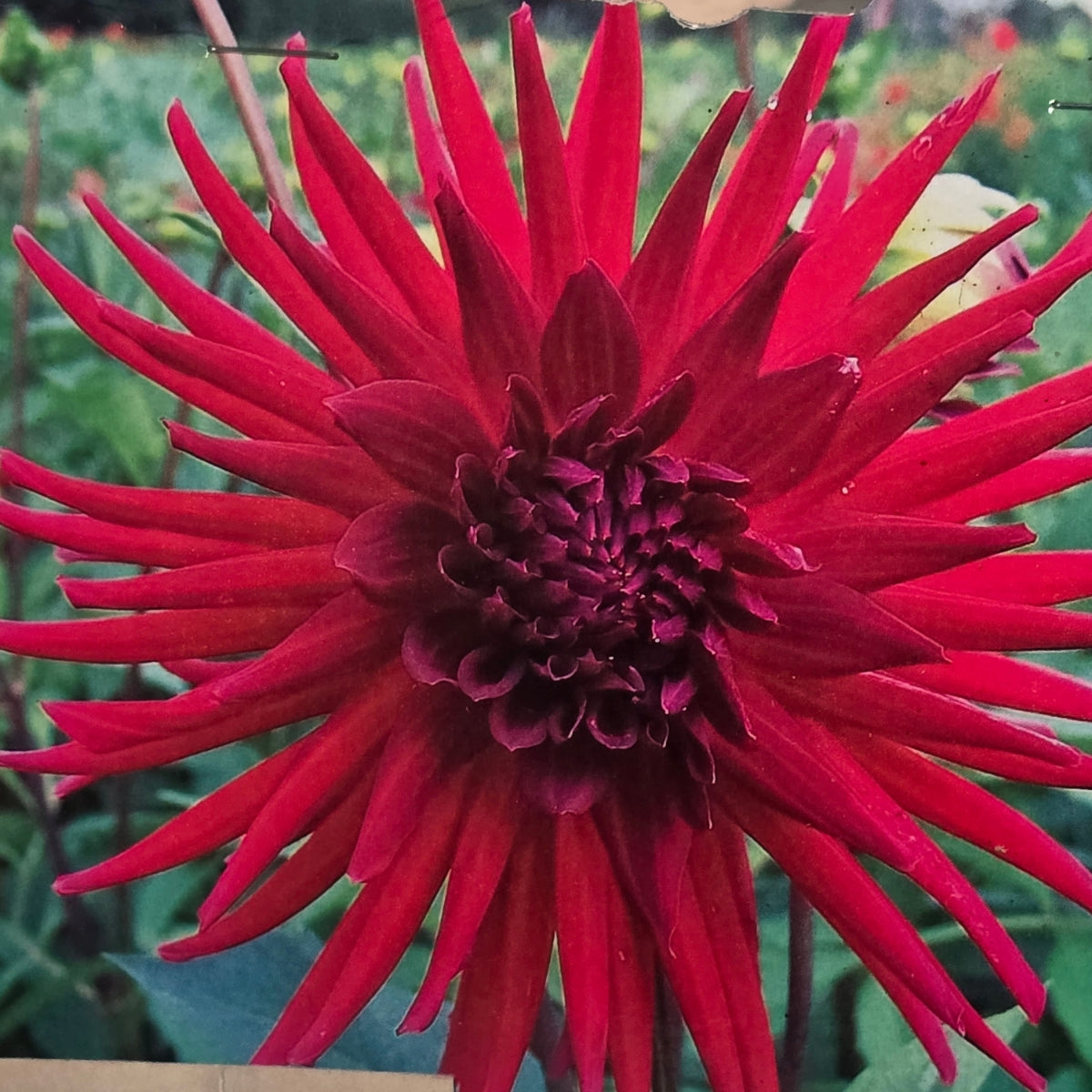
Bring bold, richly coloured flowers to the garden with Dahlia ‘Mrs Rees’, a striking cactus Dahlia producing deep burgundy-red blooms on long stems.
Its narrow, pointed petals create an elegant, spiky flower form, while subtle purple undertones add depth to the intense red colouring. Under different lighting, the flowers may appear crimson, burgundy or deep red-purple.
‘Mrs Rees’ produces an abundance of flowers throughout the season and is an excellent variety for garden beds, borders and cut-flower arrangements.
EXAMPLE IMAGE ONLY: The flower image shows an example of the expected mature bloom. The intensity of the crimson, burgundy, red and purple colouring may vary naturally according to climate, growing conditions, lighting and flower maturity. The supplied product is a dormant tuber—not a flowering plant.
Flower Characteristics
- Deep burgundy-red flowers
- May display crimson or purple undertones
- Small cactus Dahlia classification
- Flowers approximately 12–16cm across
- Long, narrow and pointed petals
- Spiky, star-shaped flower form
- Produces an abundance of blooms
- Long stems suitable for cutting
- Excellent for garden display and floral arrangements
Supplied as Dormant Tubers
Supplied as the selected quantity of dormant Dahlia ‘Mrs Rees’ tubers.
Dahlia tubers naturally vary in size, shape and appearance. A smaller tuber can grow just as successfully as a larger tuber when it is healthy and has a viable eye or growing point.
Tubers may arrive without visible shoots or roots. This is normal while they are dormant.
Key Features
- Named Dahlia ‘Mrs Rees’
- Small cactus Dahlia classification
- Deep burgundy-red colouring
- Possible crimson and purple undertones
- Spiky flowers approximately 12–16cm across
- Long, pointed petals
- Prolific flowering variety
- Long stems suitable for cutting
- Grows approximately 1.2–1.5m tall
- Flowers throughout summer and autumn
- Suitable for garden beds and large containers
- Frost-tender tuberous perennial
- Supplied as dormant tubers
Suitable Uses
- Cottage gardens
- Burgundy and red garden displays
- Dark and dramatic colour schemes
- Mixed flower borders
- Feature planting
- Cactus Dahlia collections
- Cut-flower gardens
- Bouquets and floral arrangements
- Large pots and containers
- Seasonal summer displays
- Dahlia collections
Planting Instructions
Plant Dahlia ‘Mrs Rees’ during spring once the danger of frost has passed and the soil has begun to warm.
In many Australian climates, suitable planting time falls between September and December. Always adjust planting time according to local temperatures and frost conditions.
Choose a sunny position with fertile, free-draining soil. Avoid low-lying areas where water collects, as dormant tubers can rot in continually wet conditions.
Lay each tuber horizontally approximately 5–10cm below the soil surface, with the crown or growing point facing upwards. Cover gently with soil.
Space plants approximately 60cm apart to provide adequate room for growth and good airflow.
Install a sturdy stake when planting. Adding support before growth begins reduces the risk of accidentally damaging the tuber later.
Avoid heavy watering immediately after planting. If the soil is already moist, wait until shoots begin emerging before commencing regular watering.
Care Instructions
Position
Grow Dahlia ‘Mrs Rees’ in full sun, ideally with at least six hours of direct sunlight each day.
Light afternoon shade may be beneficial in particularly hot Australian climates. Excessive shade can result in softer stems, weaker growth and fewer flowers.
Choose a position protected from strong wind to reduce the risk of damage to the tall flowering stems.
Soil
Plant in fertile, humus-rich and free-draining soil.
Improve the planting area with compost or well-aged organic matter before planting. Heavy clay soil should be amended to improve drainage, or the tuber can be grown in a raised garden bed or large container.
Excellent drainage is particularly important in subtropical climates and areas experiencing heavy summer rainfall.
Watering
Once shoots emerge, water deeply and regularly while allowing the upper surface of the soil to begin drying between applications.
Increase watering during hot, dry or windy weather. Avoid keeping the soil continually saturated, particularly around the crown and tubers.
Water near the base of the plant where possible to reduce prolonged moisture on the foliage and flowers.
Feeding
Apply a balanced or flowering-plant fertiliser once active growth is established.
Avoid excessive nitrogen, which can encourage abundant foliage at the expense of flower production. Additional flowering fertiliser may be applied when buds begin developing, following the product label directions.
Staking
Dahlia ‘Mrs Rees’ can grow approximately 1.2–1.5m tall and should be supported, particularly in windy or exposed positions.
Install a sturdy stake at planting time and secure the stems loosely as the plant grows. Allow enough room for natural movement and stem expansion.
Although cactus-style flowers generally hold less rainwater than broad-petalled varieties, the tall stems can still be damaged by strong wind or heavy weather.
Pinching
For bushier growth and additional flowering stems, pinch out the central growing tip once the young plant has developed approximately four sets of leaves or reached around 20cm tall.
Pinching may delay the first flowers slightly but can encourage a fuller plant with more flowering branches.
Deadheading and Cutting
Remove faded flowers regularly to encourage continued blooming and prevent the plant from directing energy into seed production.
Flowers intended for arrangements are best cut during the cooler part of the morning. Choose well-developed blooms and place the stems into clean water promptly after cutting.
Regular cutting and deadheading can help extend the flowering period.
Hot and Humid Climates
In subtropical and humid regions, provide excellent drainage and generous spacing between plants.
Good airflow helps reduce the risk of fungal problems. Avoid continually wet foliage and water early enough for the leaves to dry before evening.
Protection from intense late-afternoon sun may help preserve flower quality during periods of extreme heat.
End-of-Season Care
After flowering, allow the foliage to remain until it begins yellowing and dying back naturally. This enables the plant to return energy to its tubers.
In mild climates with free-draining soil, the tubers may be left in the ground during dormancy. Mark the planting position and keep the area relatively dry.
Established clumps can be lifted and divided periodically to prevent overcrowding and maintain vigorous growth.
In cold, frost-prone or persistently wet climates, lift the tubers after the foliage has died back. Allow them to dry before storing them in a cool, dark, frost-free and well-ventilated location.
Product Details
Botanical Name: Dahlia hybrid ‘Mrs Rees’
Cultivar: ‘Mrs Rees’
Common Name: Dahlia
Family: Asteraceae
Flower Classification: Small cactus Dahlia
Flower Colour: Deep burgundy red with possible crimson and purple undertones
Flower Size: Approximately 12–16cm
Plant Height: Approximately 1.2–1.5m
Flowering Period: Summer to autumn
Plant Type: Frost-tender tuberous perennial
Supply Format: Dormant tuber
Position: Full sun to light afternoon shade
Soil: Fertile, humus-rich and free-draining
Planting Depth: Approximately 5–10cm
Plant Spacing: Approximately 60cm
Water Needs: Moderate during active growth
Frost Tolerance: Frost sensitive
End Use: Garden displays, large containers and cut flowers
Important Information
- The supplied product is a dormant tuber, not a flowering plant
- Tuber size, shape and appearance will vary naturally
- Tubers may arrive without visible shoots or roots
- Plant only when local growing conditions are suitable
- Avoid overwatering before shoots emerge
- Mature height and flowering time will vary with climate and care
- Flowers may appear crimson, burgundy, deep red or red-purple under different conditions
- Small cactus is a formal flower classification and does not mean the plant itself is small
- Individual flower size and colour intensity will vary naturally
- Example images show the expected mature flowers only
FAQ
What colour are Dahlia ‘Mrs Rees’ flowers?
The flowers are predominantly deep burgundy red. Some blooms may display crimson or purple undertones depending on lighting, climate and flower maturity.
What flower form does ‘Mrs Rees’ produce?
‘Mrs Rees’ is a cactus Dahlia with narrow petals that roll or quill towards pointed tips, creating a spiky, star-shaped flower.
What does small cactus Dahlia mean?
Small cactus is an Australian flower classification referring to the bloom’s form and diameter. It does not mean that the plant is compact or produces tiny flowers.
How large are Dahlia ‘Mrs Rees’ flowers?
The flowers generally measure approximately 12–16cm across under suitable growing conditions.
How tall does Dahlia ‘Mrs Rees’ grow?
Plants generally reach approximately 1.2–1.5m tall. Final height will depend on climate, position, soil and care.
Will the tuber arrive flowering?
No. This product is supplied as a dormant tuber. The flower photograph shows an example of the expected mature bloom only.
Does Dahlia ‘Mrs Rees’ require staking?
Yes. The plant produces tall stems and can reach approximately 1.5m. Install a sturdy stake when planting to avoid damaging the tuber later.
Can Dahlia ‘Mrs Rees’ be grown in a container?
Yes. Use a large, stable container with generous drainage holes and a fertile, free-draining potting mix. Container-grown plants require regular watering, feeding and support.