


Dwarf Blue Chalk Sticks | Dwarf Chalk Sticks (Syn. Senecio serpens) – 50mm Pot
- Regular price
-
$5.95 - Regular price
-
- Sale price
-
$5.95
Couldn't load pickup availability
Shipping information & Pickup
Shipped from Wardell, NSW. Shipping is calculated at checkout by weight, cubic weight and location.
Standard delivery is usually 2–8 business days. WA, NT and TAS may take 14–30 business days due to biosecurity inspection.
Free Local Pickup: Enter 1335 Wardell Road, Wardell NSW 2477 as the delivery address at checkout to display this option. Free delivery is available within 2 km. Travelling through or need something urgently? Contact us first, as some items may need to be ordered in.
Returns
If you aren't happy with your order. we accept returns.

Description
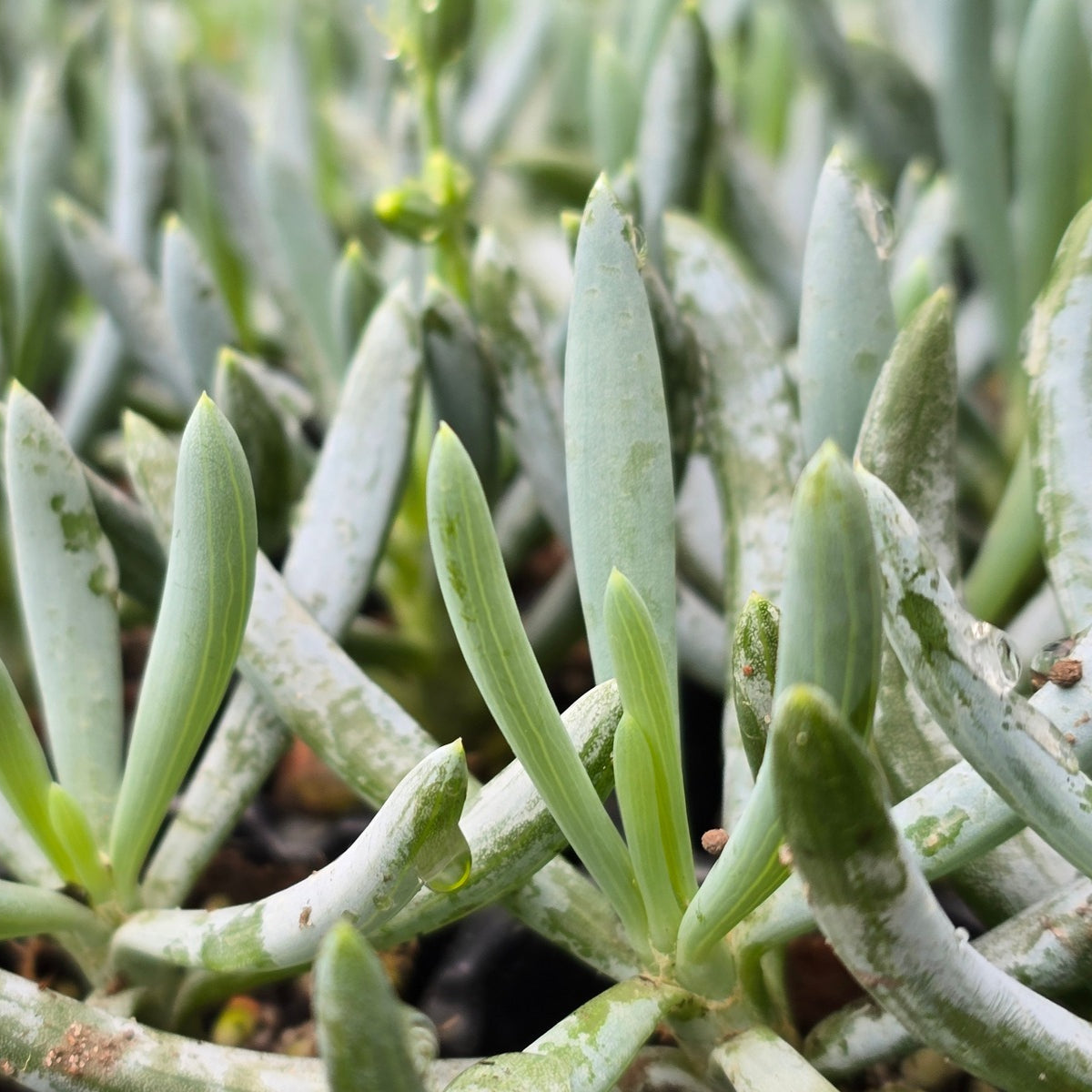
Create striking contrast with Dwarf Blue Chalk Sticks, a spreading succulent groundcover prized for its powdery silver-blue foliage.
Its short, cylindrical leaves resemble small pieces of chalk and grow along branching stems that gradually form a dense, textural mat. The cool blue-grey colouring works especially well in contemporary gardens, rockeries, gravel gardens, succulent displays and decorative pots.
Once established, Dwarf Blue Chalk Sticks is drought tolerant and requires relatively little maintenance when grown in a sunny position with excellent drainage.
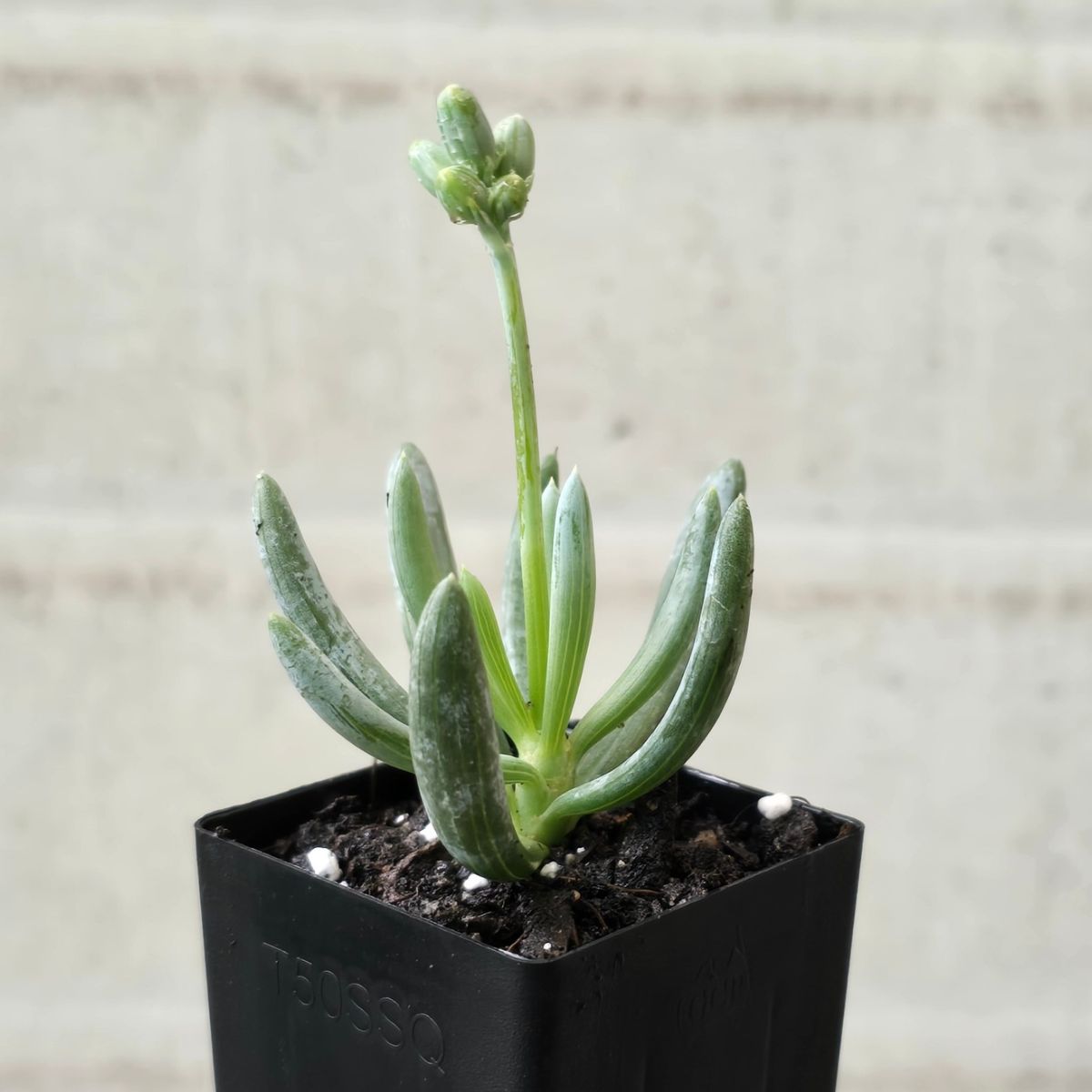
Supplied as a Young Plant
Supplied as a young live plant established in a 50mm nursery pot.
The plant will be considerably smaller than the mature examples shown in photographs. Pot size refers to the diameter of the nursery pot—not the plant’s height or spread.
Plants may be lightly trimmed or secured before dispatch to protect them during transport.
Key Features
-
Powdery silver-blue to blue-grey foliage
-
Short, cylindrical, finger-like succulent leaves
-
Low-growing and spreading habit
-
Forms a dense, textural groundcover
-
Approximately 15–35cm high when mature
-
May spread up to approximately 1m under suitable conditions
-
Drought tolerant once established
-
Excellent for pots, rockeries and gravel gardens
-
Attractive cascading over retaining walls and container edges
-
Suitable for mass planting
-
Low-maintenance landscaping plant
-
Small daisy-like flower heads may occasionally appear
-
Foliage is the plant’s main ornamental feature
Suitable Uses
-
Succulent gardens
-
Rockeries and gravel gardens
-
Contemporary landscapes
-
Mediterranean-style gardens
-
Water-wise gardens
-
Garden edging
-
Retaining walls
-
Embankments and slopes
-
Mass groundcover planting
-
Decorative pots and planters
-
Mixed succulent arrangements
-
Coastal-style gardens
-
Poolside landscaping in well-drained positions
Planting Instructions
Plant into free-draining soil in a sunny or lightly shaded position.
Dig a hole slightly wider than the root ball and approximately the same depth. Carefully remove the plant from its 50mm pot, keeping the young root system intact.
Position the top of the root ball level with the surrounding soil, backfill gently and water thoroughly.
Avoid planting into low-lying positions where water collects. Allow sufficient room for the plant’s spreading growth.
Care Instructions
Position
Grow in full sun to light shade.
A sunny position generally encourages stronger silver-blue colouring and denser, more compact growth. Plants grown in heavier shade may become greener, softer and more open.
In exceptionally hot climates, some protection from intense late-afternoon sun may benefit newly planted specimens while they establish.
Soil
Dwarf Blue Chalk Sticks requires free-draining soil.
Sandy, gravelly or moderately fertile garden soil is suitable, provided excess water drains quickly. Improve heavy clay before planting or grow the plant in a raised bed or container.
For pots, use a quality succulent or cactus potting mix. Additional mineral material may be added where improved drainage is required.
Watering
Water regularly but lightly while the young plant becomes established.
Once established, water thoroughly and then allow the soil to dry before watering again. Avoid frequent shallow watering or keeping the root zone continually wet.
Reduce watering during cool or wet weather. Overwatering and poor drainage are among the most common causes of decline.
Feeding
Dwarf Blue Chalk Sticks has relatively modest feeding requirements.
Apply a light application of controlled-release fertiliser suitable for succulents during active growth, following the product directions. Avoid excessive fertiliser, which can produce soft, stretched growth.
Pruning
Trim excessively long, damaged or untidy stems when required.
Light pruning can encourage denser growth and help keep the plant within its intended area. Spreading stems may develop roots where they remain in contact with the soil.
Hot and Humid Conditions
In warm, humid climates, provide excellent drainage and good airflow.
Avoid overcrowding the plant with dense surrounding vegetation. Water early in the day and avoid keeping the foliage and soil continually wet during periods of high humidity.
Frost Protection
Protect young plants from frost while they establish.
Established plants may tolerate brief, light frost, but heavy or prolonged frost can damage the succulent foliage. Container-grown plants can be moved into a protected position during severe cold weather.
Product Details
Botanical Name: Curio repens
Synonym: Senecio serpens
Common Names: Dwarf Blue Chalk Sticks, Dwarf Chalk Sticks, Blue Chalksticks
Family: Asteraceae
Plant Type: Evergreen succulent groundcover
Origin: South Africa
Supply Format: Young live plant in a 50mm nursery pot
Foliage Colour: Powdery silver-blue to blue-grey
Mature Height: Approximately 15–35cm
Mature Spread: Up to approximately 1m under suitable conditions
Growth Habit: Low, spreading and mat forming
Position: Full sun to light shade
Soil: Free-draining soil or succulent potting mix
Water Needs: Low once established
Flowering: Small flower heads may occasionally appear
Frost Tolerance: Protect from heavy frost
End Use: Groundcover, rockeries, pots, retaining walls and mass planting
Important Information
-
Supplied as a young plant in a 50mm nursery pot
-
The plant will be smaller than mature examples shown
-
Pot size does not indicate the plant’s overall height or width
-
Growth rate and mature dimensions vary with climate and care
-
Foliage colour varies with sunlight, temperature and watering
-
The powdery coating on the leaves is natural and may rub off when handled
-
This is not an Australian native plant
-
Do not ingest
-
Keep away from children and animals that may chew plants
-
Curio and Senecio plants should be treated as potentially harmful if eaten
-
Wear gloves when handling and wash hands afterwards
Frequently Asked Questions
How is Dwarf Blue Chalk Sticks supplied?
It is supplied as a young live plant established in a 50mm nursery pot. It will be considerably smaller than a mature plant.
Is Dwarf Blue Chalk Sticks an Australian native?
No. Curio repens is native to South Africa.
How large does it grow?
The foliage generally reaches approximately 15–35cm high. Established plants may spread up to approximately 1m when growing conditions are suitable.
Does it require full sun?
Full sun generally produces the strongest silver-blue colour and most compact growth. It can also tolerate light shade, although the foliage may become greener and less dense.
How often should it be watered?
Water regularly while the young plant establishes. Afterwards, water thoroughly and allow the soil to dry before watering again. Avoid continually wet soil.
Can it be grown in a pot?
Yes. It is well suited to pots and mixed succulent planters. Use a container with drainage holes and a free-draining succulent potting mix.
Why does the foliage have a powdery coating?
The pale coating is a natural protective wax that contributes to the plant’s blue-grey appearance. It can be rubbed or marked during handling but does not usually indicate disease.
Is Dwarf Blue Chalk Sticks safe for pets?
Curio and Senecio plants should be treated as potentially harmful if ingested. Position the plant away from pets and children who may chew foliage and seek professional advice if ingestion occurs.