


Insect Frass Bio-Fertiliser 1kg | Black Soldier Fly Larvae | GDF630
- Regular price
-
$29.95 - Regular price
-
$29.95 - Sale price
-
$29.95
Couldn't load pickup availability
-
Hurry, only 3 items left in stock!
Shipping information & Pickup
Shipped from Wardell, NSW. Shipping is calculated at checkout by weight, cubic weight and location.
Standard delivery is usually 2–8 business days. WA, NT and TAS may take 14–30 business days due to biosecurity inspection.
Free Local Pickup: Enter 1335 Wardell Road, Wardell NSW 2477 as the delivery address at checkout to display this option. Free delivery is available within 2 km. Travelling through or need something urgently? Contact us first, as some items may need to be ordered in.
Returns
If you aren't happy with your order. we accept returns.

Description
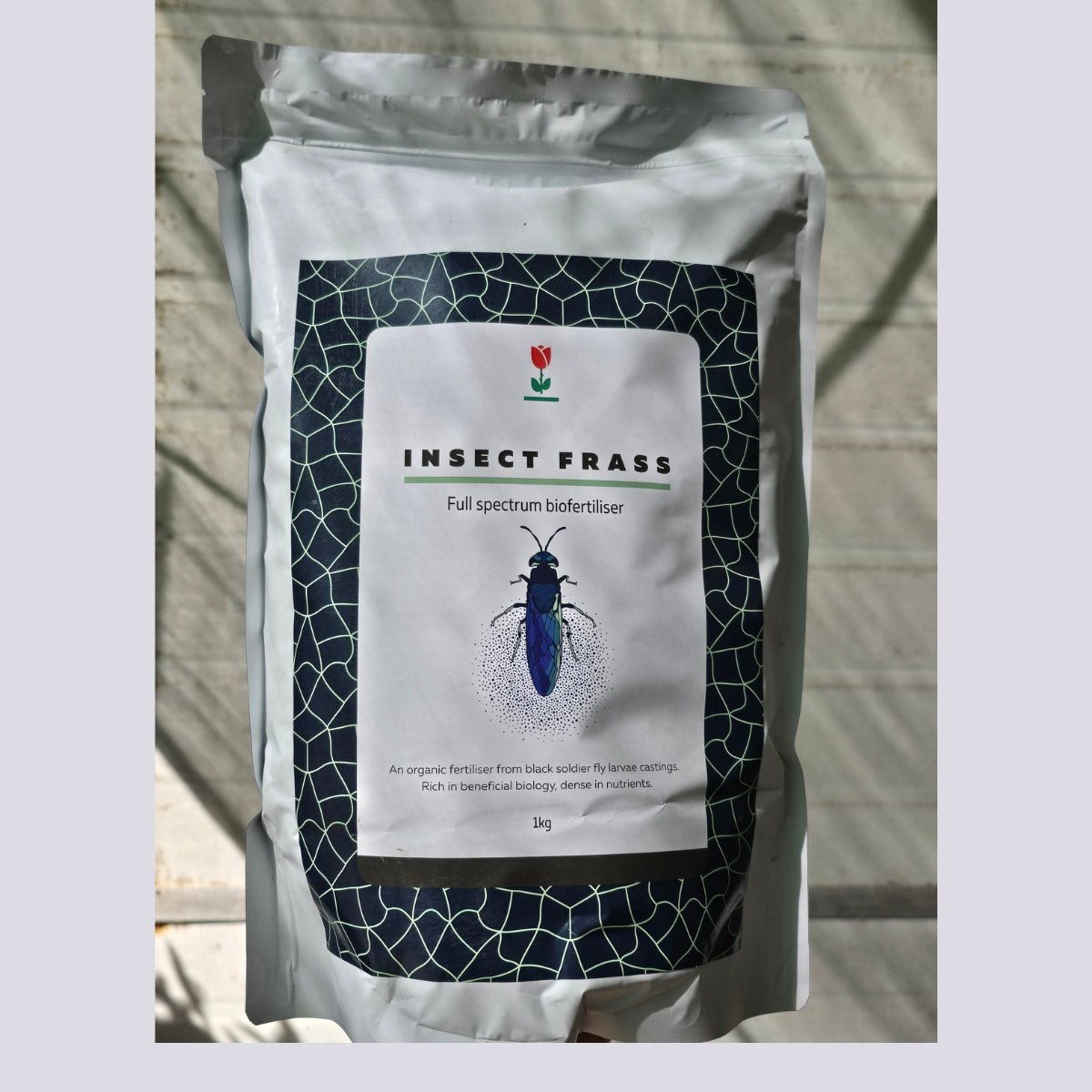
Insect Frass GDF630 is a concentrated bio-fertiliser and soil amendment produced from the castings of black soldier fly larvae. It is manufactured in a controlled Victorian facility that converts food waste into useful agricultural products, helping return nutrients and organic matter to the soil.
Naturally containing nitrogen, phosphorus, potassium, calcium, carbon, beneficial microorganisms and chitin, insect frass supports steady plant nutrition and active soil biology. It can be mixed through soil and potting media or applied as a top dressing around established plants.
Key Features
- Made from black soldier fly larvae castings
- Produced in a controlled facility in Victoria
- Helps convert food waste into a useful soil amendment
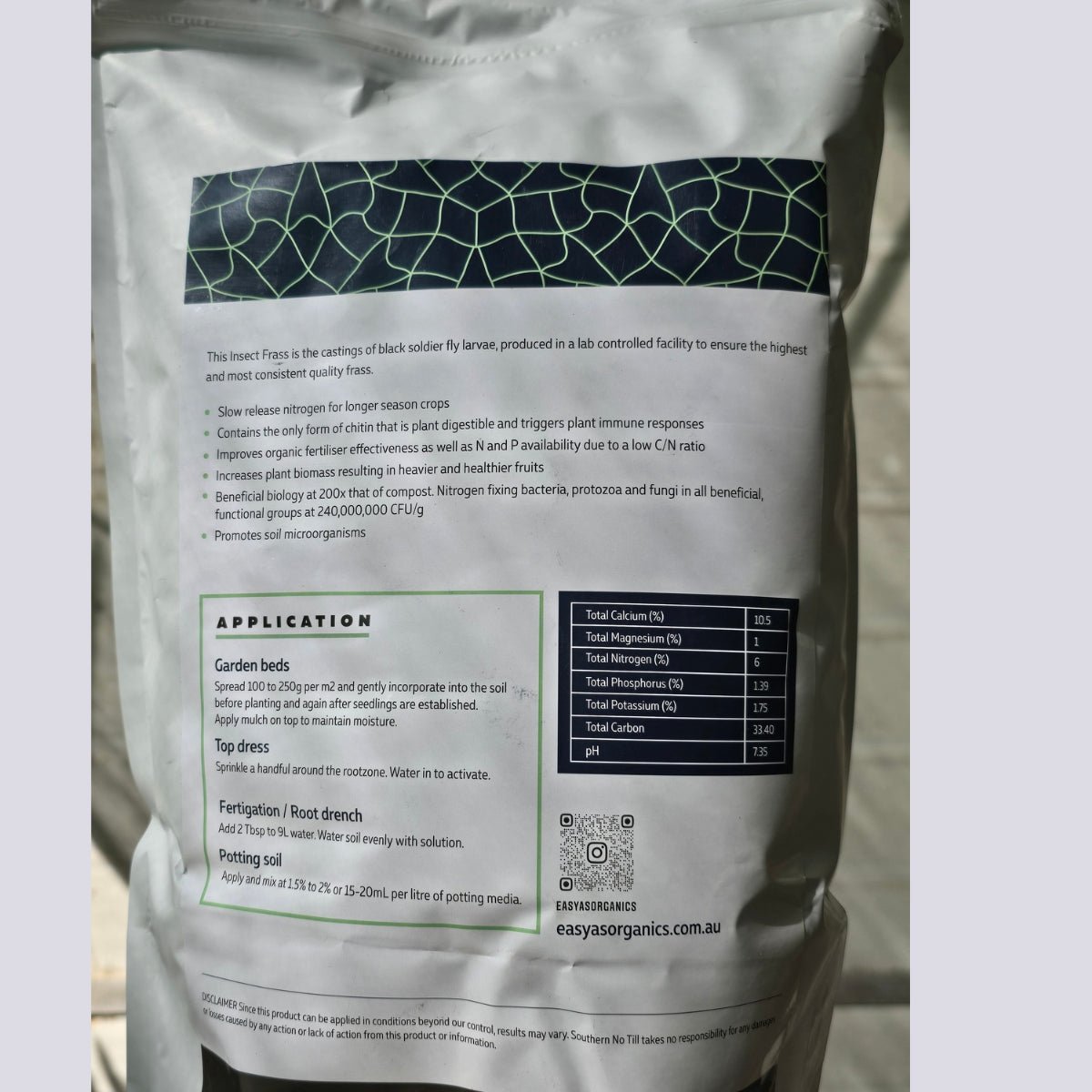
- Provides slow-release nitrogen
- Contains phosphorus, potassium, calcium and magnesium
- Rich in carbon and beneficial soil biology
- Contains nitrogen-fixing bacteria, protozoa and fungi
- Contains chitin that may support natural plant defence responses
- Low carbon-to-nitrogen ratio supports nutrient availability
- Encourages soil microbial activity
- Suitable for vegetables, fruiting plants, flowers, herbs and ornamentals
- Can complement compost and other fertilisers
- Supplied in a 1kg pack
Suitable Uses
- Vegetable gardens
- Raised garden beds
- Fruit trees and berries
- Tomatoes, capsicums and other fruiting crops
- Potatoes and root vegetables
- Herbs and leafy greens
- Roses and flowering plants
- Shrubs and ornamental plants
- Pots and containers
- Potting-mix preparation
- Living soils
- Compost enrichment
- Soil restoration and improvement
Product Details
| Product | Insect Frass |
| Product code | GDF630 |
| Source | Black soldier fly larvae castings |
| Product type | Bio-fertiliser and biological soil amendment |
| Pack size | 1kg |
| Production location | Victoria, Australia |
| Application | Mix through soil or growing media, or use as a top dressing |
| Release | Slow-release nutrient source |
Typical Analysis
| Component | Typical level |
| Total nitrogen | 3.5% |
| Total phosphorus | 1.39% |
| Total potassium | 1.75% |
| Total calcium | 10.5% |
| Total magnesium | 1% |
| Total carbon | 33.4% |
| pH | Approximately 7.35 |
| Beneficial biology | Reported at approximately 240,000,000 CFU/g |
Analysis is typical and may vary naturally between batches.
How Insect Frass Supports the Soil
Slow-Release Nutrition
Insect frass provides slow-release nitrogen that can support steady growth over an extended period. This makes it useful for longer-season vegetables, fruiting plants and established garden beds.
Beneficial Soil Biology
The product contains a diverse population of bacteria, fungi and protozoa. When used correctly, these organisms can contribute to nutrient cycling and support an active soil ecosystem.
Chitin
Frass naturally contains chitin from insect exoskeleton material. Chitin can stimulate biological activity and may help support a plant’s natural defence responses.
Insect frass is not a pesticide and should not replace appropriate pest monitoring or treatment when required.
Circular Use of Food Waste
Black soldier fly larvae convert food waste into protein and nutrient-rich castings. The frass can then be returned to the soil, helping close the loop between food waste and food production.
Application Rates
Always check the directions printed on the packaging before application.
Garden Beds
Apply approximately 100–250g per square metre. Spread evenly, lightly mix through the upper soil layer and water thoroughly.
At this rate, a 1kg pack treats approximately 4–10 square metres.
Potting Mixes and Containers
Mix approximately 15–20mL per litre of growing media, equal to around 1.5–2% of the mix by volume.
Blend thoroughly before planting to avoid concentrated pockets of fertiliser.
Established Plants
Apply a light, even top dressing around the root zone, keeping the product away from direct contact with stems and trunks. Gently work it into the soil surface and water thoroughly.
Use the lower recommended rate for seedlings, young plants, indoor plants and sensitive species.
Application Tips
- Apply to moist soil and water after use
- Distribute the product evenly
- Avoid leaving concentrated piles against stems or trunks
- Do not assume that a heavier application will produce better results
- Consider nutrients already supplied by other fertilisers
- Use during active plant growth
- Store sealed in a cool, dry location
- Follow the package directions if they differ from the general guidance above
Frequently Asked Questions
What is insect frass?
Insect frass is a mixture of castings and other residual material produced during insect farming. This product comes from black soldier fly larvae raised in a controlled Victorian facility.
Is insect frass the same as worm castings?
No. Both are biological soil amendments, but worm castings are produced by earthworms, while insect frass is produced during insect rearing and naturally contains chitin.
Is it a fertiliser or a soil conditioner?
It performs both roles. It supplies plant nutrients while also introducing organic matter and beneficial biology to the soil.
What plants can I use it on?
It can be used around vegetables, herbs, fruiting plants, roses, flowers, shrubs, fruit trees and many container plants.
Can I use it on edible plants?
Yes. It is suitable for vegetable gardens, herbs, fruit trees and other edible crops when applied according to the package directions.
Can it be mixed into potting mix?
Yes. Mix approximately 15–20mL per litre of growing media, or follow the current directions printed on the packaging.
Can it be used as a top dressing?
Yes. Apply a light, even layer around the root zone, gently work it into the surface and water thoroughly.
How much area will a 1kg pack cover?
At the recommended garden-bed rate of 100–250g per square metre, one pack will treat approximately 4–10 square metres.
Does insect frass kill garden pests?
No. Insect frass is not a pesticide. Its chitin content may support natural plant defence responses, but it does not guarantee pest prevention or control.
Does it replace compost?
No. Frass is a concentrated amendment rather than a bulky source of organic matter. It can be used alongside compost, mulch and other soil-building materials.
Can I use it with other fertilisers?
Yes, but consider the total nutrients being applied. Excessive fertiliser can damage plants or encourage unbalanced growth.
Will it guarantee larger crops or heavier fruit?
No fertiliser can guarantee a particular yield. Insect frass may support plant growth and soil fertility when combined with suitable light, water, soil and general care.
Is more insect frass better?
No. Overapplication can cause nutrient imbalances or stress plants. Apply at the recommended rate and start conservatively with seedlings or sensitive plants.
How should it be stored?
Keep the pack sealed in a cool, dry place away from moisture, children and pets.
Safety and Handling
Avoid breathing dust during application and wash your hands after use. Keep the product out of reach of children and pets, and do not allow it to be eaten.
Follow all current safety and application instructions printed on the packaging.
Please Note
Typical nutrient and biological analysis may vary naturally between batches. Plant response will depend on species, soil, climate, watering, existing nutrition and application rate.
Claims relating to soil biology, chitin and plant performance describe potential benefits when the product is used correctly. This product is not a pesticide and does not guarantee resistance to pests, disease or environmental stress.