


Lagerstroemia ‘Tuscarora’ Crepe Myrtle | Coral-Pink Flowers – 50mm Tube
- Regular price
-
$7.95 - Regular price
-
- Sale price
-
$7.95
Couldn't load pickup availability
Shipping information & Pickup
Shipped from Wardell, NSW. Shipping is calculated at checkout by weight, cubic weight and location.
Standard delivery is usually 2–8 business days. WA, NT and TAS may take 14–30 business days due to biosecurity inspection.
Free Local Pickup: Enter 1335 Wardell Road, Wardell NSW 2477 as the delivery address at checkout to display this option. Free delivery is available within 2 km. Travelling through or need something urgently? Contact us first, as some items may need to be ordered in.
Returns
If you aren't happy with your order. we accept returns.

Description
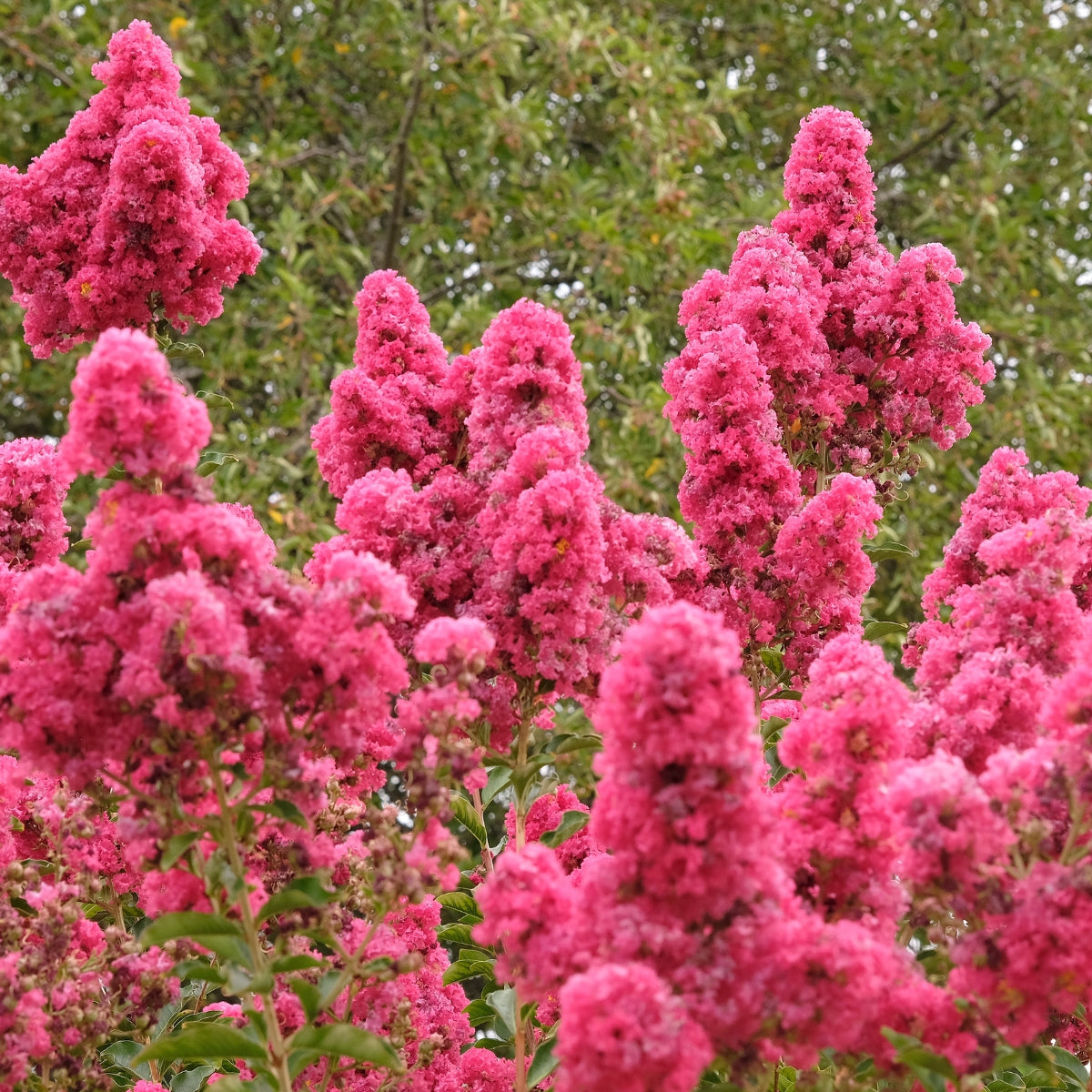
Create a spectacular summer display with Lagerstroemia ‘Tuscarora’, a deciduous crepe myrtle producing abundant clusters of vibrant coral-pink to fuchsia-pink flowers.
The colourful summer blooms are complemented by dark green foliage that develops shades of orange and red before falling in autumn. As the tree matures, its smooth, mottled bark provides additional interest through winter.
‘Tuscarora’ develops into a beautiful small to medium ornamental tree suitable for feature planting, avenues, lawns and larger gardens. It also has strong tolerance to powdery mildew compared with many older crepe myrtle varieties.
SUPPLIED IN A 50MM TUBE: This product is a young plant supplied in a 50mm nursery tube. It will be considerably smaller than the mature tree shown in example photographs and may not be flowering when dispatched. As a deciduous tree, it may arrive with limited foliage or no leaves during winter.
Flower Characteristics
-
Vibrant coral-pink to fuchsia-pink flowers
-
Large, tapered flower clusters
-
Distinctive crinkled, crepe-like petals
-
Bright yellow stamens may be visible within the flowers
-
Flowers mainly during summer and into early autumn
-
Strong flowering display under suitable conditions
-
Flower colour may vary slightly with climate, light and maturity
Key Features
-
Named Lagerstroemia ‘Tuscarora’
-
Hybrid crepe myrtle cultivar
-
Deciduous small to medium ornamental tree
-
Coral-pink to fuchsia-pink summer flowers
-
Dark green foliage during the growing season
-
Orange-to-red autumn foliage
-
Smooth, mottled ornamental bark
-
Highly tolerant of powdery mildew
-
Mature height approximately 5–6m
-
Mature spread approximately 3–4m
-
Heat and drought tolerant once established
-
Suitable for single-trunk or multi-stem training
-
Supplied as a young plant in a 50mm tube
Suitable Uses
-
Feature tree planting
-
Front gardens
-
Lawns
-
Driveways and avenues
-
Cottage gardens
-
Flowering tree collections
-
Pink garden colour schemes
-
Larger garden beds
-
Courtyards with adequate space
-
Deciduous shade planting
-
Street and landscape planting
-
Seasonal summer displays
Planting Instructions
Plant promptly after delivery into a prepared garden position or a larger nursery container.
Choose an open position receiving full sun. Strong sunlight encourages sturdy growth, good autumn colour and abundant flowering.
Dig a hole approximately twice as wide as the root ball but no deeper than the root ball itself. Carefully remove the young plant from its 50mm tube without breaking apart the root system.
Position the plant at its existing soil level, backfill gently and water thoroughly to settle the soil around the roots.
Apply mulch around the planting area to conserve moisture and reduce weed growth, keeping the mulch clear of the young trunk.
Allow sufficient room for a mature tree approximately 5–6m high and 3–4m wide. Avoid planting directly beneath powerlines or too close to buildings, fences and underground services.
Care Instructions
Position
Grow ‘Tuscarora’ in full sun, ideally with at least six hours of direct sunlight each day.
Insufficient sunlight may result in weaker growth, reduced flowering and an increased risk of fungal problems.
Soil
Plant in fertile, free-draining soil.
Crepe myrtles adapt to a range of soil types but should not remain continually waterlogged. Improve heavy or compacted ground before planting and avoid low-lying positions where water collects.
Watering
Water regularly while the young tree establishes.
Provide deep watering rather than frequent light applications, allowing the upper soil surface to begin drying between watering.
Once established, ‘Tuscarora’ can tolerate periods of dry weather. Additional water during prolonged hot or dry conditions will support stronger growth and flowering.
Feeding
Apply a balanced, controlled-release fertiliser during spring as new growth begins, following the product directions.
Avoid excessive nitrogen, which can encourage soft leafy growth at the expense of flowers.
Training
Young plants supplied in 50mm tubes can be trained as either single-trunk or multi-stem trees.
For a single-trunk form, select one strong central leader and gradually remove competing lower shoots as the tree develops.
For a multi-stem form, retain several well-positioned stems arising near the base.
Pruning
Prune lightly during winter while the tree is dormant, removing dead, damaged, weak or crossing branches.
Spent flower clusters may also be removed if desired. Avoid repeatedly cutting established branches back to heavy stubs, as this can spoil the tree’s natural shape and encourage weak growth.
Autumn and Winter
‘Tuscarora’ is deciduous. Its leaves naturally develop autumn colour before falling.
A leafless tree during winter is dormant—not dead. New foliage generally emerges when temperatures rise in spring.
Frost Protection
Established trees are frost tolerant, but young plants supplied in 50mm tubes are more vulnerable.
Protect newly planted stock from severe frost and cold, drying winds until the root system and woody growth are well established.
Product Details
Botanical Name: Lagerstroemia indica × L. fauriei ‘Tuscarora’
Cultivar: ‘Tuscarora’
Common Name: Tuscarora Crepe Myrtle
Family: Lythraceae
Plant Type: Deciduous ornamental tree
Supply Format: Young live plant in a 50mm nursery tube
Flower Colour: Coral pink to fuchsia pink
Flowering Period: Summer to early autumn
Foliage: Dark green, developing orange and red autumn colour
Bark: Smooth and mottled with light brown, grey and cinnamon tones
Mature Height: Approximately 5–6m
Mature Spread: Approximately 3–4m
Growth Habit: Upright, rounded to vase-shaped tree
Position: Full sun
Soil: Fertile and free-draining
Water Needs: Regular during establishment; lower once established
Frost Tolerance: Frost tolerant once established
Disease Tolerance: Highly tolerant of powdery mildew
End Use: Feature tree, avenue, lawn, driveway or landscape planting
Important Information
-
Supplied as a young plant growing in a 50mm nursery tube
-
The 50mm measurement refers to the tube size—not the plant’s height
-
The supplied plant will be substantially smaller than a mature tree
-
Plants may be trimmed before dispatch to support safe packing and healthy development
-
The plant may not be flowering when supplied
-
Deciduous plants may arrive with limited foliage or no leaves during winter
-
Mature size and flowering performance will vary with climate, soil and care
-
Example images show mature trees and flowers only
-
Powdery mildew tolerance does not mean complete immunity
-
Wear gloves when handling and wash hands afterwards
Frequently Asked Questions
How is Lagerstroemia ‘Tuscarora’ supplied?
It is supplied as a young live plant growing in a 50mm nursery tube. It will require growing and development before reaching the size shown in mature-tree photographs.
What colour are the flowers?
‘Tuscarora’ produces vibrant coral-pink to fuchsia-pink flowers in large clusters during summer.
How large does it grow?
Under suitable conditions, it generally reaches approximately 5–6m high and 3–4m wide. Final dimensions will depend on climate, soil, pruning and growing conditions.
Will the plant arrive flowering?
Not necessarily. Flowering depends on the plant’s maturity, season and growing conditions. Young 50mm stock may require several growing seasons before producing a substantial display.
Why has my plant arrived without leaves?
Crepe myrtles are deciduous and naturally lose their foliage during autumn and winter. A leafless plant during dormancy is normal, with new growth expected in spring.
Does ‘Tuscarora’ require full sun?
Yes. Full sun is recommended for the strongest growth, flowering and autumn colour.
Is it resistant to powdery mildew?
‘Tuscarora’ has strong powdery mildew tolerance compared with many older crepe myrtle varieties. Good sunlight, airflow and appropriate watering remain important.
Can it be grown as a multi-stem tree?
Yes. It can be trained as either a single-trunk tree or a multi-stem specimen, depending on the desired appearance and pruning undertaken while young.
Is it suitable for a small garden?
It matures into a tree approximately 5–6m high and 3–4m wide, so sufficient space is required. Consider a smaller crepe myrtle cultivar where space is limited.