


Xanthorrhoea australis | Austral Grass Tree | 50mm Pot
- Regular price
-
$16.40 - Regular price
-
- Sale price
-
$16.40
Couldn't load pickup availability
Shipping information
Shipped from Wardell, NSW. Shipping is calculated at checkout by weight, cubic weight and location.
Standard delivery is usually 2–8 business days. WA, NT and TAS may take 14–30 business days due to biosecurity inspection.
Free local pickup is available from 1335 Wardell Road, Wardell NSW for eligible postcodes within 50km. Travelling through or need something urgently? Please contact us before ordering, as some items may need to be ordered in.
Returns
If you aren't happy with your order. we accept returns.

Description
Create a distinctive, long-term garden feature with Xanthorrhoea australis, commonly known as the Austral Grass Tree.
This iconic Australian native develops a dense crown of narrow, arching leaves above a dark trunk that forms extremely slowly over many years. Mature plants may eventually produce towering flower spikes covered in masses of small cream-white flowers that attract birds, bees and other pollinators.
Its sculptural form makes it an outstanding feature for native gardens, rockeries, wildlife gardens and large containers.
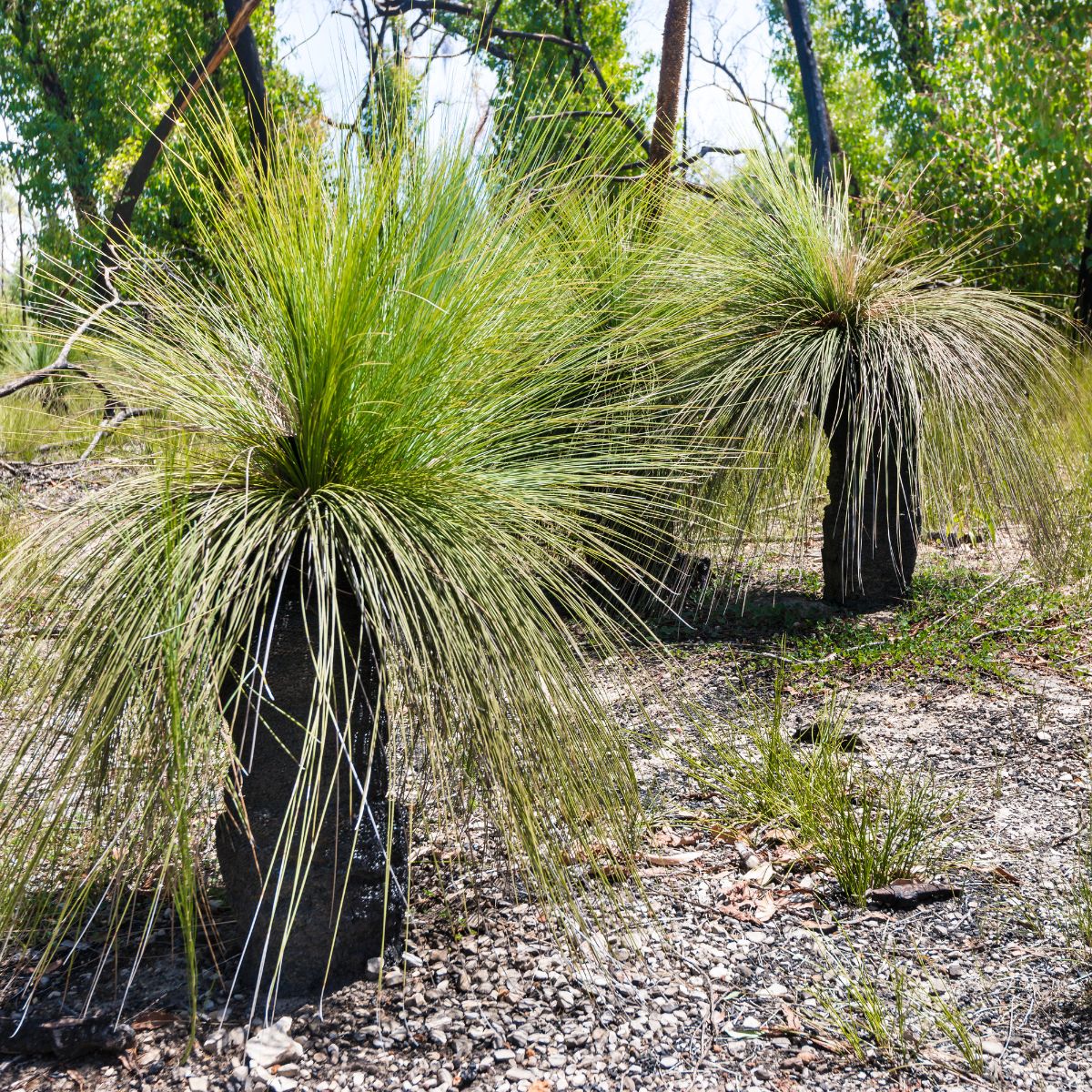
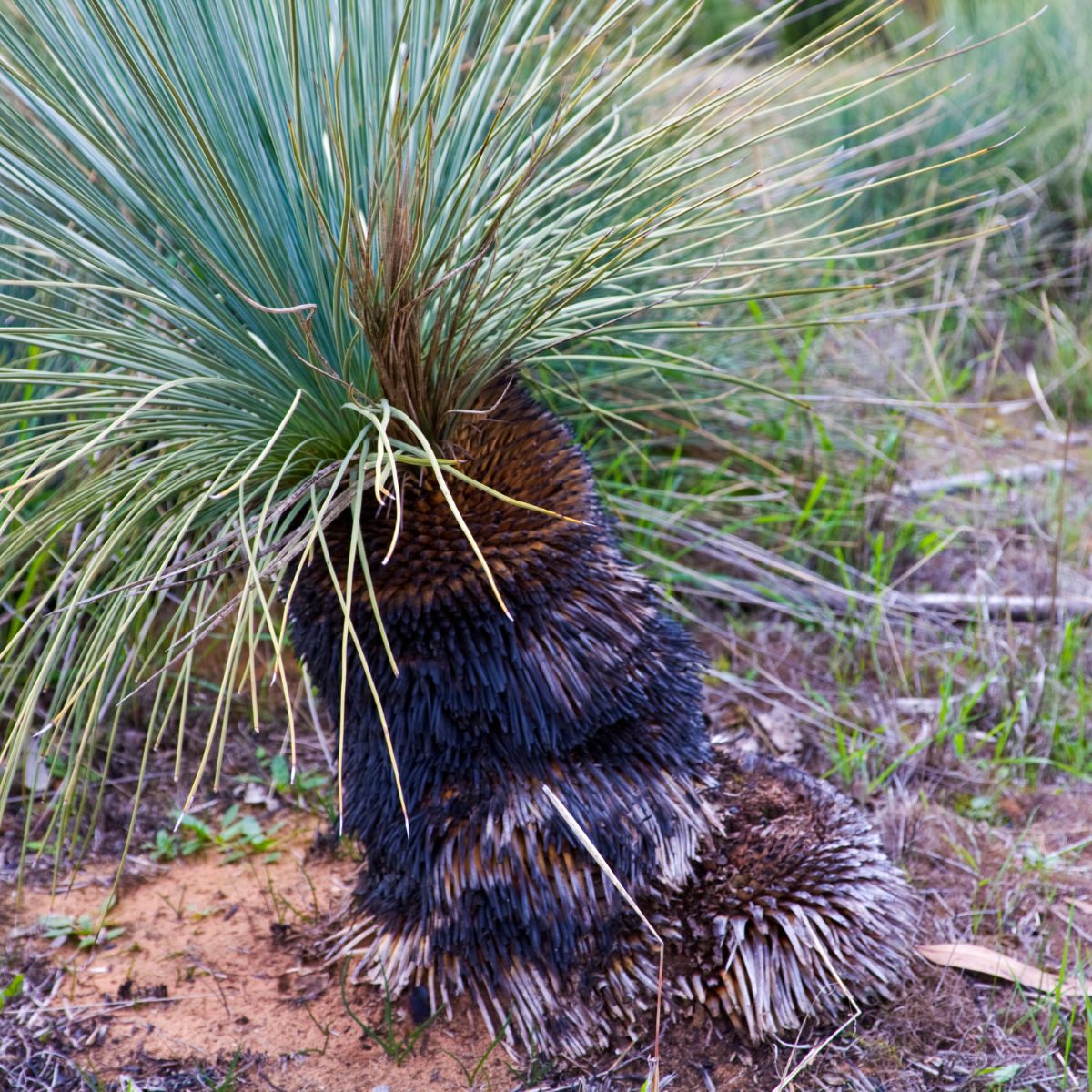
EXAMPLE MATURE PLANT: Mature grass trees take many years to develop a visible trunk or flower spike. The supplied product is a young plant and will not resemble the mature example image when delivered.
Supplied as a Young Plant
Supplied as a young, nursery-grown Xanthorrhoea australis plant in a 50mm nursery pot.
The plant has been propagated from seed and has not been collected from the wild.
The 50mm measurement refers to the width of the nursery pot—not the plant’s height or foliage spread. Plant size, leaf number and root development will vary naturally.
Important Growth Information
Grass trees are exceptionally slow-growing plants.
The supplied plant will not have a developed trunk, and trunk formation may take many years or decades. Growth speed varies considerably according to climate, soil, moisture and care.
This is best considered a long-term plant for patient gardeners rather than a fast-growing landscaping plant.
Key Features
- Iconic Australian native species
- Dense crown of narrow, arching leaves
- Slowly develops a dark, sculptural trunk
- Mature plants may develop multiple crowns
- Produces tall cream-white flower spikes when mature
- Flowers attract birds, bees and other pollinators
- Drought tolerant once established
- Frost tolerant once established
- Excellent feature plant
- Suitable for native and wildlife gardens
- Can be maintained in a large container
- Nursery-grown from seed
- Supplied in a 50mm nursery pot
Suitable Uses
- Australian native gardens
- Feature planting
- Rockeries and gravel gardens
- Bushland-style landscapes
- Wildlife and pollinator gardens
- Waterwise gardens
- Coastal gardens with suitable protection
- Large pots and containers
- Long-term plant collections
- Architectural garden displays
Planting Instructions
Choose a sunny position with exceptionally free-draining soil.
Carefully remove the plant from its nursery pot while keeping the root ball intact. Grass trees can be sensitive to root disturbance, so do not tease apart, trim or unnecessarily handle the roots.
Plant at the same depth at which it was growing in the nursery pot. Do not bury the base of the leaves or growing crown.
Water gently after planting and keep the surrounding area free from waterlogging. In heavier soil or humid climates, plant on a raised mound to improve drainage.
Keep mulch, compost and continually damp organic matter away from the plant’s crown.
Care Instructions
Position
Grow in full sun for the strongest long-term growth.
Recently planted seedlings may benefit from temporary protection against extreme heat while they establish. Gradually acclimatise nursery-grown plants before placing them in a harsh, exposed position.
Soil
Plant in sandy, gravelly or similarly free-draining soil.
Grass trees generally perform well in relatively low-fertility soils and should not be planted in dense soil that remains continually wet.
Improve heavy clay soil substantially or grow the plant in a raised garden bed or container.
Watering
Water regularly but carefully while the young plant establishes.
Allow the soil surface to begin drying between applications and never leave the pot or planting area continually saturated.
Established plants are drought tolerant, but young plants require more consistent moisture than mature specimens.
Feeding
Grass trees require very little fertiliser.
If feeding is necessary, apply a low-phosphorus fertiliser formulated for Australian native plants at the label rate. Avoid concentrated fertiliser and excessive feeding.
Root Care
Minimise root disturbance whenever planting or repotting.
Handle the root ball gently and avoid repeatedly moving the plant between containers. Excellent drainage and careful watering are particularly important following transplanting.
Climate
Xanthorrhoea australis is best suited to cool-temperate and temperate climates.
It can be grown in suitable warm-temperate areas. In humid subtropical climates, provide excellent drainage, generous airflow and protection from prolonged wet conditions.
Young plants should be protected from severe frost until established.
Container Growing
This species can be grown in a container for many years due to its slow growth.
Use a deep, stable container with large drainage holes and a gritty, free-draining native potting mix. Do not allow the container to stand in water.
Only move the plant into a larger pot when necessary, keeping the root ball intact.
Maintenance
Remove completely dry outer leaves if desired, but avoid damaging the central growing point.
Spent flower spikes may be removed after flowering. Wear gloves and eye protection when working around mature plants, as the narrow leaves can have firm, pointed tips.
Mature Size
Trunk Height: Up to approximately 3m over a very long period
Mature Crown Width: Commonly approximately 1–2m, depending on age and conditions
Flowering Height: Mature flower spikes may extend the plant’s total height to approximately 4–5m
Mature size and trunk development vary considerably. These dimensions describe old, established plants—not the young plant supplied.
Product Details
Botanical Name: Xanthorrhoea australis
Common Names: Austral Grass Tree, Southern Grass Tree
Family: Asphodelaceae
Origin: South-eastern Australia
Plant Type: Slow-growing evergreen Australian native
Propagation Type: Seed-grown
Supply Format: Young live plant in a 50mm nursery pot
Foliage: Narrow, arching green to blue-green leaves
Flower Colour: Cream to white
Flower Form: Numerous small flowers arranged along a tall spike
Flowering Period: Generally late winter to early summer; flowering is dependent on maturity and conditions
Mature Trunk Height: Up to approximately 3m
Mature Width: Approximately 1–2m
Growth Rate: Exceptionally slow
Position: Full sun
Soil: Sandy, gravelly and exceptionally free-draining
Water Needs: Moderate while establishing; low once established
Frost Tolerance: Frost tolerant once established
End Use: Feature planting, native gardens, wildlife gardens, rockeries and containers
Important Information
- The supplied product is a young plant in a 50mm nursery pot
- The 50mm measurement refers to the pot—not the plant’s height
- The plant will not arrive with a developed trunk
- Trunk formation may take many years or decades
- The plant is not supplied flowering
- Flowering may take many years and cannot be guaranteed
- Plants are nursery-grown from seed and have not been collected from the wild
- Leaf number, colour, size and growth rate will vary naturally
- Avoid disturbing the roots when planting or repotting
- Excellent drainage is essential
- Mature plant images show the species’ potential appearance only
FAQ
What size plant will I receive?
You will receive a young Xanthorrhoea australis plant growing in a 50mm nursery pot. Plant height, leaf number and development will vary.
Will the plant arrive with a trunk?
No. Young grass trees do not have a visible trunk. A trunk develops extremely slowly and may take many years or decades to become noticeable.
How quickly does Xanthorrhoea australis grow?
It is an exceptionally slow-growing species. The exact growth rate depends on climate, soil, water and growing conditions.
Will my plant arrive flowering?
No. The supplied plant is juvenile and will not arrive with a flower spike. Grass trees must reach sufficient maturity before flowering, which may take many years.
Does a grass tree need fire to flower?
No deliberate burning is required or recommended in a garden. Flowering depends on the plant’s maturity and environmental conditions.
Can it be grown in a subtropical climate?
It may be grown in suitable subtropical positions, but humidity and prolonged wet conditions can be challenging. Plant it in full sun on a raised mound with exceptional drainage and airflow.
Can it be grown in a container?
Yes. Use a deep container with excellent drainage and a gritty native potting mix. Minimise root disturbance whenever repotting.
How often should I water it?
Water regularly while the young plant establishes, allowing the soil surface to begin drying between applications. Established plants require considerably less water.