


Yellow Sticky Insect Traps | Pack of 5 or Bulk Pack of 20
- Regular price
-
$12.95 - Regular price
-
- Sale price
-
$12.95
Couldn't load pickup availability
-
Hurry, only 5 items left in stock!
Shipping information & Pickup
Shipped from Wardell, NSW. Shipping is calculated at checkout by weight, cubic weight and location.
Standard delivery is usually 2–8 business days. WA, NT and TAS may take 14–30 business days due to biosecurity inspection.
Free Local Pickup: Enter 1335 Wardell Road, Wardell NSW 2477 as the delivery address at checkout to display this option. Free delivery is available within 2 km. Travelling through or need something urgently? Contact us first, as some items may need to be ordered in.
Returns
If you aren't happy with your order. we accept returns.

Description
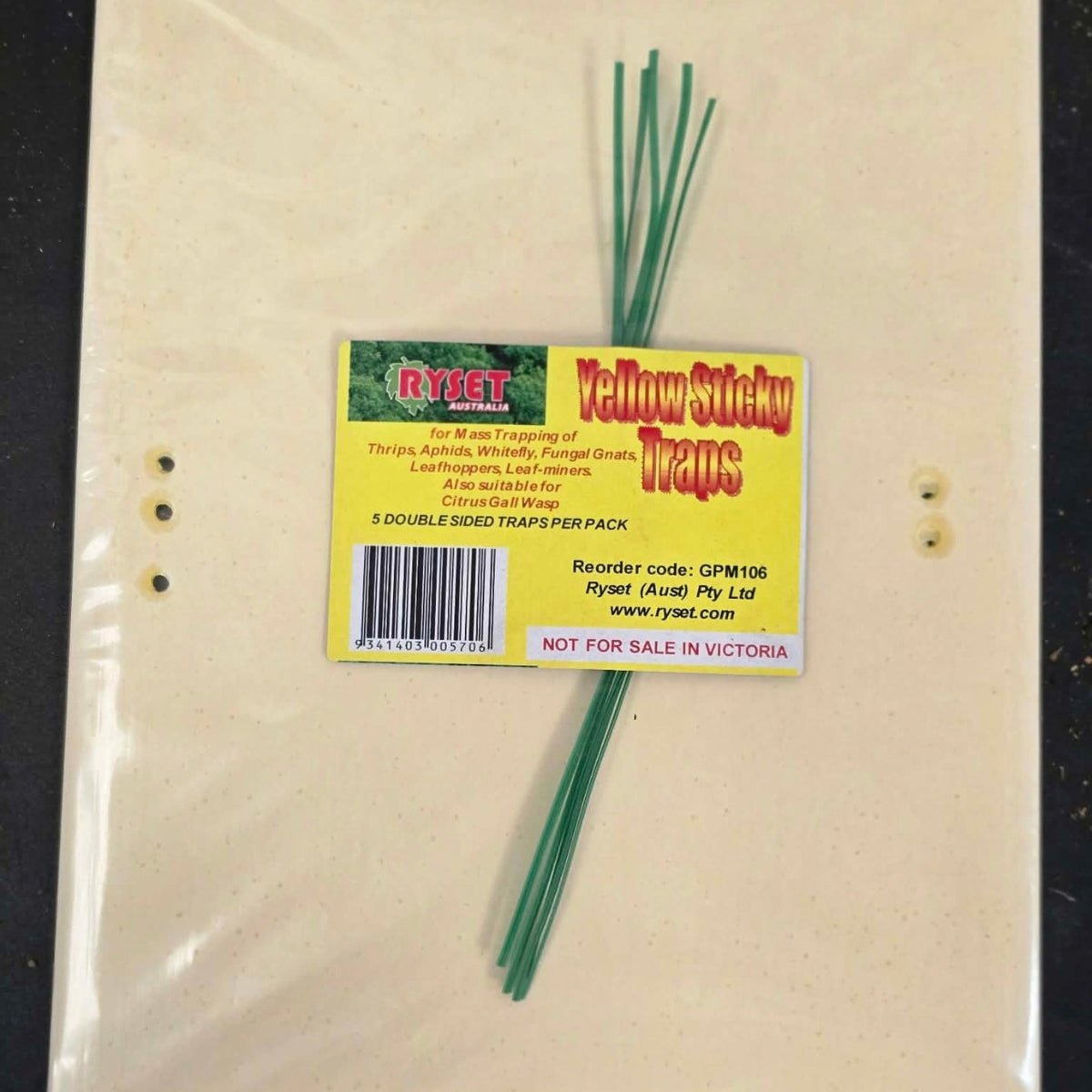
Monitor and reduce populations of small flying insect pests with these easy-to-use Yellow Sticky Traps.
The bright yellow surface attracts many common flying pests, which become caught on the adhesive coating. They provide a pesticide-free physical trapping method for indoor plants, propagation areas, greenhouses, shade houses and other protected growing environments.
Available as a convenient Pack of 5 or economical Bulk Pack of 20.
Available Pack Sizes
-
Pack of 5 – Ideal for indoor plants and smaller growing areas
-
Bulk Pack of 20 – Ideal for larger collections, greenhouses, shade houses and nurseries
May Help Monitor and Capture
-
Fungus gnats
-
Whiteflies
-
Winged aphids
-
Thrips
-
Leaf miners
-
Other small flying insect pests
Key Features
-
Bright yellow surface attracts many flying insect pests
-
Adhesive coating physically captures insects
-
Helps identify pest activity before populations become severe
-
Contains no insecticide
-
Suitable for ongoing pest monitoring
-
Easy to position near affected plants
-
Useful for indoor and protected growing environments
-
Available in packs of 5 and 20
-
Suitable for home gardeners, collectors and nurseries
Suitable Uses
-
Indoor plants
-
Seedling and propagation areas
-
Greenhouses
-
Shade houses
-
Orchid-growing areas
-
Plant collections
-
Vegetable seedlings
-
Potted herbs
-
Nursery benches
-
Protected garden areas
How to Use
-
Remove the protective covering from the adhesive surface.
-
Secure the trap to a suitable stake, clip, string or holder.
-
Position it close to the affected plants without allowing the adhesive to touch leaves.
-
For fungus gnats, position the trap close to the potting-mix surface.
-
For whiteflies and other foliage pests, position it just above or beside the plant canopy.
-
Inspect traps regularly to monitor insect activity.
-
Replace when the surface becomes covered with insects, dust or plant debris.
Use several traps throughout larger growing areas for more effective monitoring.
Important Information
-
Sticky traps capture adult flying insects but do not control eggs, larvae or soil-dwelling life stages
-
Severe infestations may require additional pest-management measures
-
Traps may also capture beneficial insects if positioned outdoors
-
Avoid placing traps directly among open flowers visited by bees and other pollinators
-
Keep the adhesive away from foliage, flowers, clothing, hair and painted surfaces
-
Use with care around birds, lizards and other small animals
-
Pack contents may be folded or separated depending on the supplied design
-
Trap colour, shape and packaging may vary slightly from the images shown
Safety and Handling
-
Wear gloves when handling and wash hands afterwards
-
Keep out of reach of children and pets
-
Avoid touching the adhesive unnecessarily
-
If adhesive contacts skin, remove it gently using vegetable oil before washing with soap and water
-
Dispose of used traps with household waste
-
Store unused traps in a cool, dry location away from direct sunlight
Frequently Asked Questions
What insects do yellow sticky traps attract?
They may attract fungus gnats, whiteflies, winged aphids, thrips, leaf miners and other small flying insects. Results will vary according to the pest species and trap position.
Will the traps eliminate an infestation?
They help monitor pest activity and reduce the number of adult flying insects. They will not control eggs or larvae, so additional treatment may be required for established infestations.
Where should I position them for fungus gnats?
Place the traps close to the surface of the potting mix, where adult fungus gnats are most active.
Where should I place them for whiteflies?
Position the traps just above or alongside the plant canopy. Check the undersides of leaves regularly for eggs and immature whiteflies.
Can they be used around indoor plants?
Yes. They are particularly useful around indoor plants because they capture flying insects without releasing pesticide sprays into the home.
Can they be used outdoors?
Yes, but use them carefully. Outdoor traps may accidentally capture beneficial insects, so keep them away from open flowers and areas frequently visited by pollinators.
When should I replace a trap?
Replace it once most of the adhesive surface is covered with insects, dust or debris, or whenever it is no longer effectively sticky.
Which pack should I choose?
The Pack of 5 is suitable for indoor plants and small growing areas. The Bulk Pack of 20 provides better value for larger collections, greenhouses, shade houses and nursery use.