


Viburnum odoratissimum ‘VOQ1’ PBR Quick Fence™ | Fast-Growing Privacy Hedge
- Regular price
-
$6.10 - Regular price
-
$6.50 - Sale price
-
$6.10
Couldn't load pickup availability
Shipping information
Shipped from Wardell, NSW. Shipping is calculated at checkout by weight, cubic weight and location.
Standard delivery is usually 2–8 business days. WA, NT and TAS may take 14–30 business days due to biosecurity inspection.
Free local pickup is available from 1335 Wardell Road, Wardell NSW for eligible postcodes within 50km. Travelling through or need something urgently? Please contact us before ordering, as some items may need to be ordered in.
Returns
If you aren't happy with your order. we accept returns.


Description
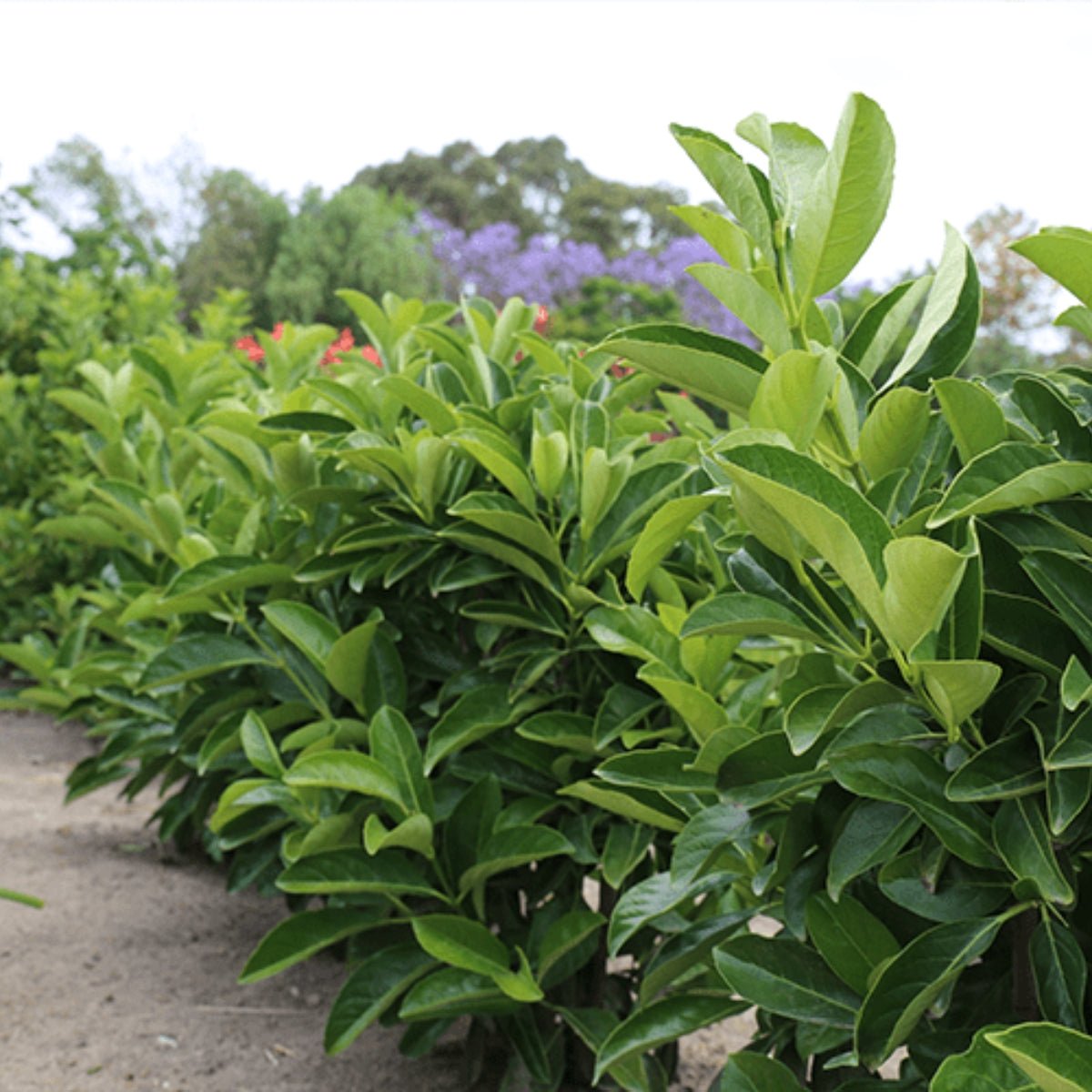
Viburnum odoratissimum ‘VOQ1’ PBR Quick Fence™, commonly known as Quick Fence Viburnum or Sweet Viburnum, is a fast-growing evergreen shrub selected for its dense, upright habit and glossy mid-green foliage.
Unlike more vertical shape, making it particularly useful for privacy hedges, boundary screens, garden dividers and evergreen backdrops where available width is limited.
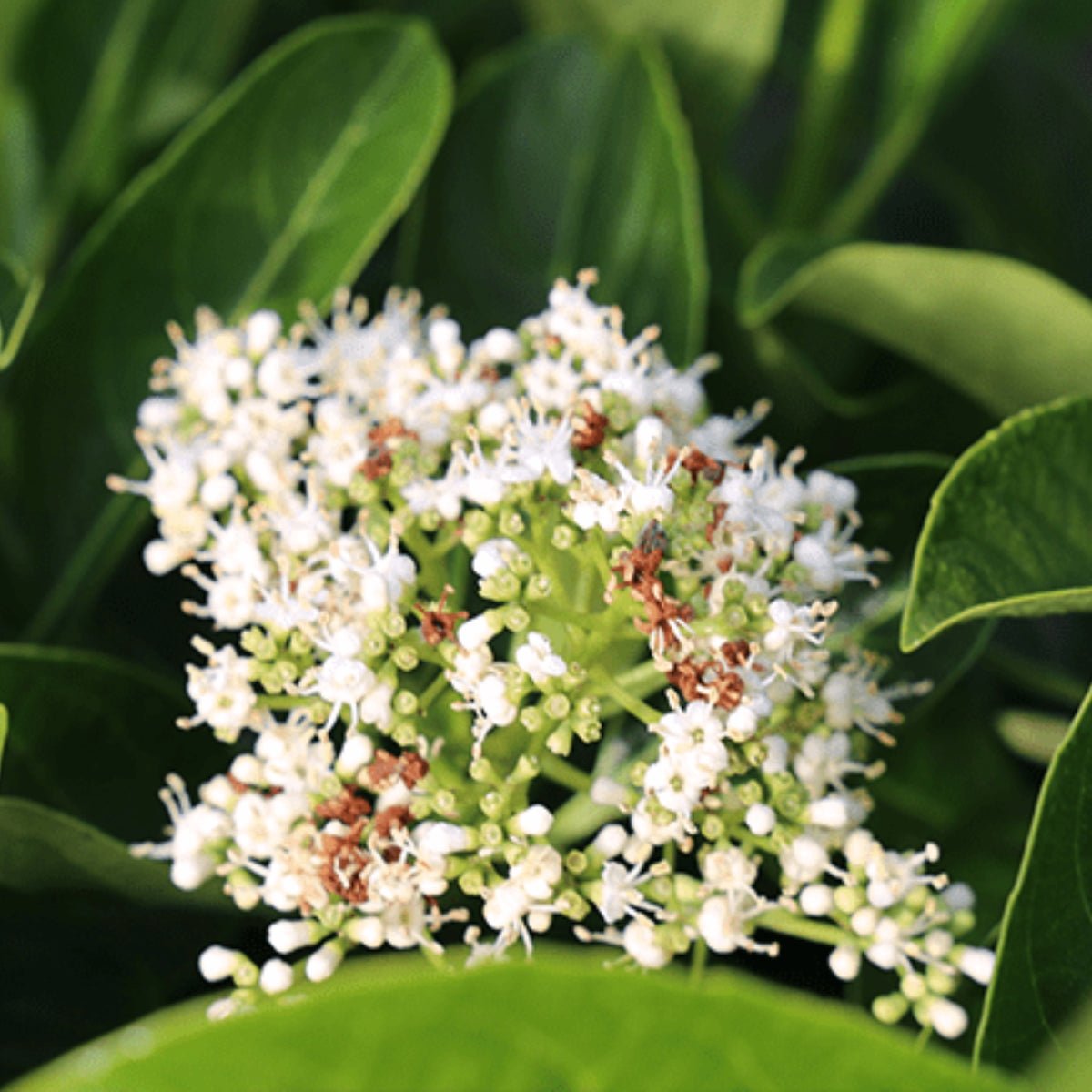
Clusters of small white flowers appear from late spring, followed by small red fruit on mature, unpruned plants. New foliage may develop attractive copper tones during cooler weather before maturing to glossy green.
Quick Fence™ performs across subtropical, warm-temperate and cool-temperate Australian climates. It tolerates heat, humidity, coastal conditions and light frost once established, provided it is planted in freely draining soil and receives adequate water during establishment.
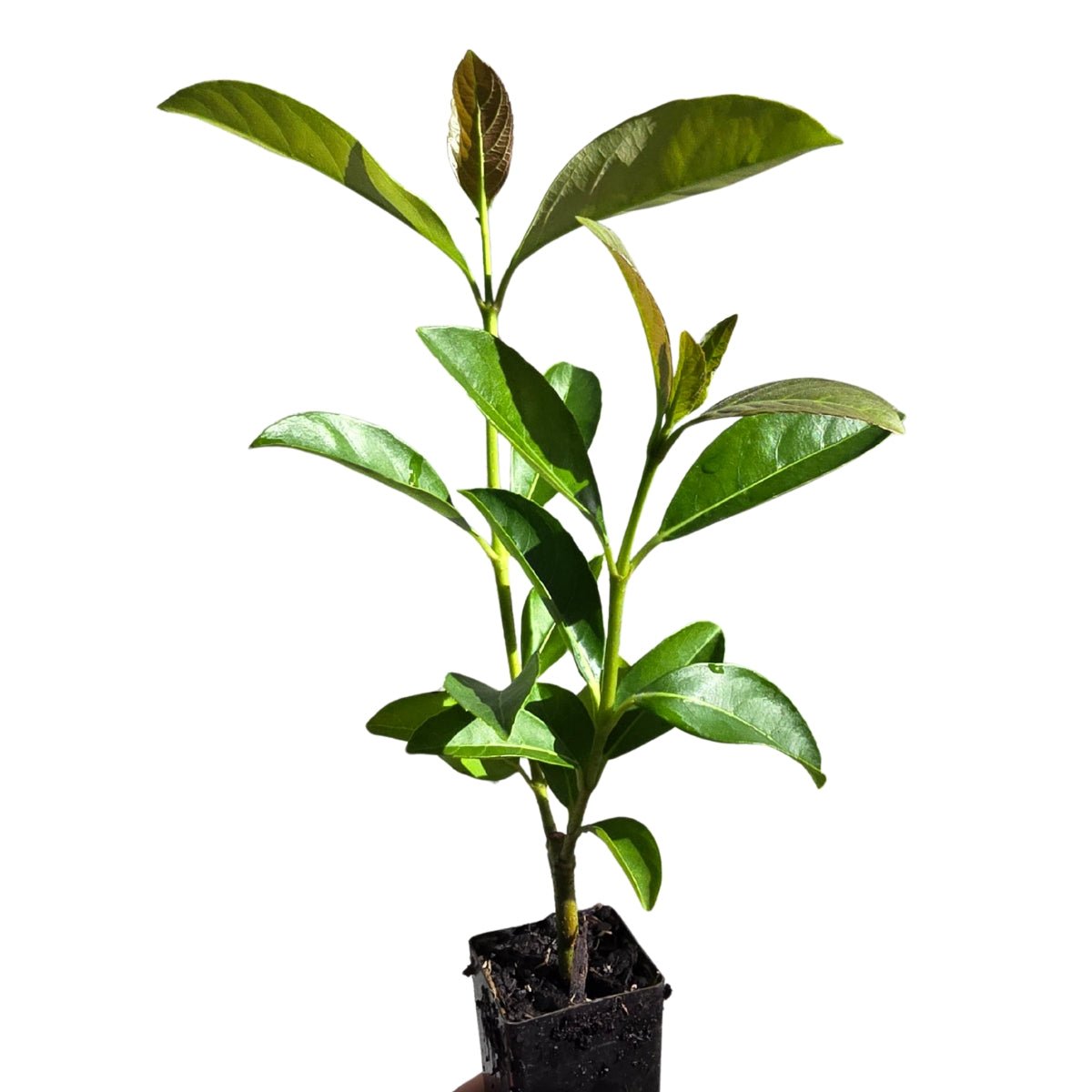
Supplied as a young live plant in a 50mm tube.
Plant Size Note
Supplied as a young live plant in a 50mm tube.
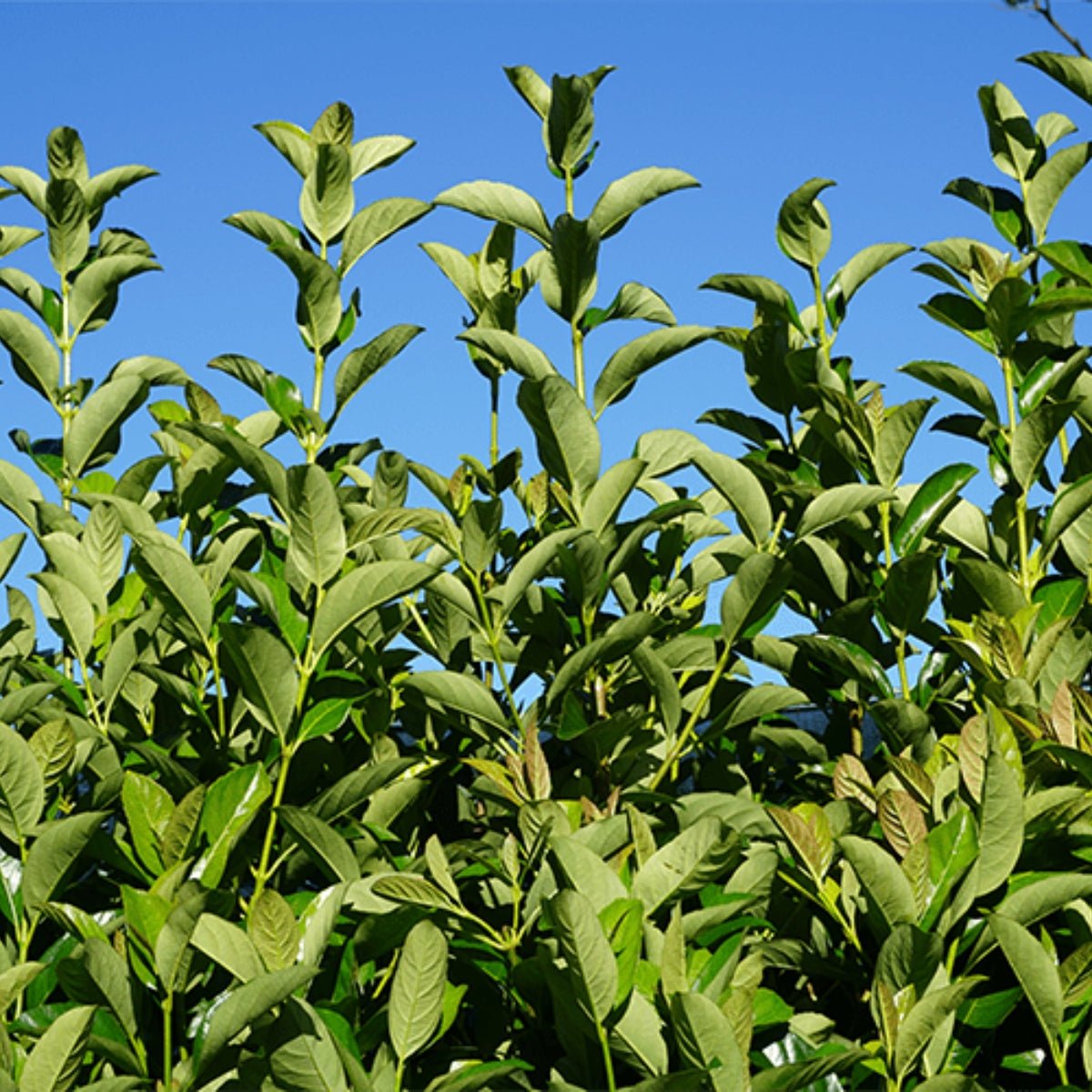
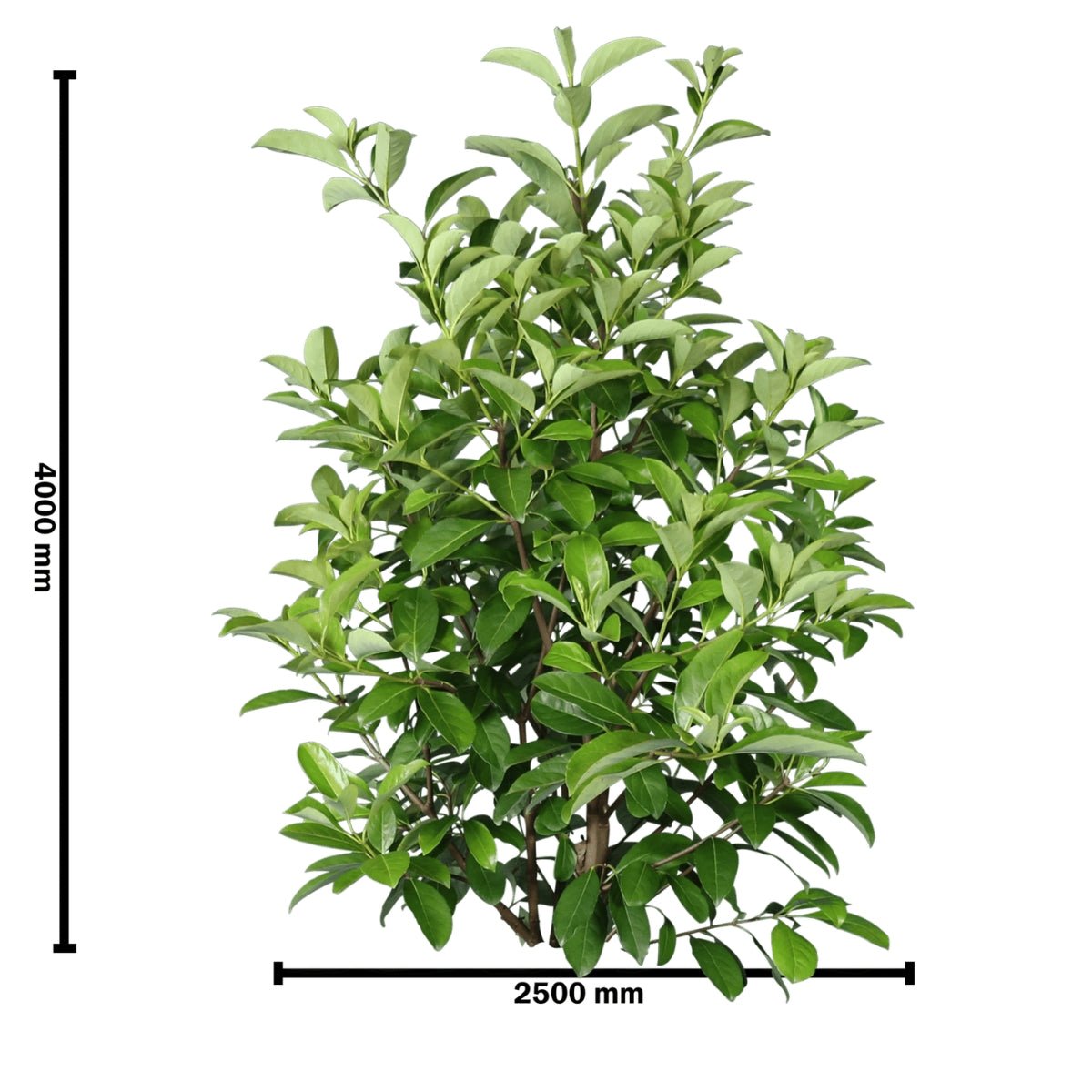
Plants supplied in 50mm tubes are small starter plants and will require growing time before forming the tall, dense hedge shown in mature example images.
Your plant may have a single main stem or limited branching when dispatched. It may not be flowering or fruiting at the time of delivery.
Height, branching, foliage density and seasonal appearance will vary naturally between individual plants.
Features
- Fast-growing evergreen screening plant
- Dense, upright and relatively narrow growth habit
- Large glossy mid-green leaves
- Copper-toned young foliage may appear in cooler weather
- Small white flowers from late spring
- Small red fruit may follow the flowers
- Suitable for formal hedges and informal privacy screens
- Grows in full sun or part shade
- Adaptable to a wide range of Australian soil types
- Tolerates light frost once established
- Performs well in warm and humid climates
- Can be maintained at a lower height through regular pruning
- Protected by Plant Breeder’s Rights in Australia
Flower Colour
Quick Fence™ Viburnum produces clusters of small white flowers from late spring.
The flowers are not its main ornamental feature, as this variety is primarily grown for its glossy evergreen foliage, upright growth and ability to form a dense privacy screen.
Regular hedge pruning may remove developing flower buds and reduce or prevent flowering.
Growth Habit and Mature Size
Quick Fence™ has a fast-growing, upright and densely branched habit. It has been selected to grow more vertically and with less width than many standard forms of Viburnum odoratissimum.
When allowed to grow without height restriction, it can reach approximately:
Mature Height: 4 metres
Mature Width: 2.5 metres
The mature size will depend on climate, soil quality, water availability, planting density and pruning.
It can be maintained as a hedge approximately 1.5–3 metres high through regular trimming. Plants kept substantially below their natural mature size will require more frequent pruning.
For hedging and screening, the breeder recommends approximately one plant every 1–2 linear metres. Closer spacing will generally create a solid screen sooner, while wider spacing allows each plant more room to develop.
Do not plant directly against fences, buildings or other structures. Allow sufficient room for future growth and access for pruning.
Plant Characteristics
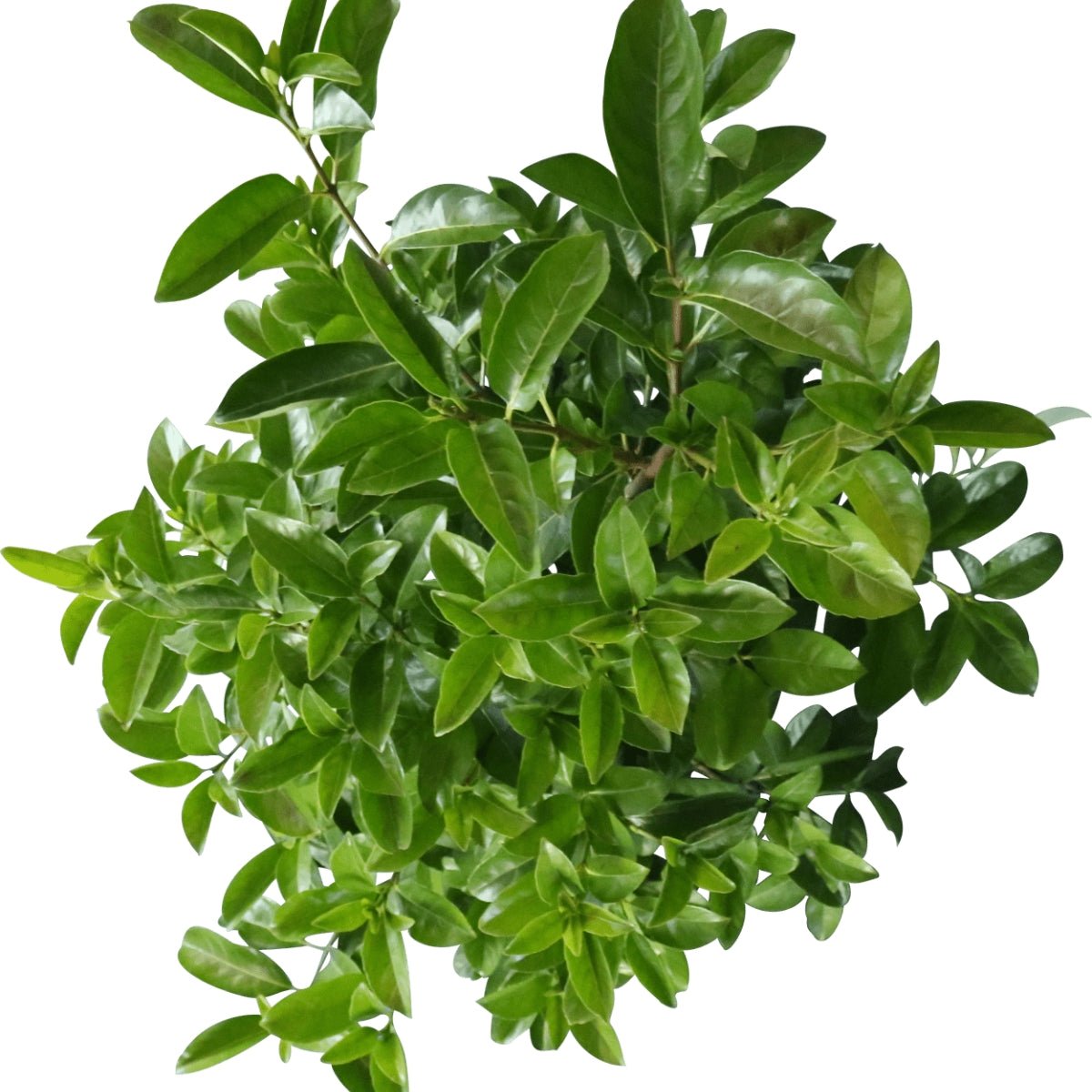
Quick Fence™ produces large, oval, glossy leaves with a mid-green colour. New foliage may display bronze or copper tones, particularly during cooler periods.
Its dense evergreen foliage provides year-round screening in suitable climates. Some leaf thinning or damage may occur during severe frost, prolonged drought, waterlogging or other environmental stress.
The plant develops woody stems and can be maintained as a multi-stemmed shrub, tall hedge or small screening tree.
Small red fruit may form after flowering on mature plants. Fruit production is less likely where the plant is regularly clipped as a formal hedge.
Plant Class and Life Cycle
Quick Fence™ is a woody evergreen flowering shrub or small tree from the Adoxaceae family.
It is a long-lived perennial and retains its foliage throughout the year in suitable Australian climates.
Viburnum odoratissimum is an exotic species originating from parts of Asia. Quick Fence™ ‘VOQ1’ is a selected cultivated variety protected by Plant Breeder’s Rights in Australia.
Planting and Care
Plant into prepared soil at approximately the same depth as the plant was growing in its tube. Do not bury the stem or place a deep layer of soil over the top of the root ball.
Water thoroughly after planting and maintain regular moisture while the root system establishes.
The breeder recommends consistent watering for approximately the first 8–13 weeks. A 50mm tube plant has a small root system and may require monitoring for longer during hot, windy or dry weather.
Apply a layer of chunky organic mulch around the root zone to conserve moisture and reduce weed competition. Keep mulch several centimetres away from direct contact with the stems.
For a straight hedge, mark the planting line before digging and position each plant at consistent spacing.
Young plants may benefit from light tip-pruning once established to encourage branching near the base.
Preferred Soil Type
Quick Fence™ is adaptable to a broad range of soils, including:
- Sandy loam
- Improved clay
- Light clay
- Loam
- Fertile garden soil
- Moderately heavy soil with adequate drainage
Although adaptable, it performs best in fertile, well-drained soil containing organic matter.
Improve poor sandy soil with compost to increase moisture and nutrient retention. Heavy or compacted clay should be improved before planting, and raised planting may be necessary where drainage is poor.
Avoid sites that remain permanently waterlogged.
A neutral to slightly acidic soil is generally suitable.
Sunlight
Plant in full sun to part shade.
Full sun generally encourages dense growth and the strongest flowering, provided adequate water is available.
Quick Fence™ can also grow well in part shade. Growth may become more open and flowering may be reduced in heavily shaded positions.
In very hot inland locations, some protection from intense afternoon sun may reduce moisture stress while plants are young.
Watering Needs
Water regularly during establishment, particularly during the first 8–13 weeks after planting.
Continue monitoring young 50mm tube plants during their first summer, as the small root ball can dry out more quickly than the surrounding garden soil.
Once established, Quick Fence™ has moderate water requirements and can tolerate short dry periods. It will produce denser foliage and stronger growth when supplied with occasional deep watering during extended hot or dry weather.
Water deeply rather than applying frequent shallow watering. This encourages the roots to grow further into the surrounding soil.
Container-grown plants will require more frequent watering than plants growing in the ground.
Avoid continuously saturated soil.
Flowering and Fruiting Season
Small white flowers generally appear from late spring into summer.
Flowering time may vary according to climate, pruning, plant maturity and seasonal conditions.
Small red fruit may follow the flowers and may darken as it matures. Fruiting cannot be guaranteed and is often limited on regularly pruned hedges.
The fruit is ornamental and should not be promoted for human consumption.
Australian Climate and Hardiness
Quick Fence™ can be grown across a wide range of Australian climates, including:
- Tropical climates with adequate drainage
- Subtropical climates
- Warm-temperate climates
- Cool-temperate climates
- Mild coastal districts
- Sheltered inland gardens
- Areas experiencing occasional light frost
It is particularly useful in warm, humid areas where rapid evergreen screening is required.
Local performance will depend on soil drainage, water availability, exposure and the severity of winter conditions.
Frost Tolerance
Quick Fence™ tolerates moderate cold and light frost once established.
Young 50mm tube plants are more vulnerable to frost than mature hedges. Protect recently planted stock from frost until it has developed a stronger root system and woody framework.
Repeated heavy frost may burn foliage and damage soft new growth. In colder areas, plant in a protected position away from frost hollows and severe winter winds.
Heat and Humidity Tolerance
This variety performs well in warm and humid tropical and subtropical climates.
Established plants tolerate summer heat when adequate soil moisture is available. Young plants may suffer leaf scorch or wilt if exposed to extreme heat, dry soil and hot winds.
Mulching and deep watering are recommended during extended hot periods.
Good drainage and airflow remain important in humid gardens.
Coastal Tolerance
Quick Fence™ is suitable for many mild coastal gardens.
It can tolerate normal coastal conditions but should be protected from severe beachfront exposure, persistent salt-laden winds and direct salt spray.
Provide regular water while plants establish in sandy coastal soil.
Drought Tolerance
Quick Fence™ has moderate drought tolerance once established but is not best treated as a no-water plant.
Extended drought may cause sparse growth, leaf drop, reduced flowering and slower hedge development.
Occasional deep watering during prolonged dry weather will help maintain dense foliage.
Suitable Spaces and Landscape Uses
Quick Fence™ Viburnum is suitable for:
- Privacy hedges
- Boundary screens
- Formal clipped hedges
- Informal evergreen screens
- Garden dividers
- Screening neighbouring properties
- Hiding sheds, tanks or utility areas
- Driveway planting
- Large garden beds
- Tropical-style landscapes
- Subtropical gardens
- Courtyards with sufficient growing space
- Commercial landscapes
- Large containers
- Evergreen garden backdrops
Its upright habit is useful where a tall screen is required without the excessive width of broader-growing Viburnum varieties.
It is not naturally a dwarf plant. Regular pruning will be required where it is planted in narrow garden beds or maintained substantially below its natural height.
Growing in Pots
Quick Fence™ can be grown in a large container, particularly while young or where a controlled evergreen screen is required.
Use a premium potting mix suitable for trees and shrubs and select a stable container with generous drainage holes.
Increase the pot size gradually as the plant grows rather than placing a small tube plant directly into an excessively large volume of wet potting mix.
Container-grown plants require:
- More frequent watering
- Regular controlled-release fertiliser
- Periodic pruning
- Occasional repotting or root management
- Protection from the pot overheating in extreme sun
This is naturally a large shrub, so long-term container growth will require a substantial pot and ongoing size control.
Pruning
Quick Fence™ responds well to pruning and can be maintained as either a formal hedge or a softer informal screen.
Tip-prune young plants after establishment to encourage low branching and dense growth from near the base.
For a neat formal hedge, pruning may be required two or more times during the active growing season. Fast growth in warm, humid climates may require more frequent trimming.
Informal screens can be pruned less frequently.
Trim the top slightly narrower than the base so sunlight can reach the lower foliage. This helps reduce bare growth near ground level.
Avoid removing large amounts of foliage during extreme heat, drought or immediately before severe cold weather.
Regular pruning may reduce flowering and fruit production.
Fertilising
Apply a controlled-release fertiliser suitable for evergreen shrubs and hedges during spring.
A second light application may be beneficial during summer in warm climates or where rapid hedge growth is required.
Apply fertiliser according to the product directions. Excessive fertiliser can produce overly soft growth that requires additional pruning.
Compost or aged organic matter can be applied around the root zone to improve soil structure and nutrient availability.
Water before and after applying granular fertiliser and keep concentrated products away from direct contact with stems and young roots.
Pollinator and Wildlife Value
The white flower clusters may attract bees and other pollinating insects.
Small fruit may be eaten and dispersed by birds. Wildlife activity will vary according to location, plant maturity and whether flowers and fruit are removed during hedge pruning.
Quick Fence™ is an exotic ornamental plant and should not be considered a replacement for locally native habitat species.
Environmental Responsibility
Viburnum odoratissimum has naturalised and is regarded as an environmental weed in some parts of eastern Australia, including areas of coastal New South Wales and south-east Queensland.
The species is not generally prohibited from sale at state level, but local council recommendations and planting restrictions can vary.
Avoid planting near rainforest, waterways, reserves or other environmentally sensitive bushland where birds may spread the fruit.
In areas where Sweet Viburnum has demonstrated weed potential:
- Keep the plant regularly clipped
- Remove flower or fruit clusters before fruit matures
- Do not dump prunings in bushland
- Dispose of fruiting material responsibly
- Check current local council weed guidance before planting
Regular hedge pruning generally reduces flowering and fruit production.
Pet Safety
The pet toxicity status of Viburnum odoratissimum ‘VOQ1’ Quick Fence™ has not been clearly established through widely recognised Australian veterinary references.
Some other Viburnum species are listed as non-toxic by overseas animal welfare references, but this does not provide sufficient cultivar-specific evidence to advertise Quick Fence™ as pet-safe.
Keep the plant, fruit and trimmed material away from pets that chew garden plants.
Consumption of any unfamiliar ornamental plant material may cause gastrointestinal upset. Seek veterinary advice if a pet develops symptoms after chewing or swallowing plant material.
Product Details
Plant Name: Quick Fence™ Viburnum
Botanical Name: Viburnum odoratissimum ‘VOQ1’ PBR
Common Names: Quick Fence Viburnum, Sweet Viburnum, Quick Fence Hedge
Cultivar: ‘VOQ1’
Trade Name: Quick Fence™
Plant Family: Adoxaceae
Plant Class: Evergreen woody shrub or small tree
Plant Life Cycle: Perennial
Plant Material: Young live plant supplied in a 50mm tube
Flower Colour: White
Flower Form: Small flowers held in clusters
Foliage: Large, glossy mid-green leaves with occasional copper-toned new growth
Growth Habit: Fast-growing, dense, upright and relatively narrow
Mature Height: Approximately 4 metres
Mature Width: Approximately 2.5 metres
Recommended Hedge Spacing: Approximately one plant every 1–2 linear metres
Flowering Season: Late spring into summer
Fruit: Small red fruit may follow flowering
Sunlight: Full sun to part shade
Preferred Soil: Fertile, well-drained soil; adaptable to a wide range of soil types
Watering Needs: Regular during establishment; moderate once established
Australian Climate: Tropical, subtropical, warm-temperate and cool-temperate climates
Frost Tolerance: Tolerates light frost once established
Heat Tolerance: Good with adequate soil moisture
Humidity Tolerance: Suitable for humid tropical and subtropical conditions
Coastal Tolerance: Suitable for mild coastal areas with protection from severe salt exposure
Drought Tolerance: Moderate once established
Pet Safety: Not confirmed as pet-safe through widely recognised Australian veterinary references
Pollinator Friendly: Flowers may attract bees and other pollinating insects
Bird Attracting: Fruit may attract birds
Suitable Spaces: Privacy hedges, screens, boundaries, driveways, large beds and containers
Pot Suitability: Suitable for large containers with regular pruning, watering and fertilising
Pruning: Prune as required; formal hedges may need two or more trims during active growth
PBR Status: Protected by Plant Breeder’s Rights in Australia
Shipping Restrictions: State, territory and regional biosecurity restrictions may apply
PBR Warning
Quick Fence™ Viburnum odoratissimum ‘VOQ1’ PBR is protected by Plant Breeder’s Rights in Australia.
Unauthorised propagation, reproduction or sale of propagated plant material is prohibited.
Do not take cuttings or otherwise propagate this variety for resale or commercial purposes without permission from the rights holder.
Important Note
Images show mature, established plants and are provided as examples only.
You will receive a young starter plant in a 50mm tube. It may have a single young stem, limited branching and may not be flowering or fruiting when dispatched.
Plant height, branching, foliage density, leaf colour and seasonal appearance will vary naturally between individual plants.
The plant will require growing time and appropriate pruning before forming the tall, dense screen shown in mature hedge images.
Plants may be lightly trimmed before dispatch where required for safe transport and healthy future growth.
Growth speed cannot be guaranteed. Climate, soil, watering, sunlight, fertilising, planting density and pruning will influence the time required to form a complete hedge.
Biosecurity and Shipping
State, territory and regional biosecurity restrictions may apply to live plants.
Please check whether this plant can be sent to your delivery address before ordering.
Local councils may also provide specific guidance regarding the planting of Viburnum odoratissimum near environmentally sensitive areas.
Orders placed for restricted destinations may need to be cancelled and refunded.
Biosecurity and local weed-management requirements may change without notice.
Frequently Asked Questions
What size plant will I receive?
You will receive a young live Quick Fence™ Viburnum plant supplied in a 50mm tube. This is a small starter plant that requires time to establish and develop into a mature hedge.
Will my plant arrive as a dense hedge plant?
No. A 50mm tube plant may have a single main stem or limited branching. Tip-pruning after establishment will encourage denser growth near the base.
Will it arrive in flower or fruit?
Flowering or fruiting at the time of dispatch cannot be guaranteed. Young plants are generally supplied for establishment and foliage growth rather than immediate flowering.
How quickly does Quick Fence™ grow?
Quick Fence™ is classified as a fast-growing screening variety. Actual growth will depend on climate, soil, water, fertiliser, sunlight and plant health.
How large does Quick Fence™ grow?
It can reach approximately 4 metres high and 2.5 metres wide when allowed to grow naturally. It can be maintained at a lower height through regular pruning.
How far apart should Quick Fence™ Viburnum be planted?
The breeder recommends approximately one plant every 1–2 linear metres. Use closer spacing where a solid hedge is required sooner and wider spacing for a more open screen.
Is Quick Fence™ narrower than regular Sweet Viburnum?
Yes. Quick Fence™ was selected for its tighter, more upright growth habit and does not spread as widely as many standard Sweet Viburnum forms.
Is it evergreen?
Yes. It retains glossy green foliage throughout the year in suitable climates. Severe frost, drought or waterlogging may cause temporary leaf damage or thinning.
What colour are the flowers?
The flowers are white and appear in small clusters.
When does Quick Fence™ flower?
Flowering generally begins in late spring and may continue into summer. Regular hedge pruning can reduce flowering.
Does it produce berries?
Small red fruit may follow the flowers on mature, unpruned plants. Fruit production is not guaranteed and is often reduced by regular clipping.
Is the fruit edible?
The fruit should not be promoted for human consumption.
Does Quick Fence™ grow in full sun?
Yes. It grows well in full sun when adequate moisture is available.
Can it grow in part shade?
Yes. It tolerates part shade, although very deep shade may result in more open growth and reduced flowering.
What soil does it prefer?
It prefers fertile, well-drained soil but adapts to sandy loam, loam and improved clay. Avoid permanently waterlogged ground.
How often should it be watered?
Water regularly for at least the first 8–13 weeks and continue monitoring small tube plants during hot or dry weather. Established plants benefit from deep watering during extended dry periods.
Is it drought tolerant?
It has moderate drought tolerance once established but maintains denser foliage when watered during prolonged dry weather.
Is it frost tolerant?
Established plants tolerate light frost and moderate cold. Young tube plants should be protected from frost while establishing.
Is it suitable for subtropical Australian gardens?
Yes. Quick Fence™ performs well in subtropical climates and tolerates heat and humidity when planted in well-drained soil.
Can it grow in cooler Australian climates?
Yes. It can grow in warm-temperate and cool-temperate areas, particularly where heavy or repeated frost is avoided.
Is it suitable for coastal gardens?
It is suitable for many mild coastal gardens but should be protected from severe ocean winds and direct salt spray.
Can Quick Fence™ grow in a pot?
Yes. It can grow in a large container with good drainage, regular watering, fertiliser and pruning. It is naturally a large shrub and will eventually require a substantial pot.
How often does it need pruning?
Informal screens can be pruned as required. Formal hedges may require two or more trims during the active growing season, particularly in warm, humid climates.
Will regular pruning stop it flowering?
Regular trimming may remove developing flower buds and reduce or prevent flowering and fruiting.
Does it spread through underground runners?
No. It does not normally spread by underground runners. However, birds may disperse seeds from fruiting plants.
Can it become a weed?
Viburnum odoratissimum has naturalised in some parts of coastal NSW and south-east Queensland. Check local guidance, avoid planting near bushland and remove fruiting clusters where environmental spread is a concern.
Does it attract bees or birds?
The flowers may attract bees and other pollinating insects. Fruit may attract birds where it is allowed to develop.
Is Quick Fence™ pet-safe?
Its cultivar-specific pet toxicity status has not been clearly established through widely recognised Australian veterinary references. It should not be advertised as pet-safe.
Can I propagate Quick Fence™ from cuttings?
Quick Fence™ ‘VOQ1’ is protected by Plant Breeder’s Rights. Unauthorised propagation, reproduction and commercial sale of propagated plants are prohibited.
Are there biosecurity restrictions?
State, territory and regional biosecurity restrictions may apply. Local council environmental weed guidance may also vary according to the delivery and planting location.