


Russelia ‘Tangerine Falls’ | equisetiformis - Apricot-Orange Firecracker Plant
- Regular price
-
$4.40 - Regular price
-
$7.00 - Sale price
-
$4.40
Couldn't load pickup availability
Shipping information & Pickup
Shipped from Wardell, NSW. Shipping is calculated at checkout by weight, cubic weight and location.
Standard delivery is usually 2–8 business days. WA, NT and TAS may take 14–30 business days due to biosecurity inspection.
Free Local Pickup: Enter 1335 Wardell Road, Wardell NSW 2477 as the delivery address at checkout to display this option. Free delivery is available within 2 km. Travelling through or need something urgently? Contact us first, as some items may need to be ordered in.
Returns
If you aren't happy with your order. we accept returns.

Description
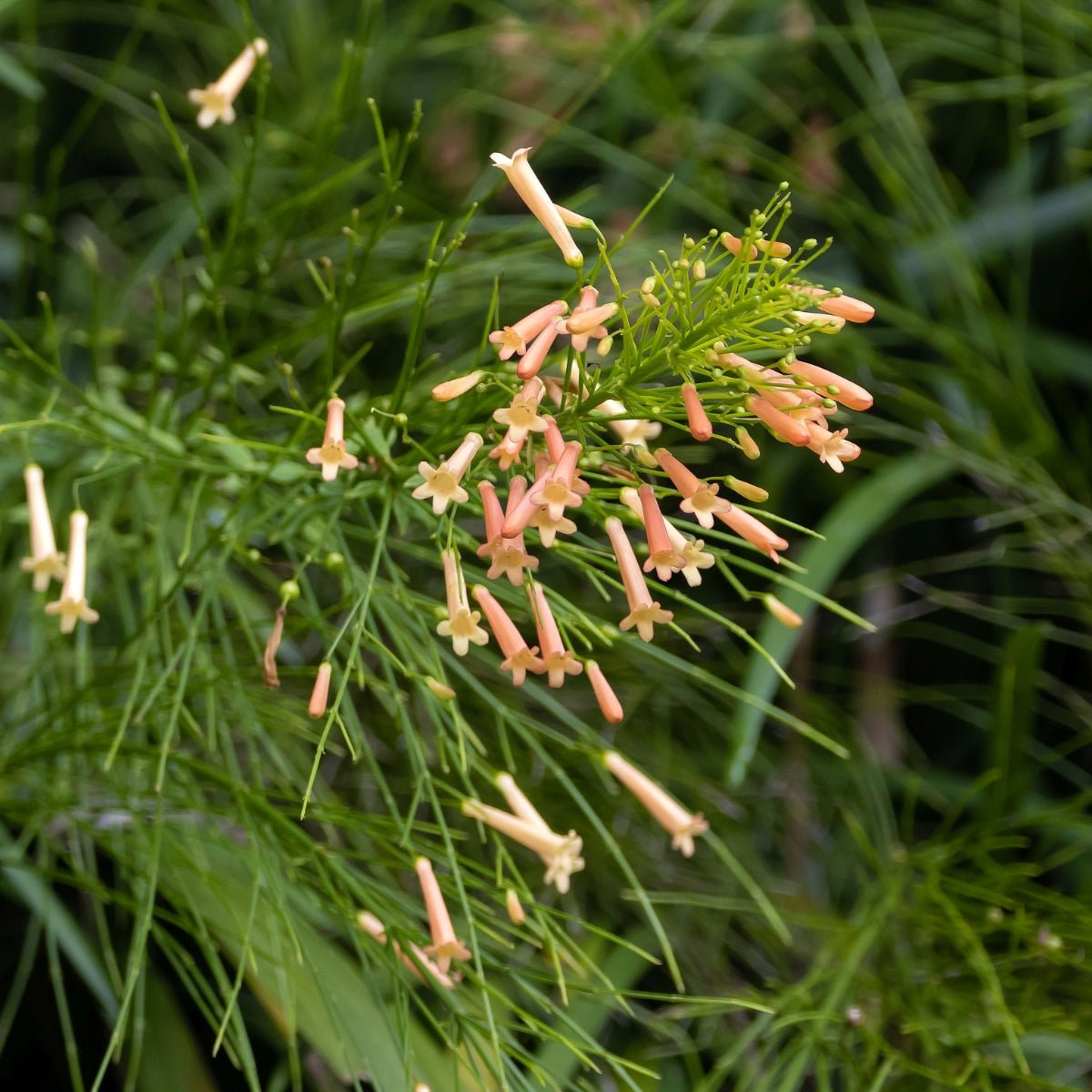
Create a flowing display of fine green foliage and warm apricot-orange flowers with Russelia ‘Tangerine Falls’, an evergreen to semi-evergreen flowering perennial commonly known as the Orange Firecracker Plant.
This decorative cascading plant produces long, slender stems covered in narrow tubular flowers ranging from soft peach and apricot to warm tangerine orange. Its arching, weeping growth habit makes it particularly effective when planted above retaining walls, along banks and slopes, or in hanging baskets and raised containers.
Flowering is generally strongest from late spring through summer, with flowers often continuing into autumn in warm Australian climates. In tropical and subtropical regions, scattered flowers may appear at other times of the year.
The nectar-rich blooms can attract small nectar-feeding birds, butterflies, bees and other beneficial pollinators.
Plant Size Note
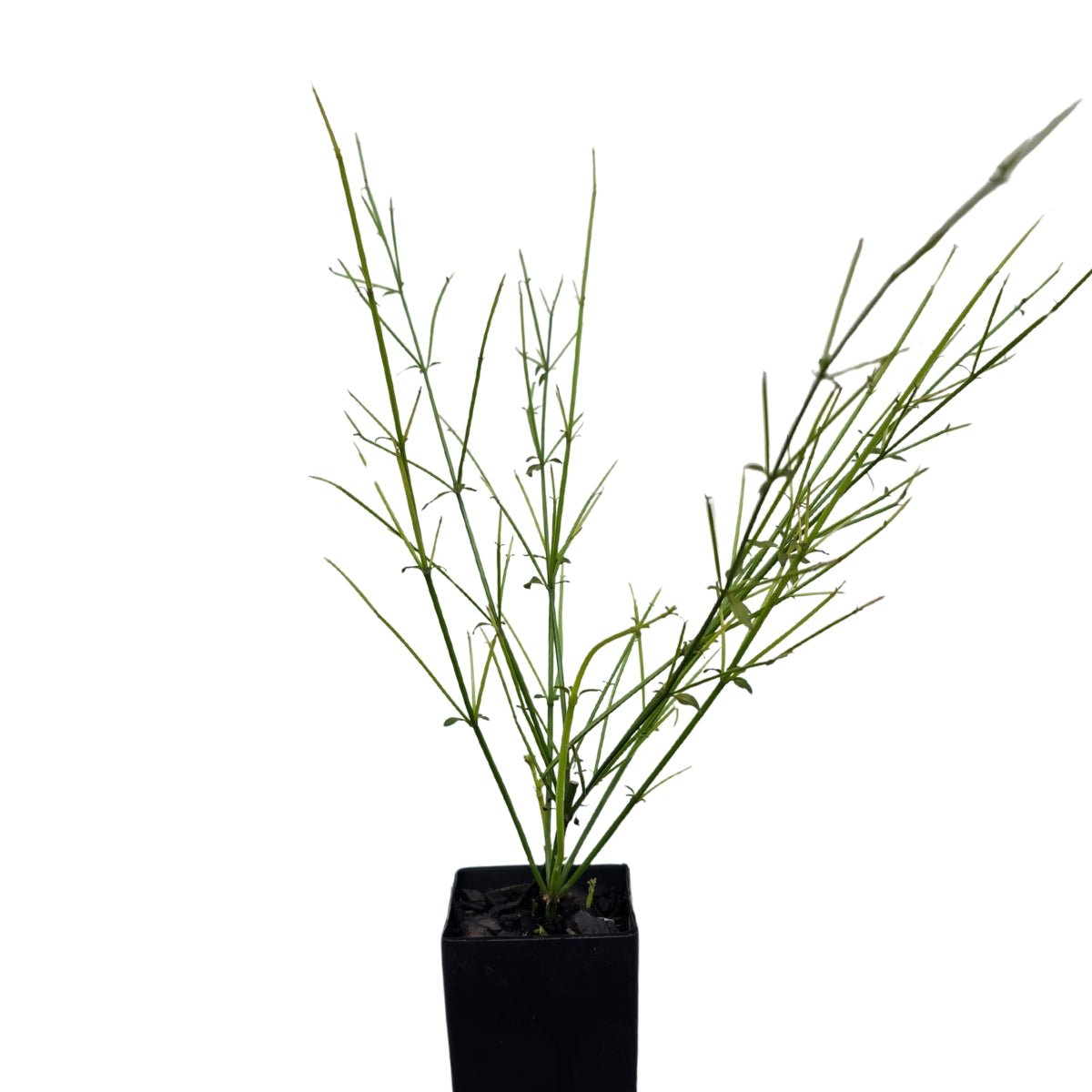
Supplied as a young live plant in a 42mm tube.
Plants supplied in 42mm tubes are small starter plants and require time to establish before reaching the mature size shown in example images.
Plants may not be flowering when dispatched. Height, branching, stem length, foliage and seasonal appearance will vary naturally between individual plants.
Features
- Russelia equisetiformis ‘Tangerine Falls’
- Commonly known as Tangerine Falls Russelia or Orange Firecracker Plant
- Peach, apricot and tangerine-orange tubular flowers
- Fine green foliage on slender stems
- Cascading, arching, weeping and spreading growth habit
- Flowers mainly from late spring through summer
- Flowering may continue into autumn in warm climates
- Evergreen in warm frost-free areas
- May become semi-evergreen in cooler regions
- Nectar-rich flowers attract birds and pollinators
- Suitable for tropical, subtropical and warm-temperate Australian gardens
- Drought tolerant once established
- Suitable for full sun to part shade
- Excellent for pots, hanging baskets, walls, banks and slopes
- Responds well to pruning
- Supplied in a 42mm tube
Flower Colour
Tangerine Falls produces tubular flowers in warm tones of:
- Peach
- Apricot
- Soft orange
- Tangerine orange
Flower colour may appear slightly lighter or deeper depending on sunlight, plant maturity, temperature and seasonal conditions.
Growth Habit
Russelia ‘Tangerine Falls’ has a naturally arching, cascading and spreading growth habit.
Its long, slender stems curve outward and trail downwards, making it particularly suitable for planting where the growth can spill over an edge.
The plant commonly grows approximately:
- Height: 60cm–1m
- Width: 1–1.5m
The stems may trail further when planted above a retaining wall, raised garden bed or elevated container.
Final size will depend on climate, soil, available moisture, pruning and growing space.
Plant Characteristics
Tangerine Falls is valued for its combination of ornamental foliage, long flowering period and adaptable cascading habit.
Plant characteristics include:
- Flowering perennial
- Evergreen to semi-evergreen
- Cascading and spreading
- Bird attracting
- Butterfly attracting
- Bee and pollinator friendly
- Drought tolerant once established
- Suitable for pots and hanging baskets
- Suitable for banks and slopes
- Responsive to pruning
- Suitable for warm Australian climates
Plant Class and Life Cycle
Plant Class: Flowering shrub or subshrub
Plant Life Cycle: Perennial
Foliage Habit: Evergreen in warm frost-free climates and semi-evergreen in cooler areas
This plant continues growing for multiple years when planted in a suitable climate and protected from severe frost.
Planting and Care
Plant Russelia ‘Tangerine Falls’ in full sun to part shade.
Full sun generally encourages the densest growth and strongest flowering. Light part shade is also suitable, although flowering may be reduced where the plant receives limited direct sunlight.
Choose fertile, free-draining soil. Russelia adapts to sandy and loamy soils and may also grow in improved clay where excess water can drain freely.
Avoid planting in areas that remain waterlogged following rain.
Plant at approximately the same depth it was growing in its original tube. Do not bury the stems or plant the root ball too deeply.
Water thoroughly after planting and maintain regular moisture while the young plant establishes.
A young plant supplied in a 42mm tube should not be allowed to dry out completely during its early growth.
Once established, Tangerine Falls develops good tolerance to short dry periods. Additional deep watering during prolonged hot, windy or dry weather will help maintain healthy foliage and continued flowering.
Apply mulch around the root zone to conserve moisture and reduce weeds. Keep mulch slightly away from the centre of the plant.
Feed during spring with a balanced controlled-release fertiliser, following the application rates on the product label.
Preferred Soil Type
Russelia ‘Tangerine Falls’ prefers:
- Fertile soil
- Free-draining soil
- Sandy soil
- Loamy soil
- Organic-rich garden soil
- Improved clay where drainage is suitable
The plant does not perform well in constantly wet or waterlogged soil.
For container growing, use a quality premium potting mix with clear drainage.
Sunlight
Preferred Light: Full sun to part shade
Full sun encourages stronger flowering, compact growth and more abundant blooms.
In very hot inland or exposed locations, some protection from harsh afternoon sun may help reduce moisture stress while the plant is young.
Very dark shade is not recommended, as it can cause weak growth and reduced flowering.
Watering Needs
Water regularly while the young plant establishes.
Once established, Tangerine Falls generally has low to moderate watering needs, although flowering will benefit from additional moisture during extended hot or dry periods.
Allow the soil surface to begin drying between watering, but avoid allowing young plants to remain completely dry for extended periods.
Container-grown plants will require more frequent watering than plants growing in the garden.
Reduce watering during cool or wet weather.
Flowering Season
Flowering is generally strongest from:
- Late spring
- Summer
- Early to mid-autumn
In tropical and subtropical Australian climates, flowering may continue for longer and scattered blooms may appear at other times of the year.
Flowering time and abundance will vary according to climate, rainfall, sunlight, plant maturity and pruning.
Australian Climate and Hardiness
Russelia ‘Tangerine Falls’ performs best in:
- Tropical climates
- Subtropical climates
- Warm-temperate climates
- Frost-free coastal regions
- Warm protected positions in cooler areas
It generally remains evergreen in warm, frost-free regions.
In cooler climates, the plant may become semi-evergreen or lose some foliage during winter.
Tangerine Falls is not considered highly frost tolerant. Hard frost can damage the foliage and stems.
Protect young plants from:
- Hard frost
- Cold drying winds
- Prolonged freezing conditions
In cooler Australian regions, plant it beside a warm wall, under light overhead protection or in a container that can be moved to a sheltered position during winter.
Suitable Spaces
Russelia ‘Tangerine Falls’ is suitable for:
- Retaining walls
- Hanging baskets
- Decorative pots
- Raised garden beds
- Courtyards
- Balconies
- Banks
- Slopes
- Rockeries
- Garden borders
- Poolside planting
- Cottage-style gardens
- Tropical gardens
- Subtropical gardens
- Pollinator gardens
- Bird-attracting gardens
- Mass planting
- Cascading feature planting
Its long trailing stems are most effective where they can hang freely over an edge.
Allow approximately 80cm–1.2m between plants, depending on the desired coverage and how regularly the plants will be pruned.
Growing in Pots and Hanging Baskets
Tangerine Falls is well suited to pots, raised containers and hanging baskets.
Transfer the young plant into a container only slightly larger than its existing root system.
Avoid placing a small 42mm-tube plant directly into an excessively large pot, as the unused potting mix may remain wet for too long.
Use a quality free-draining potting mix and a container with clear drainage holes.
Position the container in full sun or light part shade.
Container-grown plants require:
- More frequent watering
- Regular feeding
- Excellent drainage
- Occasional pruning
- Gradual movement into larger pots
Trim older or untidy stems periodically to encourage fresh growth and maintain a dense cascading shape.
Pruning
Trim Tangerine Falls after a major flowering flush or whenever the stems become untidy.
Pruning can help:
- Encourage fresh branching
- Maintain denser growth
- Control the plant’s spread
- Remove old or damaged stems
- Keep growth clear of paths
- Refresh established plants
- Maintain a compact container plant
Established plants generally respond well to firm pruning when required.
Avoid removing all active growth immediately before the main flowering period.
Spreading Habit
Russelia stems may form roots where they remain in contact with moist soil.
This can be useful when covering banks and slopes but may also allow the plant to spread beyond the original planting area.
Trim trailing stems or remove newly rooted sections where spreading is not wanted.
Growing Tangerine Falls in a pot, hanging basket, raised garden bed or contained planting space can make it easier to manage.
Pet Safety
The pet toxicity status of Russelia equisetiformis is not clearly established through widely recognised Australian veterinary references.
This plant should not be advertised as pet-safe.
Keep the plant and any trimmed material away from pets that chew garden plants.
Product Details
Plant Name: Russelia ‘Tangerine Falls’
Botanical Name: Russelia equisetiformis ‘Tangerine Falls’
Common Names: Tangerine Falls Russelia, Orange Firecracker Plant, Coral Plant
Plant Class: Flowering shrub or subshrub
Plant Life Cycle: Perennial
Plant Material: Young live plant supplied in a 42mm tube
Flower Colour: Peach, apricot and tangerine orange
Flower Form: Narrow tubular flowers
Foliage: Fine green foliage on slender stems
Growth Habit: Cascading, arching, weeping and spreading
Mature Height: Approximately 60cm–1m
Mature Width: Approximately 1–1.5m
Flowering Season: Mainly late spring through summer and into autumn
Sunlight: Full sun to part shade
Preferred Soil: Fertile, organic-rich and free-draining sandy or loamy soil
Watering Needs: Regular while establishing; low to moderate once established
Climate: Tropical, subtropical and warm-temperate Australia
Frost Tolerance: Protect from hard frost
Drought Tolerance: Good once established
Pet Safety: Not confirmed; do not advertise as pet-safe
Pollinator Friendly: Yes
Bird Attracting: Yes
Suitable Spaces: Walls, banks, slopes, pots, hanging baskets, borders and raised gardens
Pruning: Trim as required to control growth and encourage branching
Important Note
Images show mature established plants in flower and are provided as examples only.
You will receive a young starter plant in a 42mm tube. It may have limited branching and may not be flowering when dispatched.
Plant height, stem length, flower colour, foliage and seasonal appearance will vary naturally between individual plants.
Long stems may be lightly trimmed before dispatch where required for safe transport and healthy future growth.
Biosecurity and Shipping
State, territory and regional biosecurity restrictions may apply to live plants.
Please check whether this plant can be sent to your delivery address before ordering.
Orders placed for restricted destinations may need to be cancelled and refunded.
Biosecurity requirements may change without notice.
FAQ
What colour are Tangerine Falls flowers?
The flowers range from soft peach and apricot to warm tangerine orange.
What type of plant is Tangerine Falls?
It is a perennial flowering shrub or subshrub with a cascading, arching growth habit.
Is Tangerine Falls evergreen?
It generally remains evergreen in warm frost-free Australian climates.
In cooler regions, it may become semi-evergreen or lose some foliage during winter.
What size plant will I receive?
You will receive a young live plant supplied in a 42mm tube.
Will it arrive in flower?
Not necessarily. Flowering depends on plant maturity, season and growing conditions.
How large does Tangerine Falls grow?
It generally reaches approximately 60cm–1m high and 1–1.5m wide.
Its stems may trail further when planted above a wall or in a raised container.
When does it flower?
Flowering is generally strongest from late spring through summer, with flowers often continuing into autumn in warm climates.
Does it grow in full sun?
Yes. Full sun generally encourages the strongest flowering and densest growth.
Can it grow in part shade?
Yes. It tolerates light part shade, although flowering may be lighter where sunlight is limited.
What soil does it prefer?
It prefers fertile, organic-rich and free-draining sandy or loamy soil.
It may also grow in improved clay where drainage is suitable.
How often should it be watered?
Water regularly while establishing.
Once mature, it generally has low to moderate watering needs but will benefit from additional deep watering during prolonged hot or dry periods.
Is it drought tolerant?
Yes, once established. Young plants still require regular moisture while their root systems develop.
Is it suitable for subtropical gardens?
Yes. Tangerine Falls is particularly well suited to subtropical Australian gardens.
Can it grow in tropical climates?
Yes. It performs well in tropical climates where drainage is suitable.
Can it grow in cooler areas?
It can grow in warm, protected positions in cooler climates, but it should be protected from hard frost.
Is it frost tolerant?
It may tolerate brief light frost once established, but hard frost can damage the foliage and stems.
Can it grow in a hanging basket?
Yes. Its long cascading stems make it an excellent plant for hanging baskets and raised containers.
Is it suitable for retaining walls?
Yes. It is particularly effective where the stems can trail over the edge of a retaining wall.
Can it grow on a bank or slope?
Yes. Its spreading and cascading habit makes it suitable for banks and slopes with free-draining soil.
Does it attract birds?
Yes. The tubular nectar-rich flowers can attract small nectar-feeding birds.
Does it attract bees and butterflies?
Yes. Bees, butterflies and other beneficial pollinators may visit the flowers.
Does Tangerine Falls spread?
The stems may form roots where they remain in contact with moist soil.
Prune trailing stems or remove rooted sections if spreading is not wanted.
Does it need pruning?
Light pruning helps control its spread and encourages fresh, bushier growth.
Is Tangerine Falls pet-safe?
Its pet toxicity status has not been reliably confirmed. It should not be advertised as pet-safe.