


I was pleasantly surprised by the size of this plant, I repotted into a big pot until I decide exactly where its permanent place will be in my garden. It is thriving.
Tibouchina lepidota ‘Alstonville’ | Purple Flowering Tree
- Regular price
-
$3.90 - Regular price
-
$4.35 - Sale price
-
$3.90
Tax included.
Shipping calculated at checkout.
Couldn't load pickup availability
Shipping information & Pickup
Shipped from Wardell, NSW. Shipping is calculated at checkout by weight, cubic weight and location.
Standard delivery is usually 2–8 business days. WA, NT and TAS may take 14–30 business days due to biosecurity inspection.
Free Local Pickup: Enter 1335 Wardell Road, Wardell NSW 2477 as the delivery address at checkout to display this option. Free delivery is available within 2 km. Travelling through or need something urgently? Contact us first, as some items may need to be ordered in.
Returns
If you aren't happy with your order. we accept returns.
Description
Tibouchina lepidota ‘Alstonville’, commonly known as the Alstonville Tibouchina, Glory Tree or Lasiandra, is a large evergreen flowering shrub or small tree renowned for its rich violet-purple flowers and textured dark green foliage.
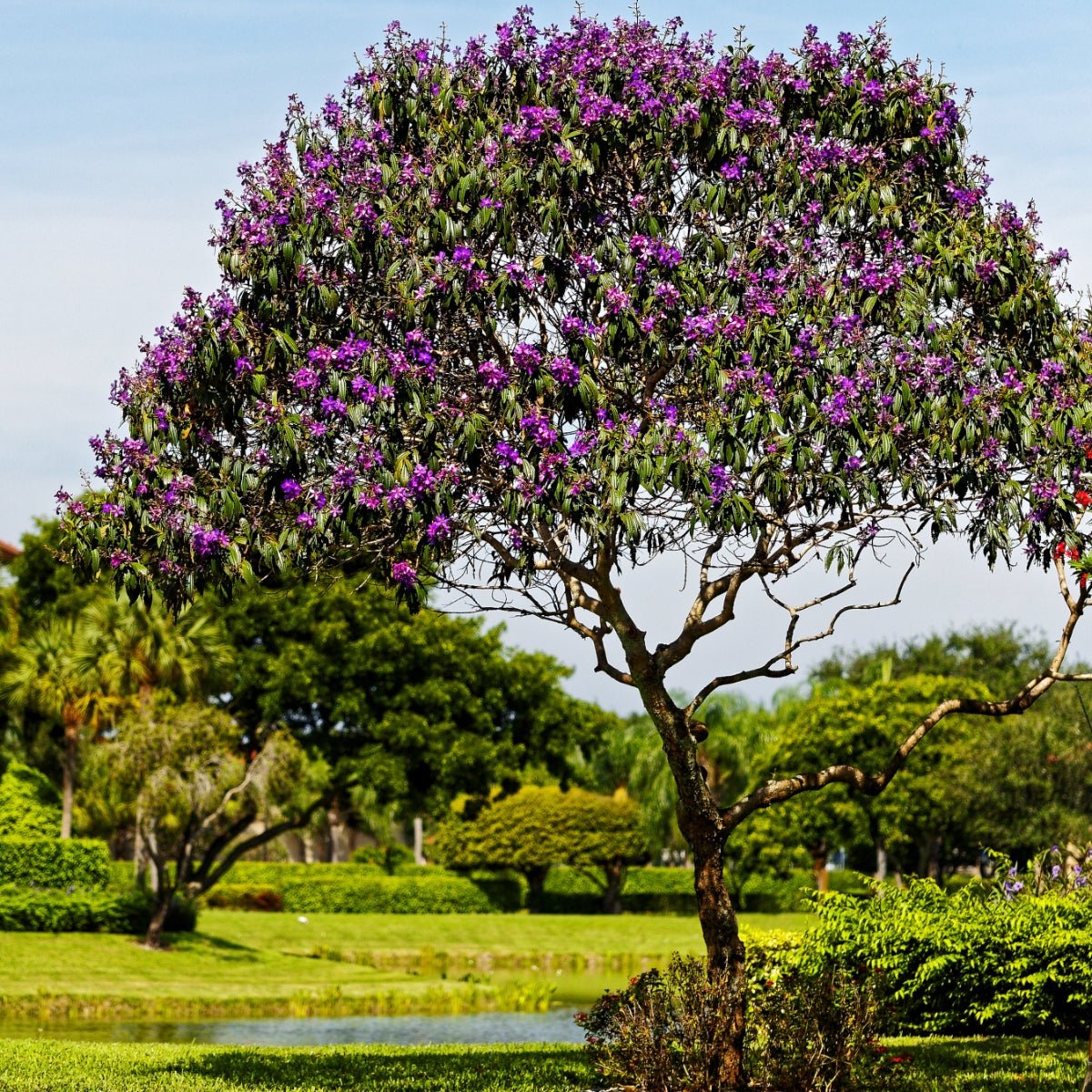
This well-known Australian cultivar takes its name from Alstonville in the Northern Rivers of New South Wales. It develops a naturally upright, spreading habit with a rounded canopy, making it an impressive feature tree, flowering screen or background shrub for larger gardens.
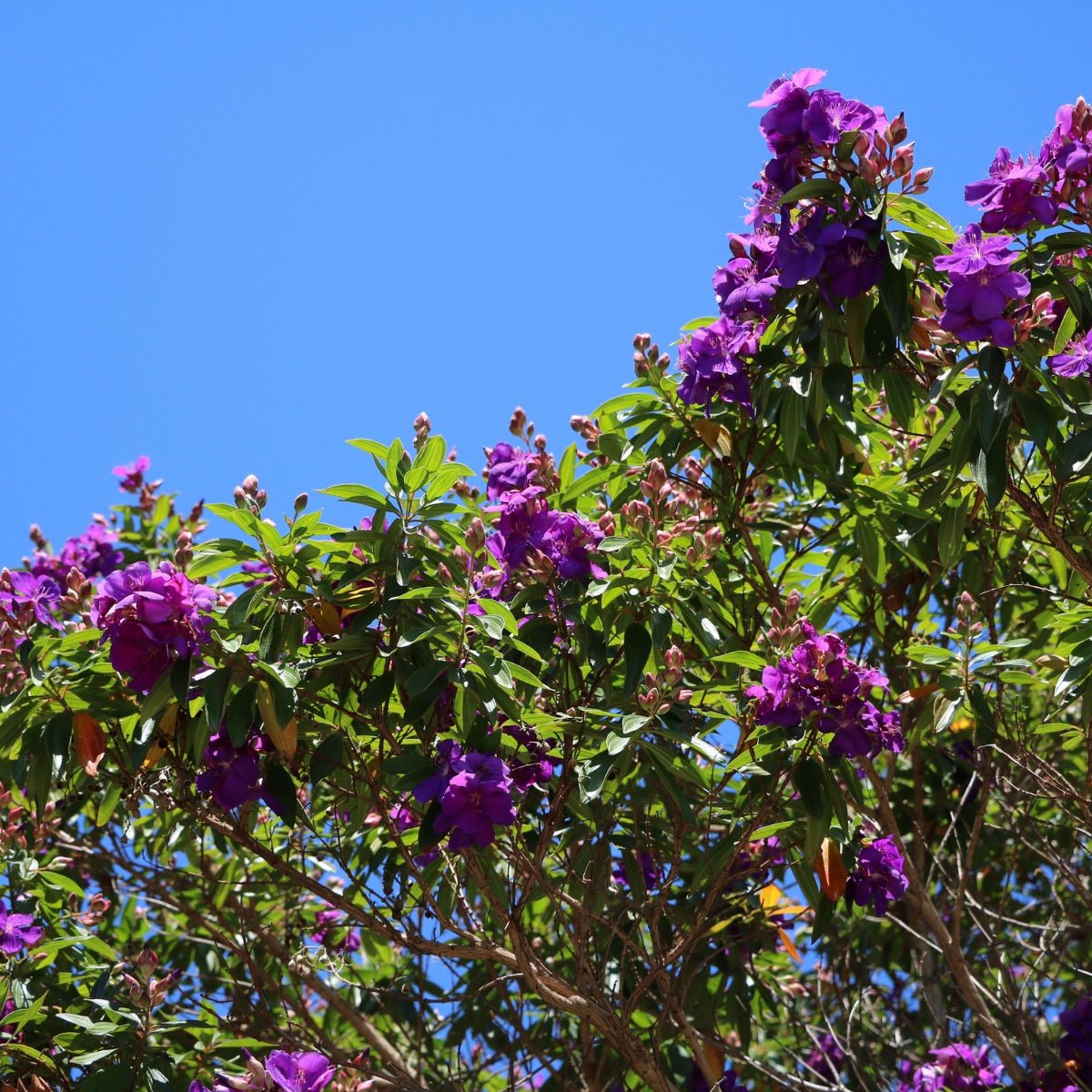
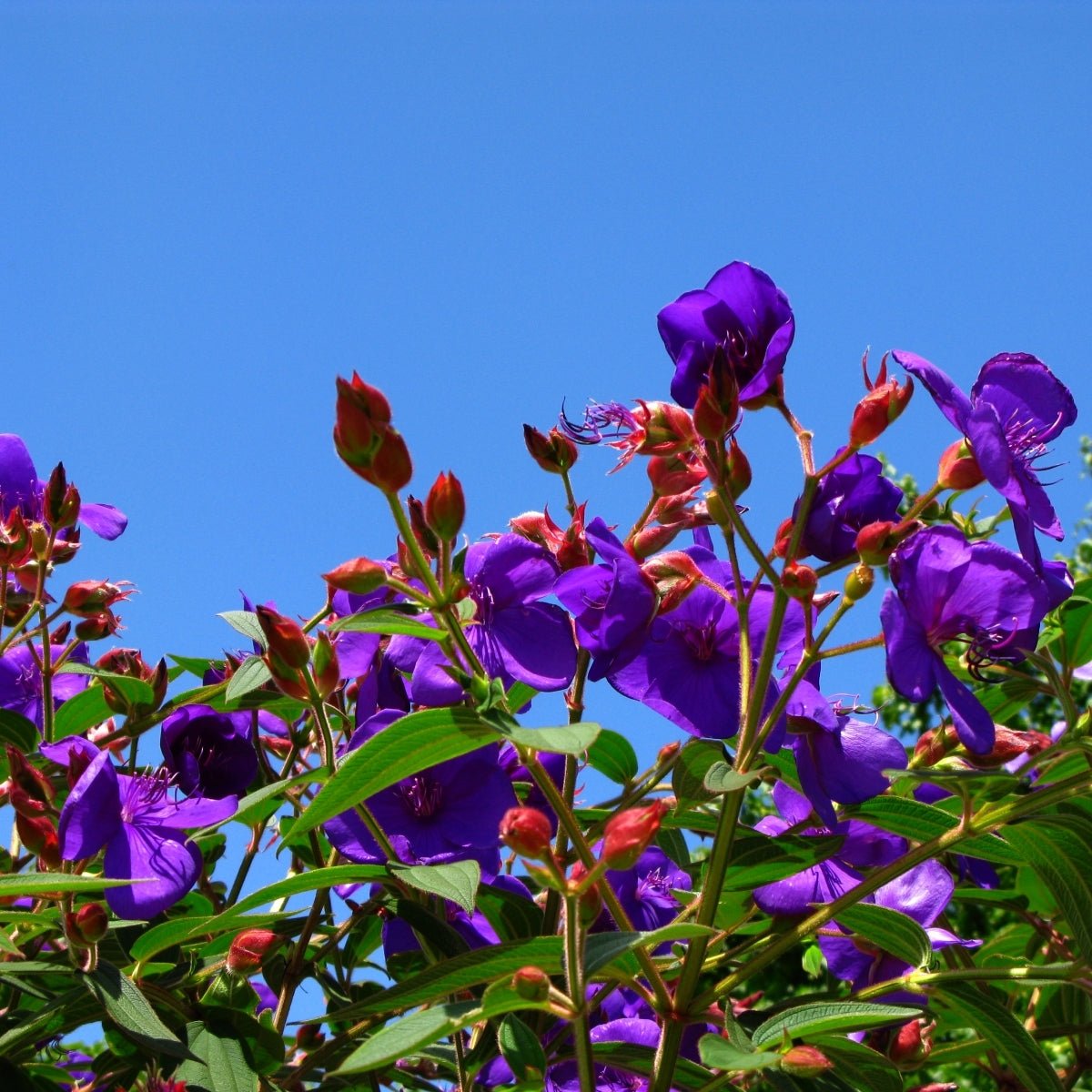
Masses of open purple flowers can cover the canopy from late summer through autumn, often continuing into early winter in mild climates. The blooms contrast beautifully against the plant’s velvety, prominently veined leaves.
Tibouchina ‘Alstonville’ performs particularly well in subtropical and mild coastal climates. It can also be grown in warm-temperate gardens when planted in a sheltered position protected from heavy frost and cold winds.
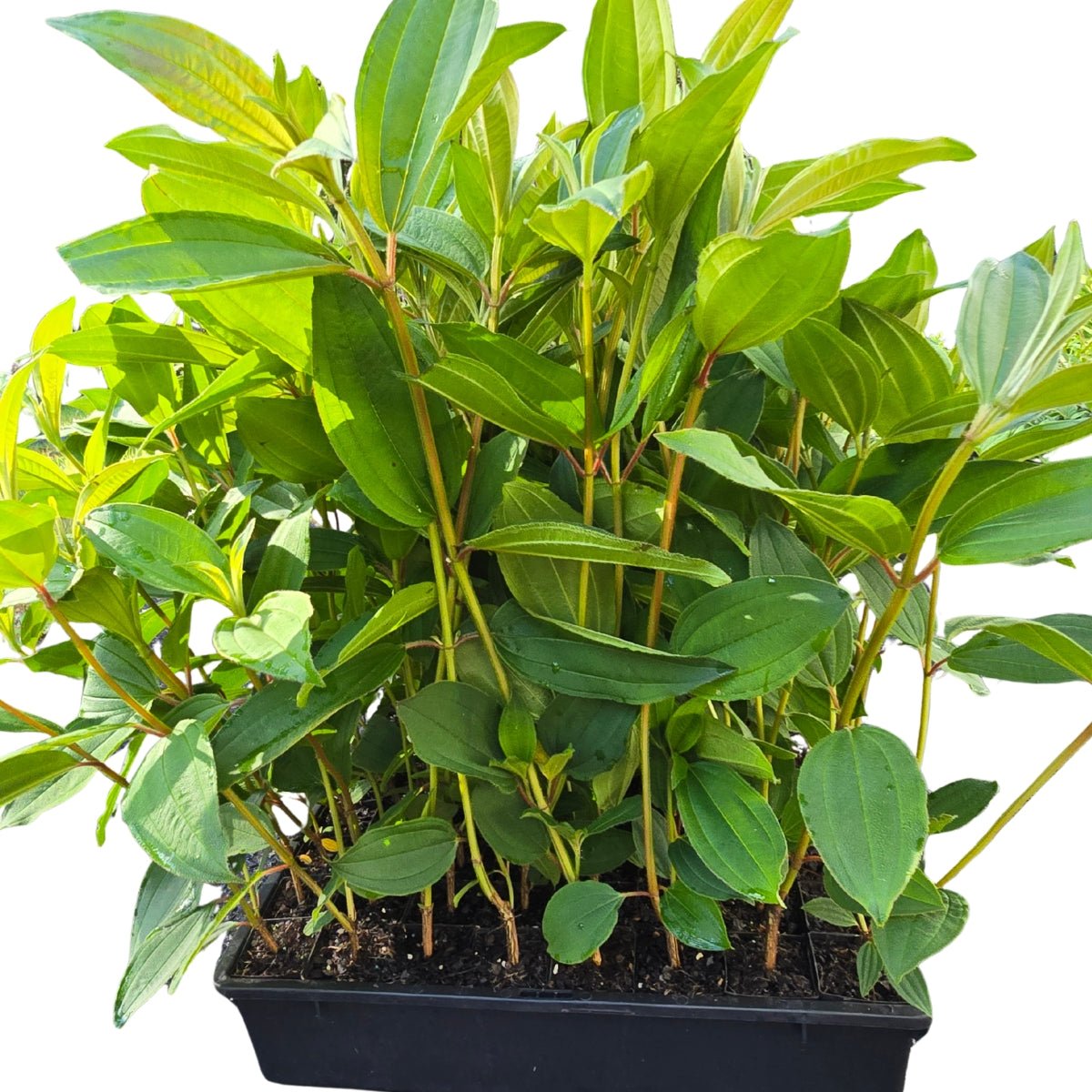
Supplied as a young live plant in a 50mm tube.
Plant Size Note
Supplied as a young live plant in a 50mm tube.
Plants supplied in 50mm tubes are small starter plants and will require growing time before reaching the mature size shown in example images.
The plant may have a single young stem or limited branching when dispatched. It may not be flowering at the time of delivery.
Height, branching, foliage density and seasonal appearance will vary naturally between individual plants.
Features
- Rich violet-purple to rose-purple flowers
- Flowers heavily from late summer through autumn
- Evergreen in suitable warm climates
- Large flowering shrub or small feature tree
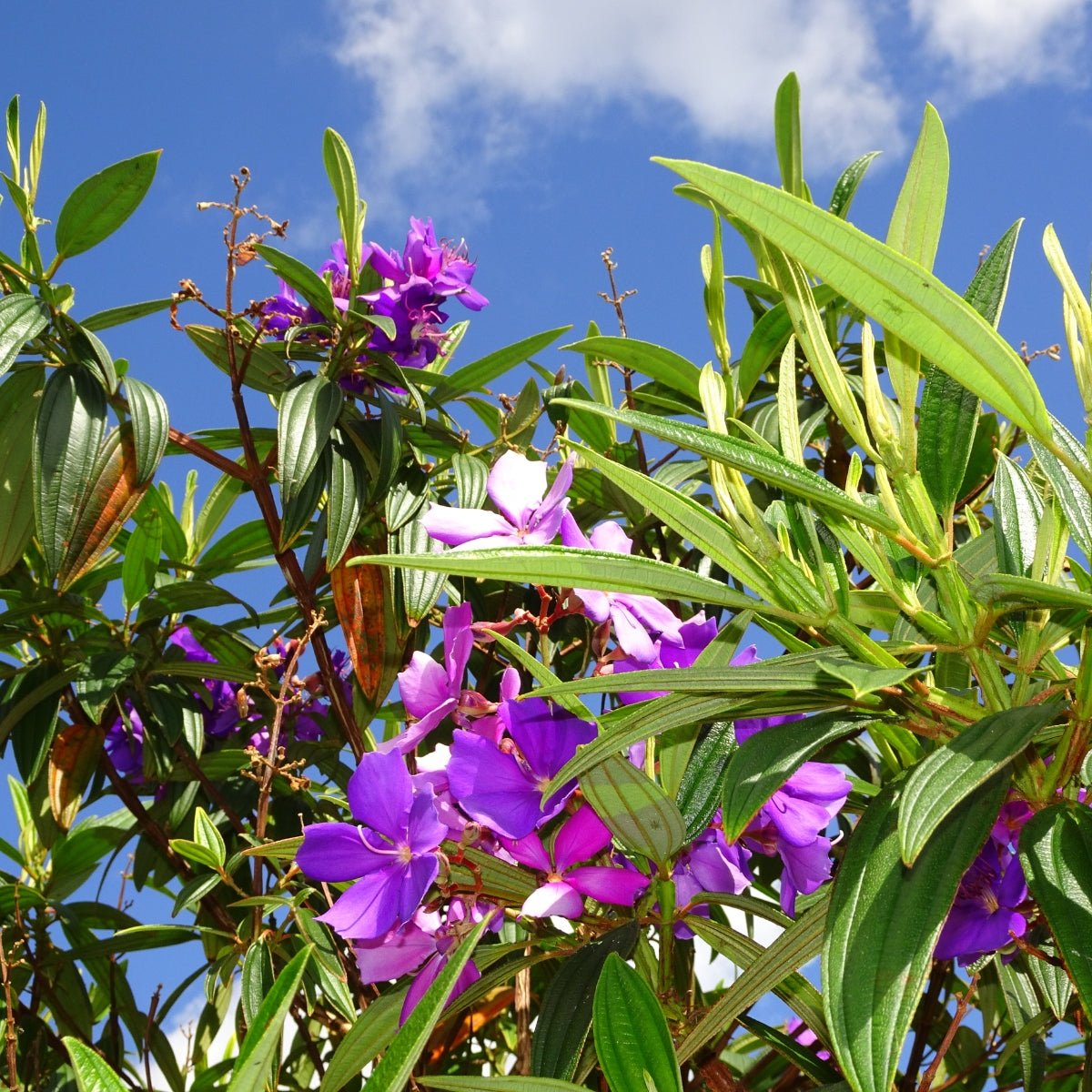
- Attractive velvety foliage with prominent veins
- Upright growth with a broad, rounded canopy
- Suitable for subtropical and mild coastal Australian gardens
- Useful as a specimen tree, flowering screen or garden backdrop
- Can be pruned to control its size and encourage denser growth
- Flowers may attract bees and other pollinating insects
- Australian cultivar associated with Alstonville in Northern NSW
Flower Colour
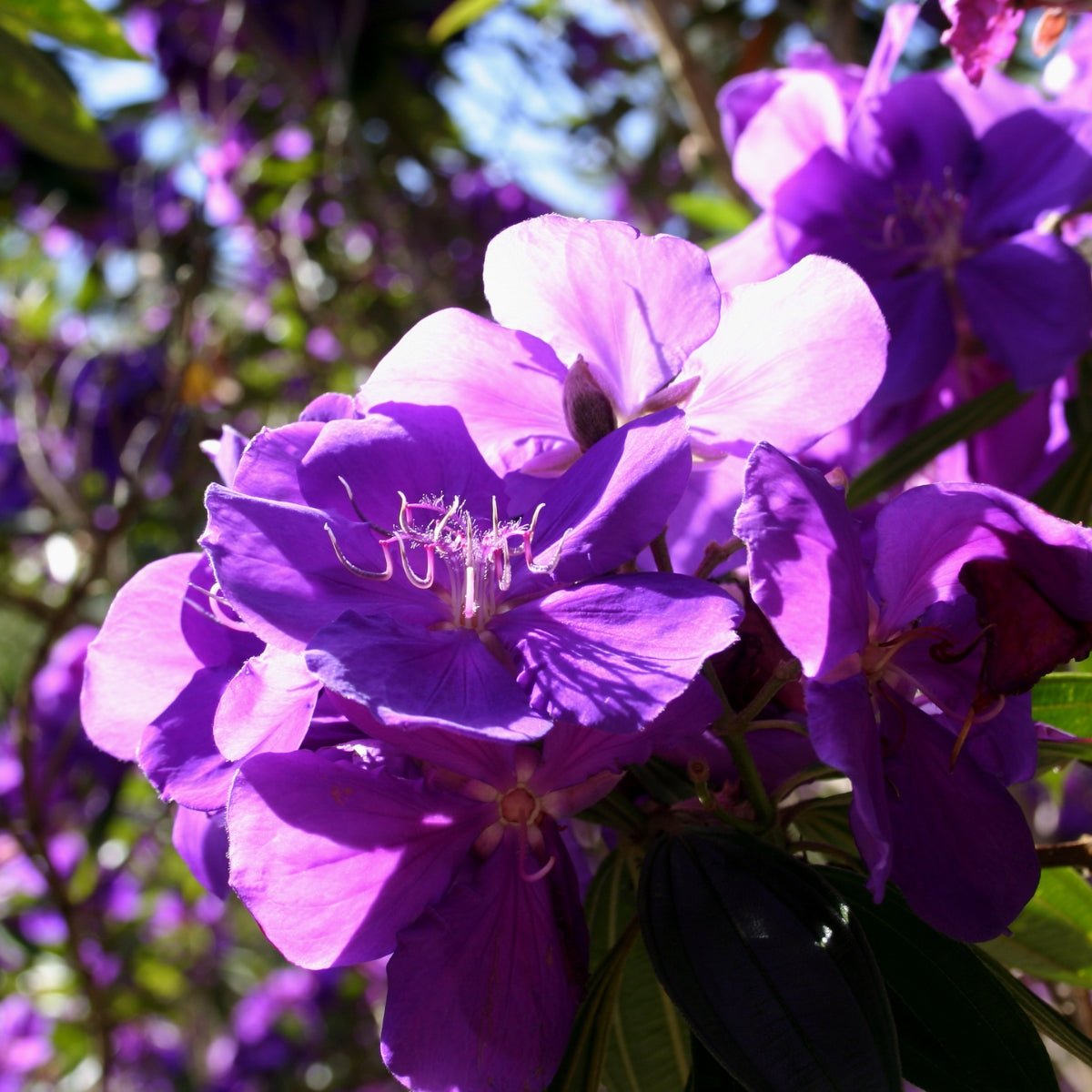
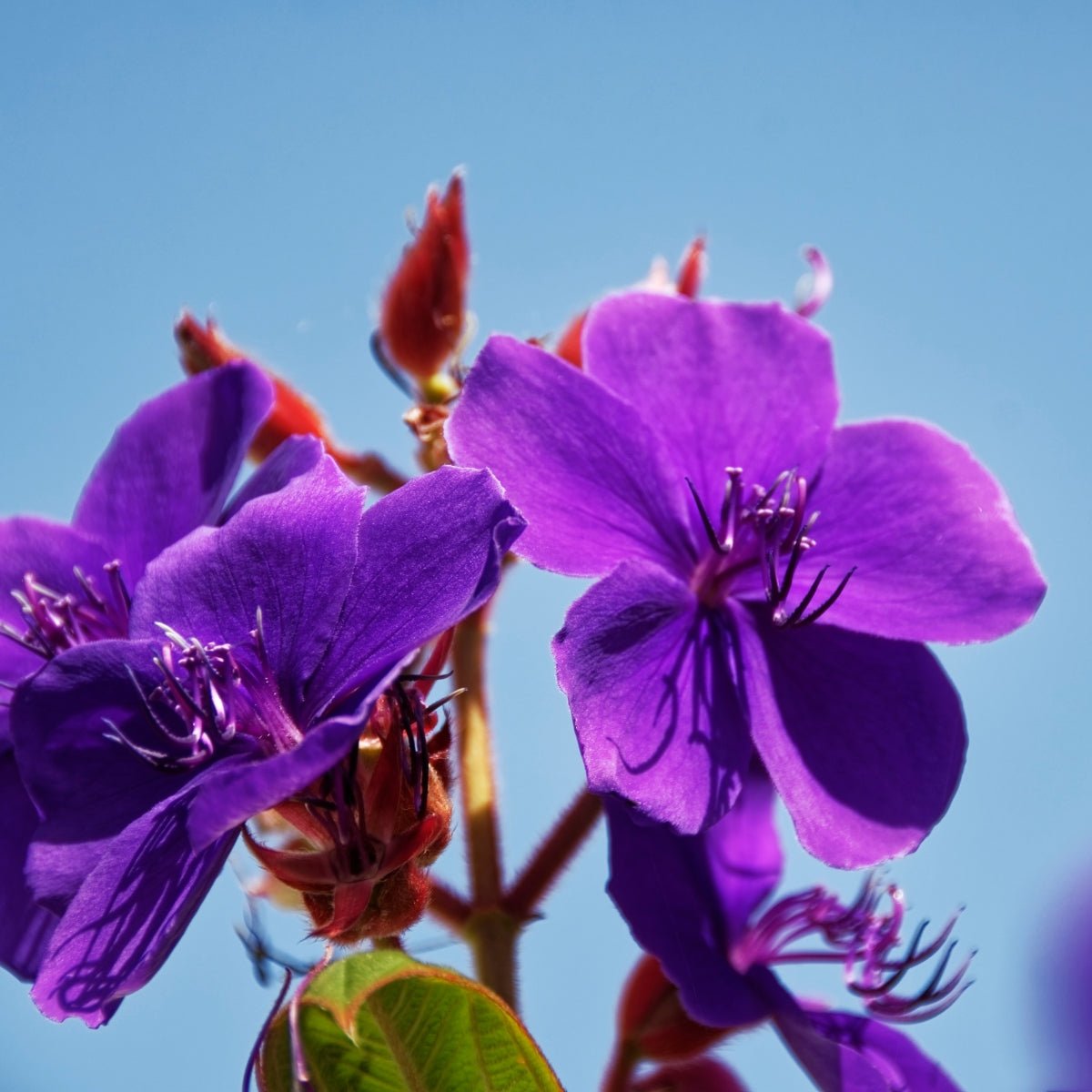
Tibouchina ‘Alstonville’ produces masses of rich violet-purple flowers. Depending on the light, flower age and growing conditions, the blooms may also appear deep mauve or rose-purple.
The flowers have an open, five-petalled form with prominent curved stamens through the centre. During peak flowering, the blooms can cover much of the canopy and create a strong display of purple colour.
Growth Habit and Mature Size
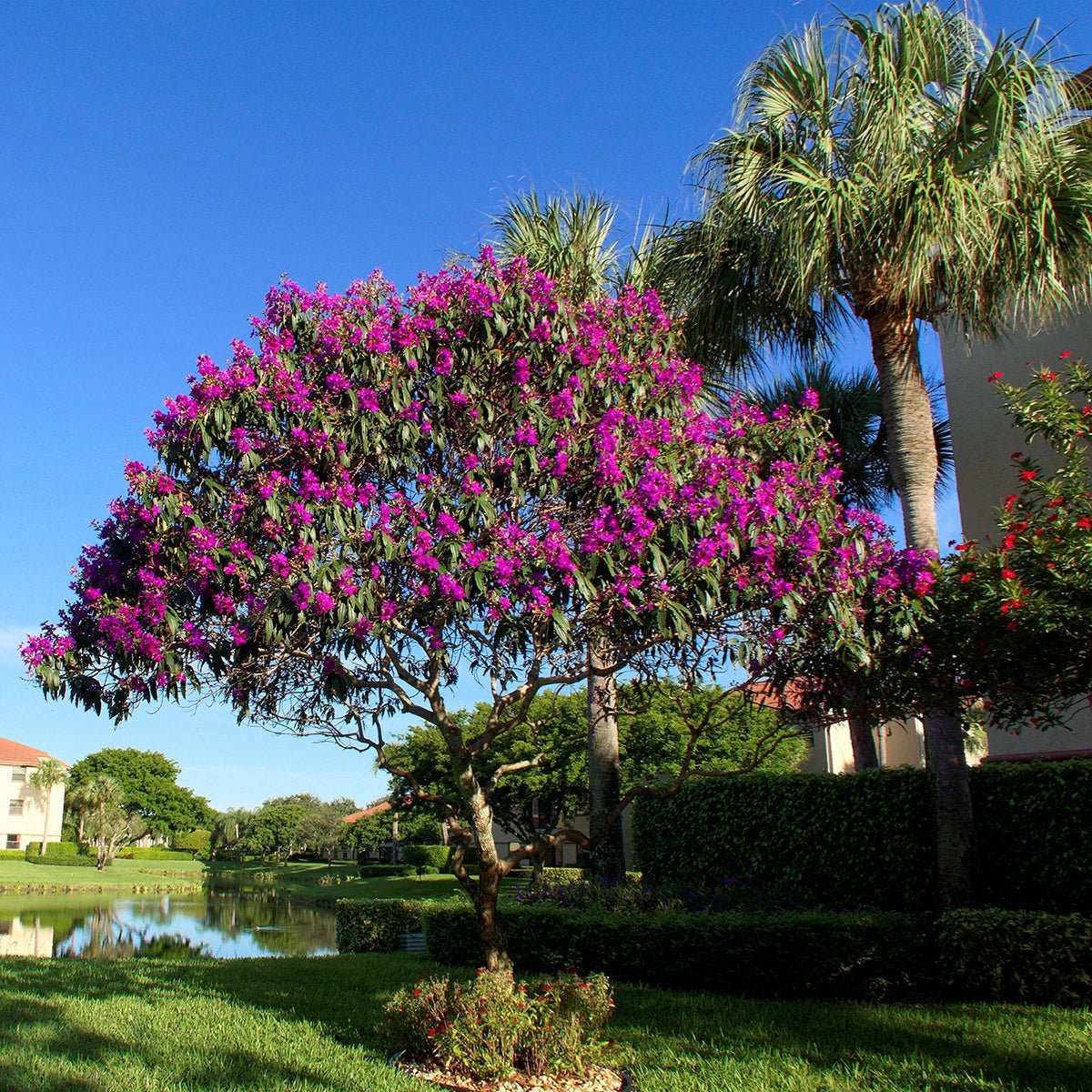
‘Alstonville’ grows as a large evergreen shrub or small tree with sturdy woody stems and a naturally upright, vase-shaped habit. As the plant matures, it develops a spreading, rounded canopy.
Under favourable conditions, it can reach approximately:
Mature Height: 5–6 metres
Mature Width: 3–4 metres
Final size will depend on climate, soil, water availability and pruning. Plants grown in warm, moist, frost-free gardens may develop more quickly and reach a larger size than plants in cooler or drier locations.
Regular pruning can maintain the plant as a dense large shrub or smaller flowering tree.
Allow sufficient space between ‘Alstonville’ and buildings, paths, fences or neighbouring plants. It is not naturally a compact cultivar and may outgrow narrow garden beds if it is not regularly pruned.
Plant Characteristics
Tibouchina ‘Alstonville’ has distinctive dark green leaves with a softly textured or velvety surface. Several strong longitudinal veins run along each leaf, creating the ribbed appearance characteristic of tibouchinas.
The underside of the foliage is generally paler than the upper surface. New stems may have a slightly angular appearance before becoming woody with age.
The foliage is normally evergreen in subtropical and mild coastal climates. Cold weather, frost, drought or prolonged stress may cause leaf damage, thinning or temporary leaf drop.
This cultivar is valued primarily for its large autumn flower display, attractive foliage and ability to form a substantial flowering feature in warm Australian gardens.
Plant Class and Life Cycle
Tibouchina ‘Alstonville’ is a woody ornamental flowering shrub or small tree from the Melastomataceae family.
It is a long-lived perennial and is normally evergreen in suitable climates.
It is not an Australian native species. The species originates from tropical regions of Central and South America, while ‘Alstonville’ is a recognised Australian garden cultivar.
Planting and Care
Plant into prepared soil at approximately the same depth as the plant was growing in its tube. Avoid burying the stem or covering the top of the root ball with a deep layer of soil.
Water thoroughly after planting and maintain consistent moisture while the root system becomes established.
Apply an organic mulch around the root zone to conserve moisture, regulate soil temperature and reduce weed competition. Keep mulch several centimetres away from direct contact with the trunk.
Choose a position protected from strong winds, heavy frost and reflected heat. Young plants may require staking while their root systems establish, particularly in exposed gardens.
Tibouchina roots should not be left sitting in constantly waterlogged soil.
Preferred Soil Type
Tibouchina ‘Alstonville’ grows best in fertile, humus-rich soil that retains some moisture while draining freely.
A slightly acidic soil is preferred. Suitable soil types include improved loam, sandy loam and well-structured garden soil enriched with compost or aged organic matter.
Heavy clay should be improved before planting to prevent waterlogging. Raised planting may be beneficial in gardens with poorly drained soil.
Very alkaline soil may result in weak growth or pale foliage. In alkaline areas, growing in an improved garden bed or large container with an appropriate acidic potting mix may provide better results.
Sunlight
Plant in full sun to part shade.
Full sun generally encourages the strongest flowering, provided the plant receives sufficient water and is protected from severe heat.
In very hot inland districts or gardens exposed to intense afternoon sun, light afternoon shade can help reduce leaf scorch and moisture stress.
Plants grown in excessive shade may become open or leggy and generally produce fewer flowers.
Watering Needs
Water regularly while the young plant establishes. The root ball of a 50mm tube plant can dry quickly after planting, so check the surrounding soil frequently during the first growing season.
Once established, Tibouchina ‘Alstonville’ has moderate drought tolerance but performs and flowers best with consistent moisture.
Provide additional deep watering during:
- Extended dry periods
- Very hot weather
- Flower bud development
- The first one to two years after planting
- Prolonged periods without useful rainfall
Allow the upper surface of the soil to begin drying between watering, but do not allow a young plant to remain completely dry for extended periods.
Avoid permanently wet or poorly drained soil.
Flowering Season
The main flowering period is from late summer through autumn.
In warm, mild and frost-free districts, flowering may begin earlier or continue into early winter. Seasonal temperatures, rainfall, sunlight, pruning and plant maturity will influence the timing and intensity of flowering.
Young plants require time to establish before producing the dense canopy of flowers shown on mature specimens.
Flowering cannot be guaranteed at the time of dispatch.
Australian Climate and Hardiness
Tibouchina ‘Alstonville’ is best suited to:
- Subtropical climates
- Mild coastal districts
- Warm-temperate gardens
- Sheltered frost-free or low-frost positions
- Humid gardens with freely draining soil
It is particularly well suited to the coastal and hinterland districts of northern New South Wales and south-east Queensland.
Frost Tolerance
This cultivar is frost tender, especially while young.
A brief light frost may damage foliage and soft new growth. Repeated or heavy frost can cause substantial stem damage and may kill an unprotected young plant.
In cooler districts, plant near a warm wall, beneath a high tree canopy or in another protected microclimate. Frost cloth may be required while the plant is young.
It is generally unsuitable for exposed, severely frost-prone gardens unless reliable winter protection can be provided.
Heat and Humidity Tolerance
Tibouchina ‘Alstonville’ grows well in warm and humid subtropical conditions when the soil remains adequately moist and drains freely.
Established plants tolerate summer heat, but extreme heat combined with dry soil or hot winds may scorch the foliage and reduce flowering.
Afternoon shade, mulch and supplementary watering are beneficial in very hot inland areas.
Good airflow and drainage remain important in humid gardens.
Coastal Tolerance
Suitable for many coastal gardens, particularly in mild coastal climates.
For the best foliage and flowering, provide some protection from direct salt spray, severe ocean winds and exposed beachfront conditions.
Drought Tolerance
Moderately drought tolerant once established, but it is not best treated as a dry-climate or no-water plant.
Extended drought may cause leaf drop, sparse growth and reduced flowering. Occasional deep watering during dry weather will improve plant health and flower production.
Suitable Spaces and Landscape Uses
Tibouchina ‘Alstonville’ is suitable for:
- Large suburban gardens
- Subtropical gardens
- Warm coastal gardens
- Front garden feature planting
- Flowering screens
- Large mixed shrub borders
- Driveway or entrance planting
- Garden backdrops
- Courtyards with sufficient space
- Informal flowering hedges
- Specimen tree planting
- Tropical-style landscapes
- Large rural and acreage gardens
It can be grown as a multi-stemmed flowering shrub or selectively pruned to form a small tree with a visible trunk.
Because of its eventual height and canopy width, it is not ideal for very narrow beds, directly beneath low powerlines or immediately beside buildings unless its size will be actively controlled.
Growing in Pots
Tibouchina ‘Alstonville’ can be grown in a container while young and may be maintained in a large pot with regular pruning.
Use a premium, freely draining potting mix suitable for flowering shrubs. A slightly acidic mix is preferred.
Choose a container with substantial drainage holes and increase the pot size gradually as the root system develops.
Container-grown plants require more frequent watering and fertilising than plants grown in the ground. Do not leave the pot standing continuously in water.
Because ‘Alstonville’ naturally develops into a large shrub or small tree, it will eventually require a very large, stable container. Long-term container plants must be pruned regularly to manage their height and canopy.
Pruning
Tip-prune young plants to encourage stronger branching and a denser shape.
Established plants can be pruned after the main autumn flowering period. Remove dead, damaged, crossing or poorly positioned branches and shorten long growth where required.
Pruning after flowering helps maintain a compact canopy without unnecessarily removing developing flower buds before the main display.
‘Alstonville’ can tolerate firm corrective pruning, but major pruning should be carried out thoughtfully. Avoid removing too much foliage during extreme heat, drought or immediately before cold weather.
Plants being trained as small trees can have lower branches removed gradually as the main trunk develops.
Always use clean, sharp pruning equipment.
Fertilising
Apply a controlled-release fertiliser suitable for flowering shrubs during spring as active growth begins.
An additional light application after the main flowering period can support foliage recovery and future growth.
Compost, aged manure or other well-decomposed organic matter can be incorporated around the root zone to improve soil structure and nutrient availability.
Water before and after applying granular fertiliser. Keep concentrated fertiliser away from direct contact with the trunk and young roots.
Avoid excessive fertilising, particularly with high-nitrogen products, as this may encourage soft foliage growth at the expense of flowering.
Pollinator and Wildlife Value
The prominent open flowers may be visited by bees and other pollinating insects seeking pollen.
Tibouchina ‘Alstonville’ is primarily grown as an ornamental flowering plant and should not be considered a substitute for locally native habitat plants.
Including it alongside a diverse selection of native and exotic flowering plants can help provide a broader seasonal supply of garden flowers.
It is not generally regarded as a major bird-attracting plant.
Pet Safety
The pet toxicity status of Tibouchina lepidota ‘Alstonville’ has not been clearly established through widely recognised Australian veterinary references.
It should not be advertised as pet-safe. Keep the plant, flowers and trimmed material away from pets that chew garden plants.
Do not allow pets to consume unknown quantities of any ornamental plant. Seek veterinary advice if a pet develops symptoms after chewing or swallowing plant material.
Product Details
Plant Name: Tibouchina ‘Alstonville’
Botanical Name: Tibouchina lepidota ‘Alstonville’
Currently Accepted Species Name: Andesanthus lepidotus
Common Names: Alstonville Tibouchina, Glory Tree, Lasiandra, Purple Glory Tree
Cultivar: ‘Alstonville’
Plant Family: Melastomataceae
Plant Class: Evergreen flowering shrub or small tree
Plant Life Cycle: Perennial
Plant Material: Young live plant supplied in a 50mm tube
Flower Colour: Rich violet-purple to rose-purple
Flower Form: Open, five-petalled flowers with prominent stamens
Foliage: Dark green, velvety and strongly veined
Growth Habit: Upright, spreading and rounded
Mature Height: Approximately 5–6 metres
Mature Width: Approximately 3–4 metres
Flowering Season: Late summer through autumn, sometimes into early winter in mild climates
Sunlight: Full sun to part shade
Preferred Soil: Fertile, humus-rich, slightly acidic and freely draining soil
Watering Needs: Regular while establishing; moderate once established
Australian Climate: Subtropical, mild coastal and sheltered warm-temperate climates
Frost Tolerance: Frost tender
Heat Tolerance: Good with adequate soil moisture and protection from extreme heat
Humidity Tolerance: Suitable for humid subtropical conditions with good drainage and airflow
Coastal Tolerance: Suitable for coastal districts with protection from direct salt spray
Drought Tolerance: Moderate once established
Pet Safety: Not confirmed as pet-safe through widely recognised Australian veterinary references
Pollinator Friendly: Flowers may attract bees and other pollinating insects
Bird Attracting: Not considered a major bird-attracting plant
Suitable Spaces: Feature planting, flowering screens, large shrub borders, driveways, entrances and large gardens
Pot Suitability: Suitable for large containers with regular pruning, watering and feeding
Pruning: Tip-prune when young and shape after flowering
Shipping Restrictions: State, territory and regional biosecurity restrictions may apply
Important Note
Images show mature, established plants and are provided as examples only.
You will receive a young starter plant in a 50mm tube. It may have a single stem, limited branching and may not be flowering when dispatched.
Plant height, branching, foliage density, flower colour and seasonal appearance will vary naturally between individual plants.
The young plant will require growing time before developing the broad canopy and heavy flower coverage shown in mature plant images.
Plants may be lightly trimmed before dispatch where required for safe transport and healthy future growth.
Environmental conditions including climate, soil, sunlight, watering, fertilising and pruning will influence mature size, growth rate and flowering performance.
Biosecurity and Shipping
State, territory and regional biosecurity restrictions may apply to live plants.
Please check whether this plant can be sent to your delivery address before ordering.
Orders placed for restricted destinations may need to be cancelled and refunded.
Biosecurity requirements may change without notice.
Frequently Asked Questions
What size plant will I receive?
You will receive a young live Tibouchina ‘Alstonville’ plant supplied in a 50mm tube. It is a small starter plant and will require growing time before reaching its mature size.
Will my plant arrive in flower?
Flowering at the time of dispatch cannot be guaranteed. Young plants may require several growing seasons to establish enough mature growth to produce a substantial flower display.
What colour are the flowers?
The flowers are rich violet-purple. They may appear deep mauve or rose-purple under different light conditions or as individual flowers age.
When does Tibouchina ‘Alstonville’ flower?
The main flowering period is from late summer through autumn. Flowering may extend into early winter in warm, mild climates.
How large does Tibouchina ‘Alstonville’ grow?
An established plant can reach approximately 5–6 metres high and 3–4 metres wide. Climate, soil, water and pruning will affect its final size.
Is Tibouchina ‘Alstonville’ evergreen?
It is normally evergreen in subtropical and mild coastal climates. Cold, frost, drought or other stress may cause foliage damage or temporary leaf loss.
Does it grow in full sun?
Yes. Full sun usually produces the strongest flowering when adequate water is available.
Can it grow in part shade?
Yes. It can grow in part shade, although excessive shade may result in fewer flowers and more open growth.
Is it suitable for subtropical Australian gardens?
Yes. It is particularly well suited to subtropical gardens, including the Northern Rivers of NSW and many parts of south-east Queensland.
Can it grow in cooler areas?
It can grow in mild warm-temperate areas when given a protected position. It is frost tender and is not well suited to exposed locations with repeated heavy frost.
Is Tibouchina ‘Alstonville’ frost tolerant?
No. Young plants are particularly vulnerable to frost. Established plants may recover from minor cold damage, but heavy or repeated frost can cause serious injury.
Is it drought tolerant?
It has moderate drought tolerance once established. Regular deep watering during prolonged dry periods will improve its foliage and flowering.
How often should it be watered?
Water regularly during establishment and whenever the upper soil begins to dry. Established garden plants generally require less frequent watering but benefit from deep watering during hot or dry weather.
What soil does it prefer?
It prefers fertile, slightly acidic soil that contains organic matter but drains freely. Avoid highly alkaline, compacted or permanently waterlogged soil.
Can Tibouchina ‘Alstonville’ grow in a pot?
Yes, particularly while young. Long-term container plants require a very large pot, regular watering, fertilising and pruning because this is naturally a large cultivar.
Does it require pruning?
Pruning is not essential where the plant has ample room, but tip-pruning young plants encourages branching. Established plants can be shaped after flowering to control their height and width.
Can it be grown as a tree?
Yes. Lower branches can be gradually removed as the plant matures to create a small feature tree. It can also be allowed to grow naturally as a large multi-stemmed shrub.
Does it spread through the garden?
It develops a broad canopy as it matures but does not spread through underground runners. Allow enough space for its natural width.
Does it attract bees or butterflies?
The flowers may attract bees and other pollinating insects. Wildlife visitation varies according to location and the other plants growing nearby.
Is Tibouchina ‘Alstonville’ pet-safe?
Its pet toxicity status has not been clearly established through widely recognised Australian veterinary references. It should not be promoted as pet-safe, and pets should be prevented from chewing the plant.
Are there biosecurity restrictions?
State, territory and regional biosecurity restrictions may apply to live plants. Eligibility depends on the destination and current biosecurity requirements.