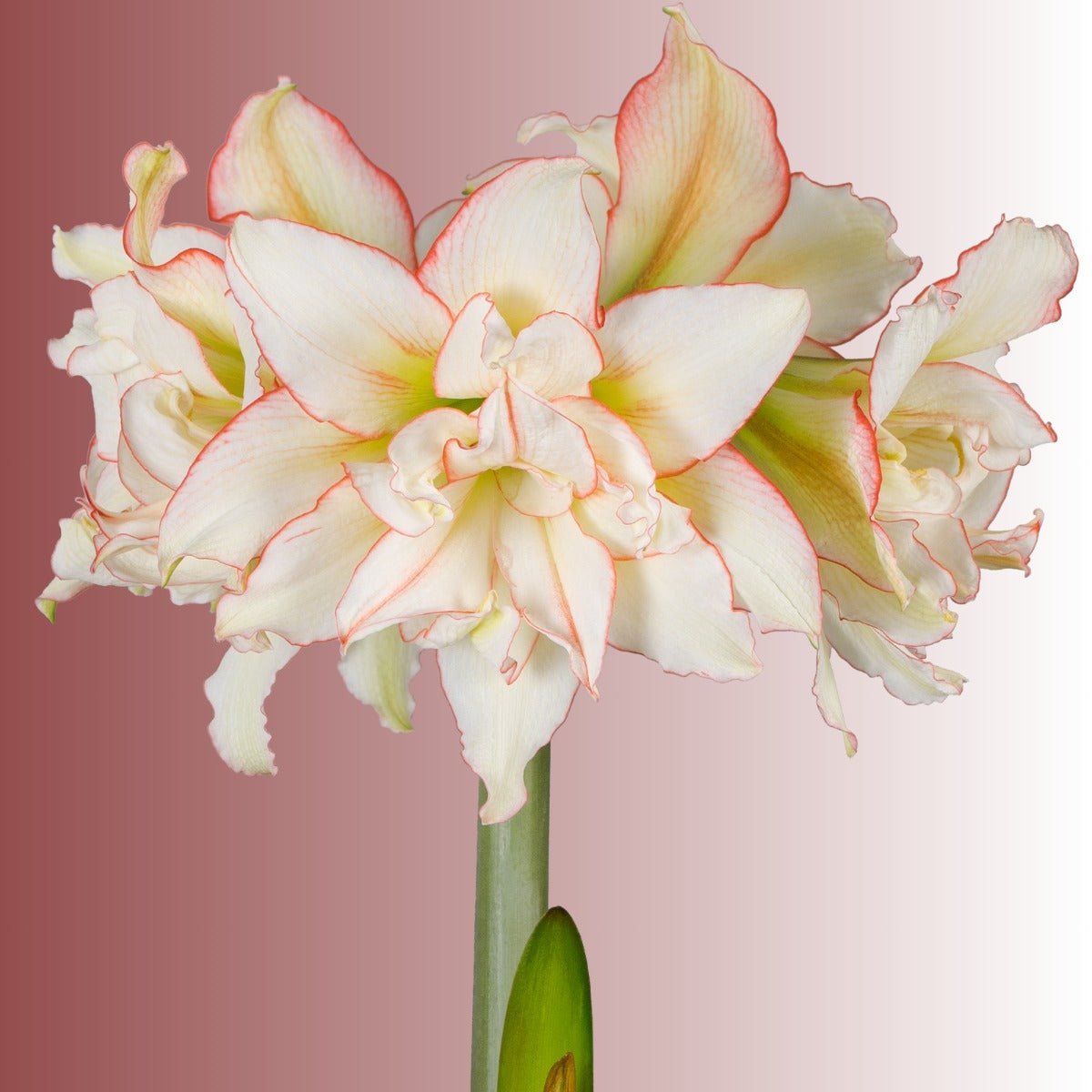
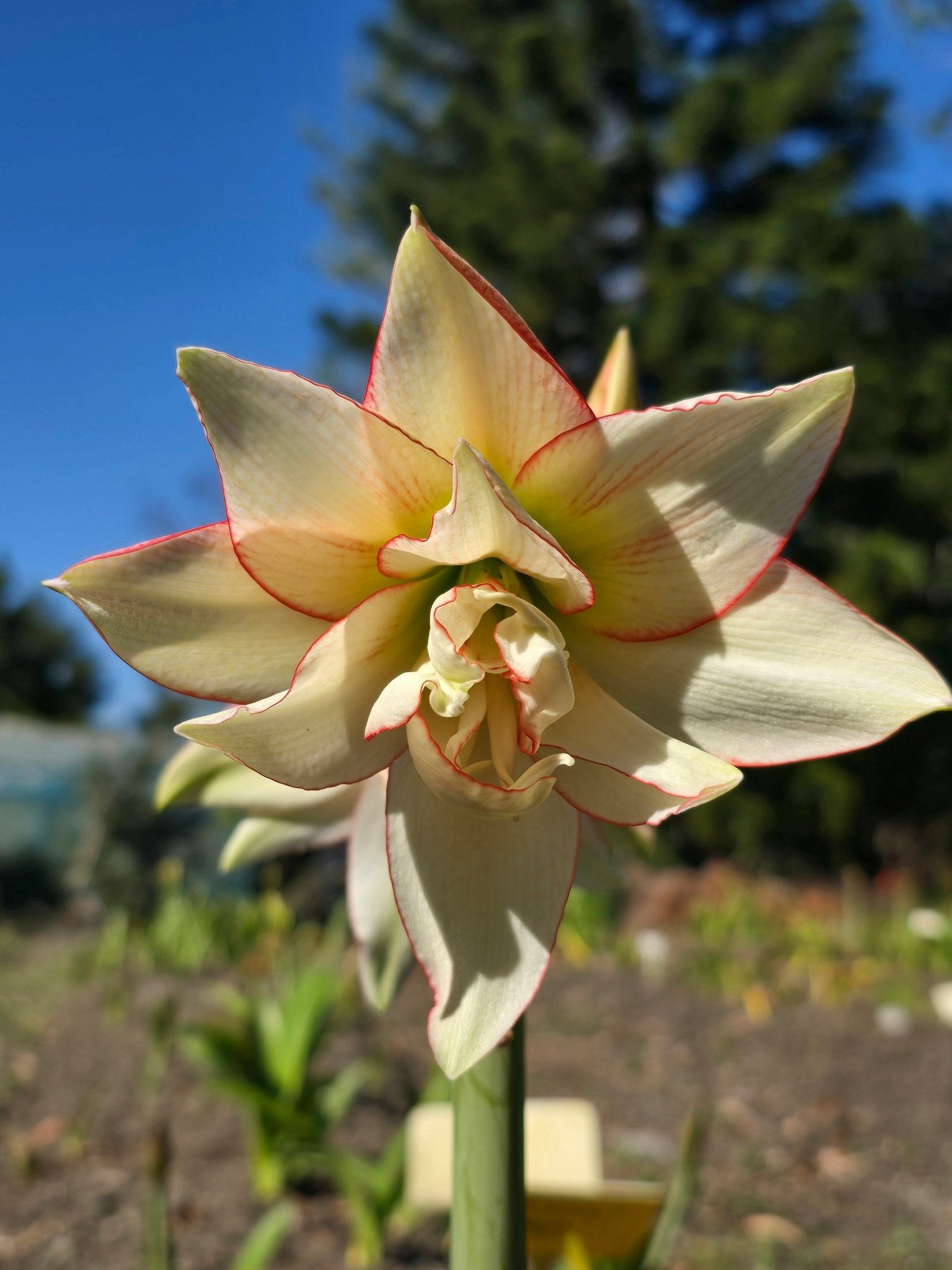
A fan favourite for good reason, Harlequin Amaryllis produces elegant creamy-white blooms beautifully edged and lined with soft pale pink. Botanically known as Hippeastrum x hybridum, this striking flowering bulb is commonly sold and searched for as Amaryllis, making it a popular choice for gardeners wanting bold, easy-care seasonal flowers.
The delicate colouring of Harlequin gives each bloom a refined, almost painted appearance. Creamy white petals are softly traced with pale pink, creating a fresh, elegant display that looks beautiful in pots, garden beds and cut flower arrangements.
Hippeastrums are reliable, rewarding flowering bulbs that bring impressive colour with very little fuss. Harlequin is especially loved for its clean white petals, gentle pink edging and strong flower stems, producing a beautiful display from late spring into summer depending on your climate.
Supplied as a large dormant bulb, Harlequin Amaryllis can be grown in the garden or in pots. Plant with the neck of the bulb slightly exposed, keep the soil free draining, and enjoy bold seasonal blooms that can return year after year when grown in suitable conditions.
Availability Update – 12 July 2026
This item has now moved from pre-order to ready stock and is available for dispatch.
The image shown is an example only. Flower colour, size and form may vary slightly depending on growing conditions and natural seasonal variation.
All orders are subject to final stock availability at the time of packing. If an unexpected supply issue occurs, we will contact you regarding substitution options.
Any items you do not wish to have substituted will be refunded.
Features
-
Popular Harlequin Amaryllis variety
-
Botanically known as Hippeastrum x hybridum
-
Creamy-white blooms with delicate pale pink edges
-
Elegant, soft-toned flower display
-
Strong, sturdy flower stems
-
Suitable for garden beds and pots
-
Excellent for cut flowers
-
Supplied as a large dormant bulb
-
Can naturalise in suitable climates
-
Easy to grow with good drainage
-
Suitable across many Australian growing regions
Planting & Care
Plant Harlequin Amaryllis bulbs from July to October in a position with full sun to partial shade. In warmer climates, some afternoon shade can help protect the flowers and foliage from harsh heat.
Choose a light, free-draining soil. Before planting, loosen the soil to around 20cm deep and improve drainage if needed. Hippeastrums dislike sitting in wet, heavy soil, especially while dormant.
Plant with the fat end and roots facing down, leaving the neck of the bulb slightly exposed above the soil surface. Do not bury the bulb completely. Space bulbs around 10cm apart for a full display, or further apart if you prefer a more open planting.
If growing in pots, use a quality free-draining potting mix and make sure the pot has good drainage holes. Avoid overwatering in pots, as bulbs can rot if they remain too wet.
Water regularly during the active growing period, especially once leaves and flower stems begin to develop. Reduce watering as the plant naturally moves towards dormancy.
Feed annually with pelletised chicken manure or a balanced bulb fertiliser to support strong flowering and healthy bulb growth. Avoid excessive feeding with high-nitrogen fertilisers, as this can encourage leafy growth instead of flowers.
Hippeastrums prefer temperatures around 15–25°C while actively growing. Protect bulbs from frost, especially in colder regions or when growing in pots.
Once established in suitable climates, Hippeastrum bulbs often prefer to remain undisturbed in the ground for several years. Allow foliage to remain after flowering so the bulb can restore energy for future blooms.
Flowering Time
Flowering time can vary depending on climate and planting conditions.
Tropics: October to November
Subtropics: October to November
Cool Regions: December to January
Product Details
Botanical Name: Hippeastrum x hybridum
Common Name: Amaryllis, Hippeastrum
Variety: Harlequin
Product Type: Flowering bulb
Supplied As: Dormant bulb
Flower Colour: Creamy white with pale pink edges
Bloom Size: Medium-sized blooms
Stem Height: Approximately 25cm
Planting Season: July to October
Aspect: Full sun to partial shade
Planting Depth: Leave the neck slightly exposed
Spacing: Approximately 10cm apart
Growth Habit: Suitable for garden beds or pots
Growing Zones: Suitable across many Australian regions
End Use: Garden display, pots, cut flowers
FAQ
Is Harlequin an Amaryllis or a Hippeastrum?
Harlequin is botanically a Hippeastrum x hybridum, but these bulbs are commonly sold and searched for as Amaryllis. Both names are often used by gardeners.
What colour are Harlequin Amaryllis flowers?
Harlequin produces creamy-white blooms with soft pale pink edging and lines on the petals.
When should I plant Harlequin Amaryllis bulbs?
Plant from July to October, depending on your climate and growing conditions.
How deep should I plant Hippeastrum bulbs?
Plant with the roots and fat end facing down, leaving the neck of the bulb slightly exposed above the soil.
Can Harlequin Amaryllis grow in pots?
Yes. Harlequin grows very well in pots. Use a free-draining potting mix and ensure the pot has good drainage holes.
How far apart should I plant the bulbs?
Space bulbs around 10cm apart for a full display, or further apart if you prefer a less dense look.
When will Harlequin Amaryllis flower?
In tropical and subtropical areas, flowering is commonly around October to November. In cooler regions, flowering may occur around December to January.
Does Harlequin Amaryllis need full sun?
It grows well in full sun to partial shade. In hotter areas, partial shade or afternoon protection can be beneficial.
Are these good cut flowers?
Yes. Harlequin Amaryllis produces elegant blooms that can be used in cut flower arrangements.
Should I lift Hippeastrum bulbs every year?
In suitable climates, they often prefer to remain undisturbed for several years. Lift only if required due to frost, overcrowding, drainage issues or relocation.
Are Hippeastrums frost hardy?
They should be protected from frost, especially in colder regions or when grown in pots.
What are they supplied as?
They are supplied as dormant bulbs, ready for planting during the recommended season.
Is this a pre-order?
Yes. This item is a pre-order. Stock is expected around the end of July, but may push into August depending on seasonal conditions and supplier availability.
What happens if there is a supply issue?
If there are any supply issues, we will contact you regarding substitution options. Any items you do not wish to have substituted will be refunded.
We love chatting with avid gardeners and sharing our knowledge with those with “not so green” fingers, so feel free to contact us.