


Happy with service, products, and delivery 5🌟
Murraya paniculata | Fragrant White Flowering Hedge
- Regular price
-
$3.90 - Regular price
-
$7.50 - Sale price
-
$3.90
Tax included.
Shipping calculated at checkout.
Couldn't load pickup availability
Shipping information & Pickup
Shipped from Wardell, NSW. Shipping is calculated at checkout by weight, cubic weight and location.
Standard delivery is usually 2–8 business days. WA, NT and TAS may take 14–30 business days due to biosecurity inspection.
Free Local Pickup: Enter 1335 Wardell Road, Wardell NSW 2477 as the delivery address at checkout to display this option. Free delivery is available within 2 km. Travelling through or need something urgently? Contact us first, as some items may need to be ordered in.
Returns
If you aren't happy with your order. we accept returns.
Description
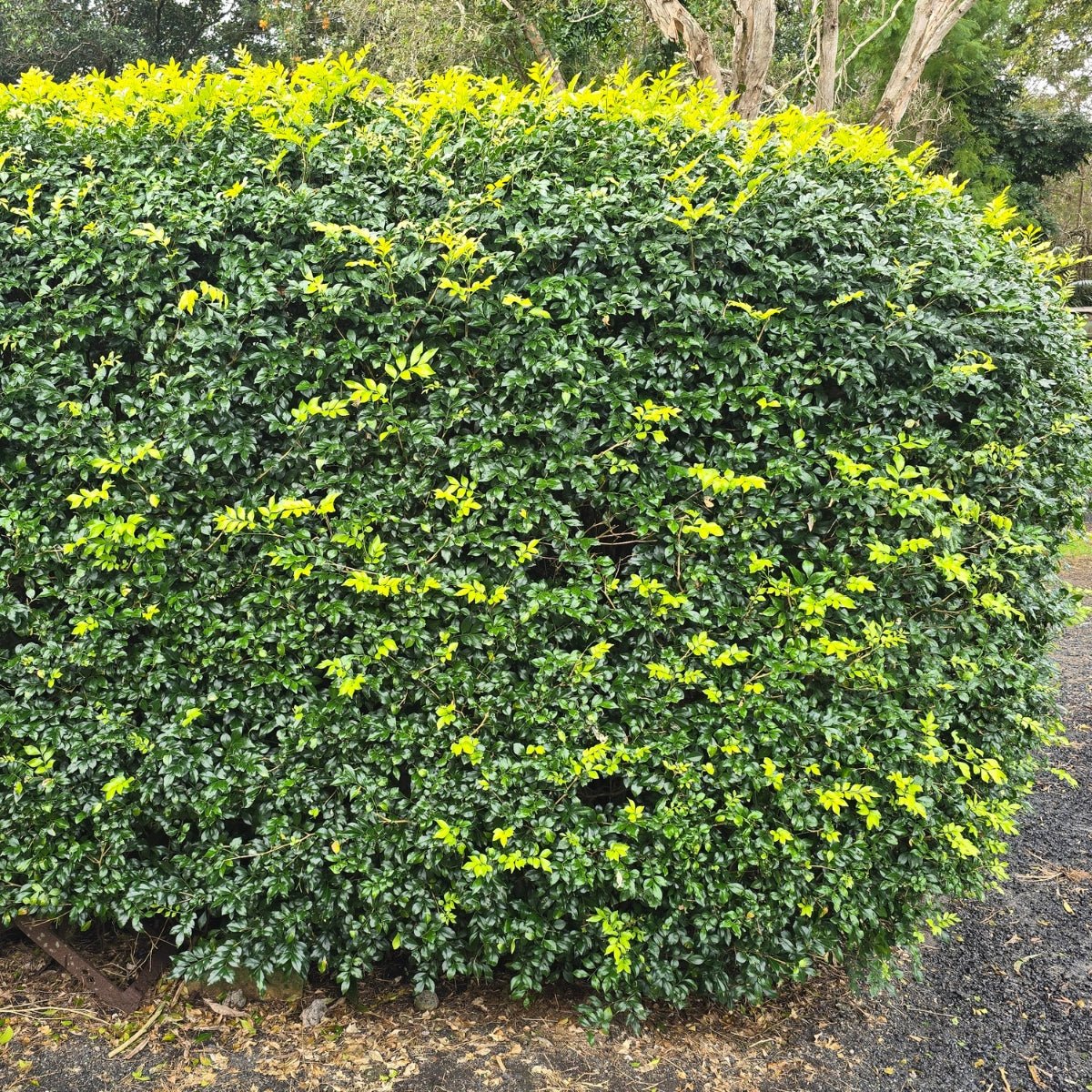
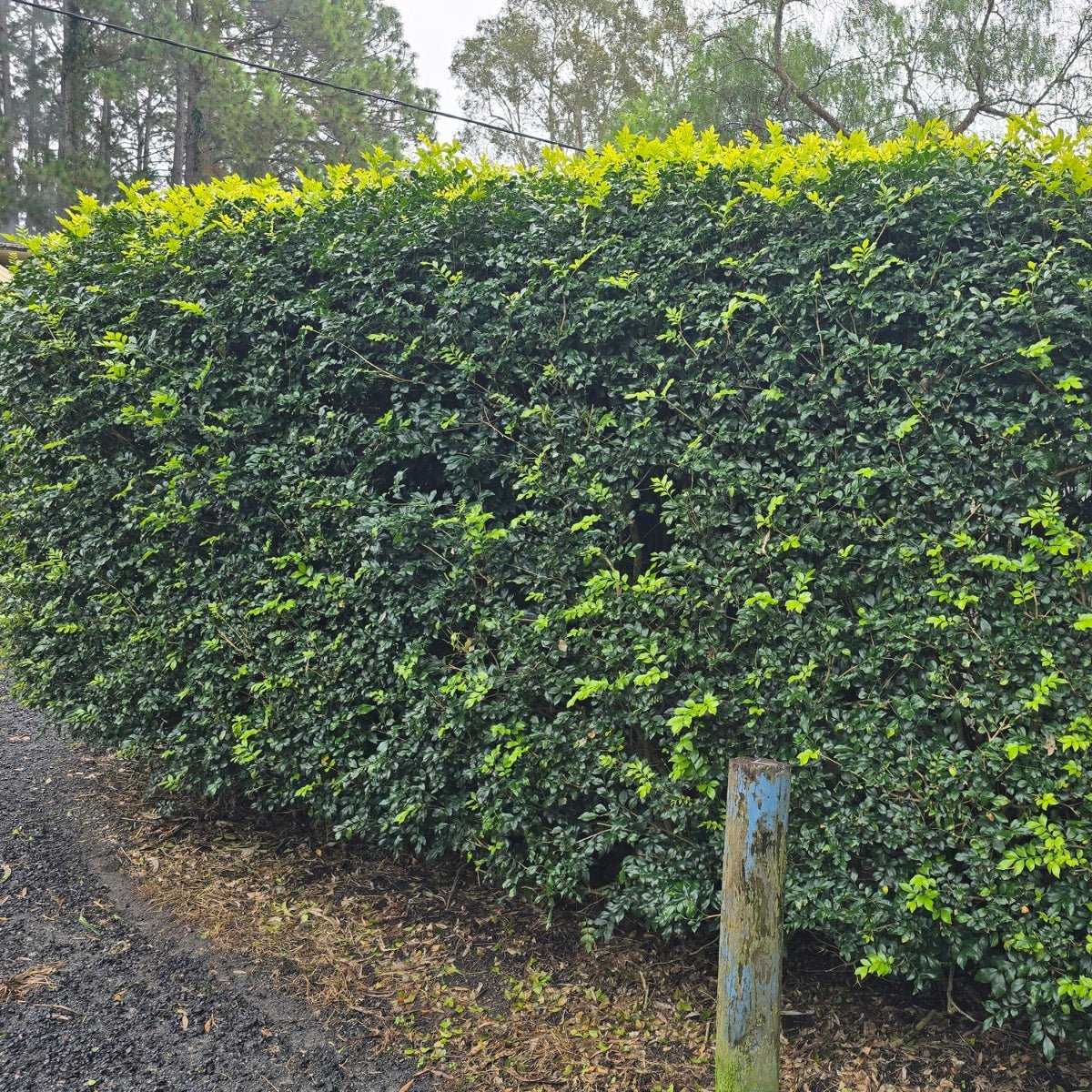
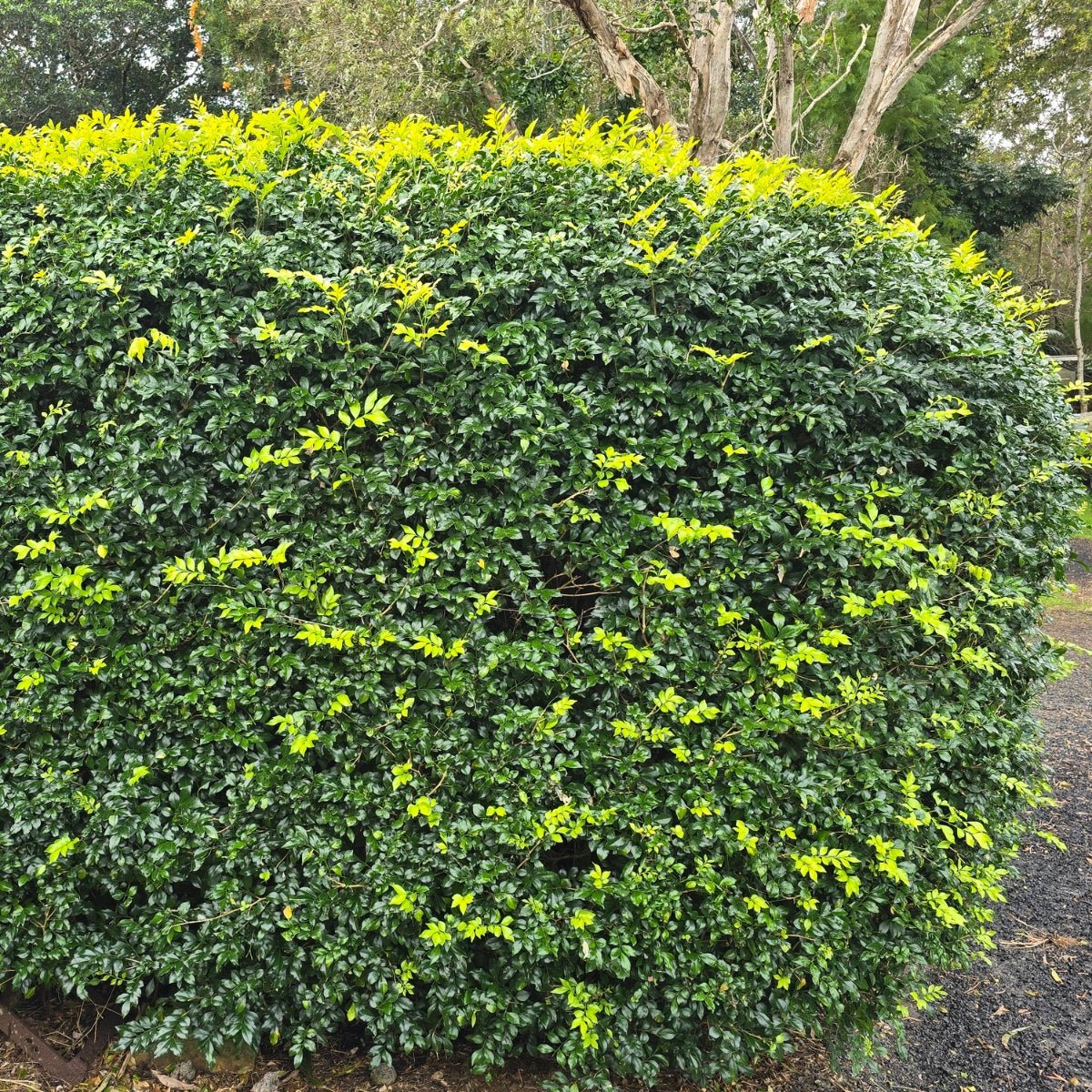
Create a dense evergreen hedge or privacy screen with Murraya paniculata, commonly known as Mock Orange or Orange Jasmine.
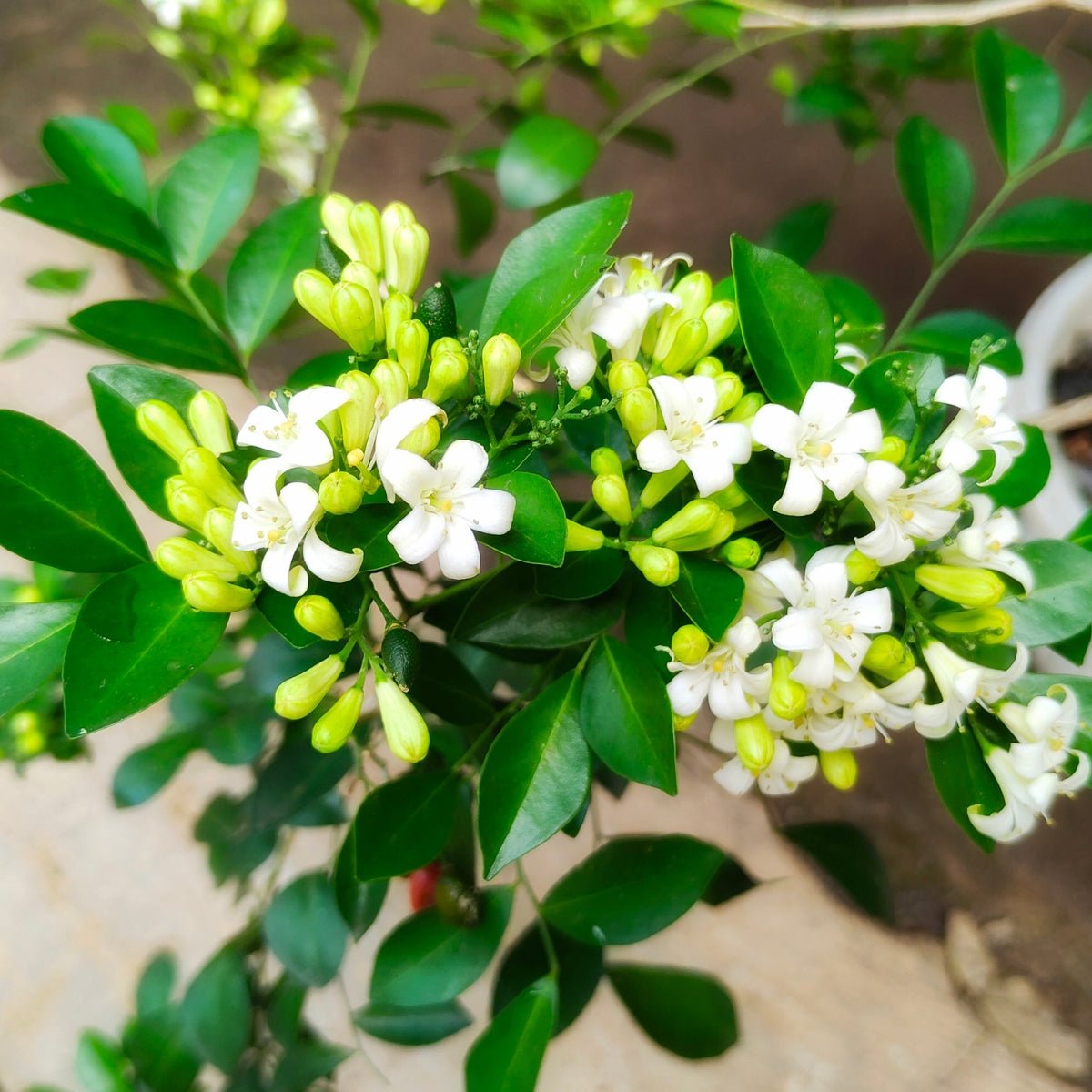
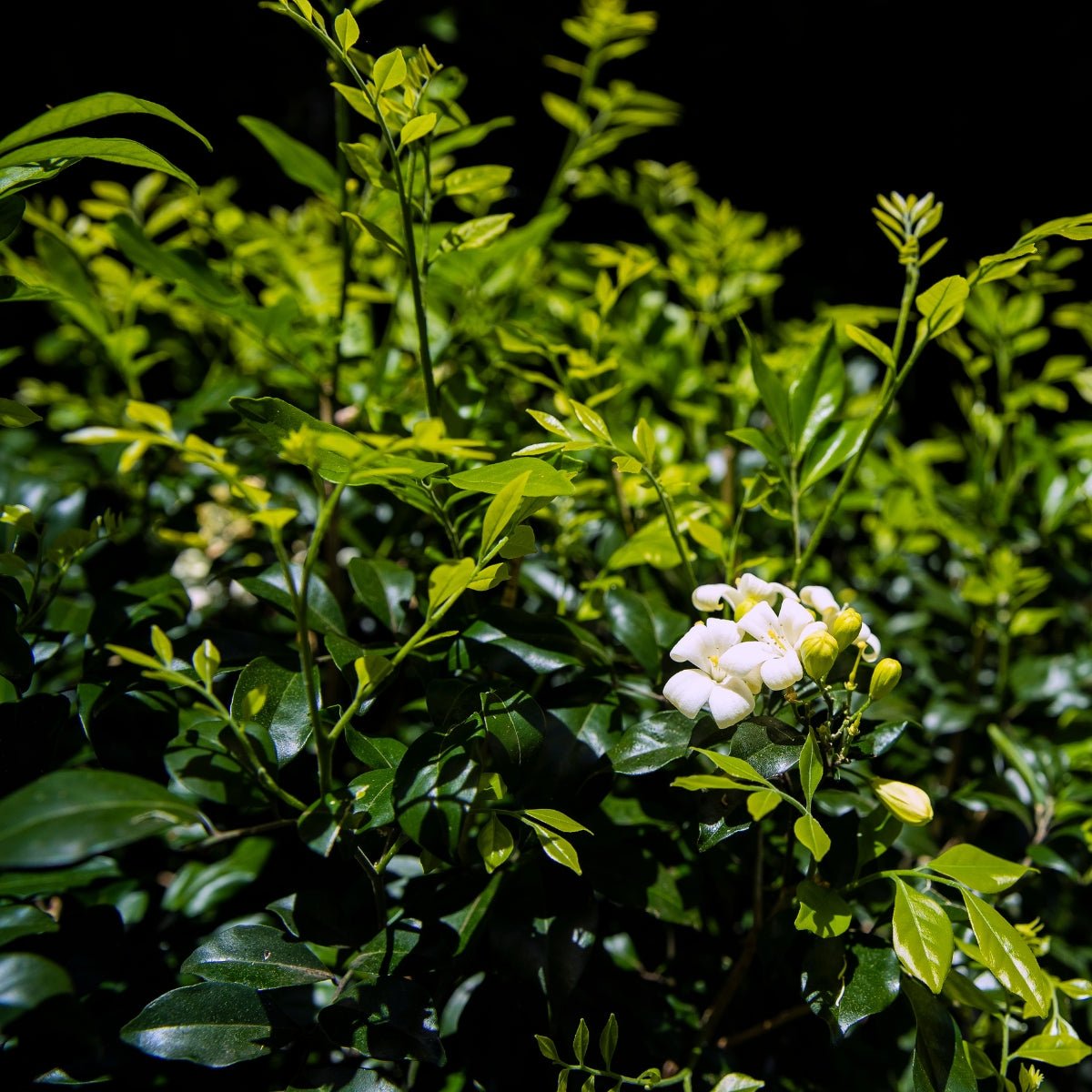
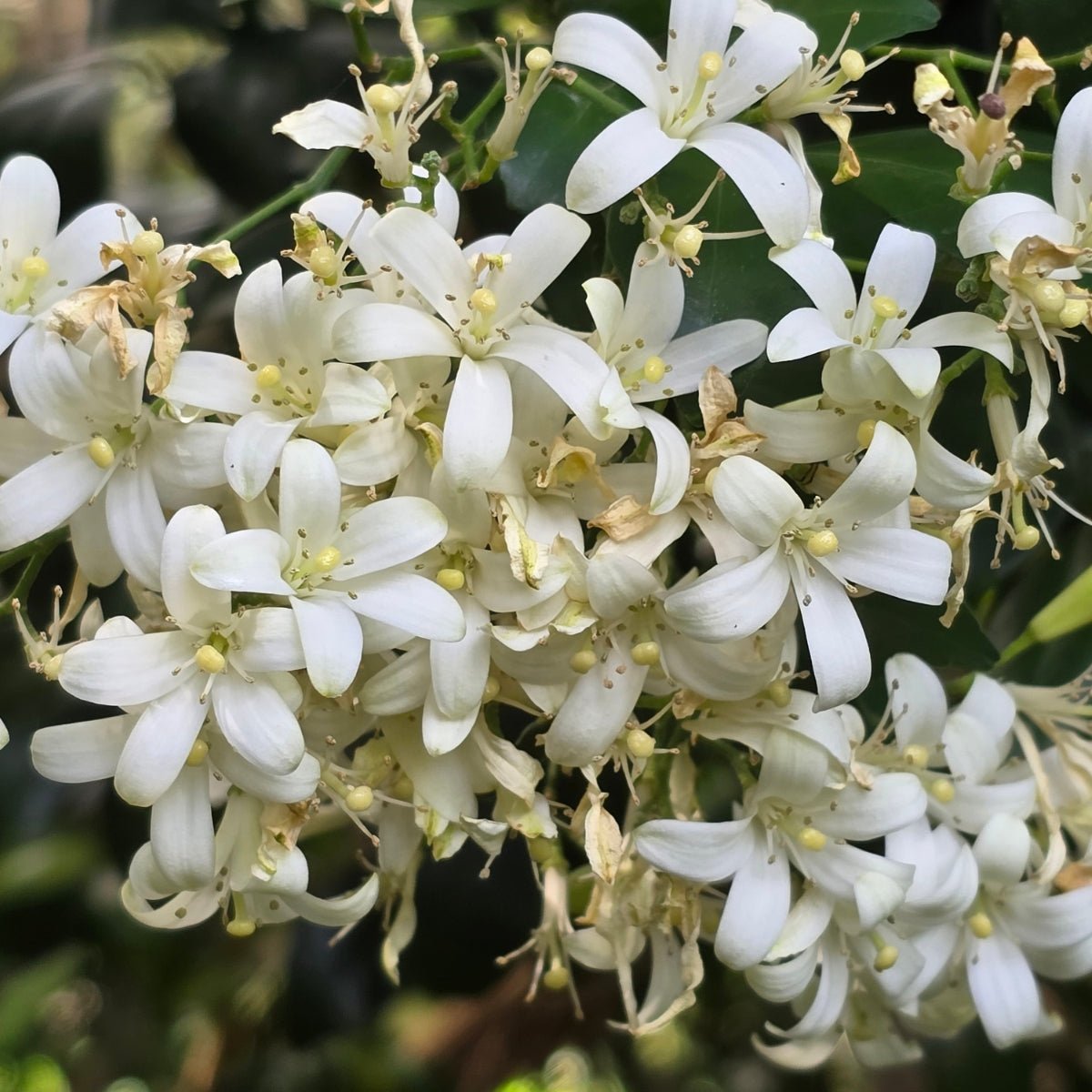
This popular hedging shrub produces glossy dark green foliage and clusters of strongly fragrant white flowers. The perfume is similar to orange blossom and can carry through the garden during flowering.
Murraya responds well to regular trimming and can be maintained as a formal hedge, informal screen or rounded feature shrub. When left unclipped, it may also produce small orange-red to red berries after flowering.
Plant Size Note
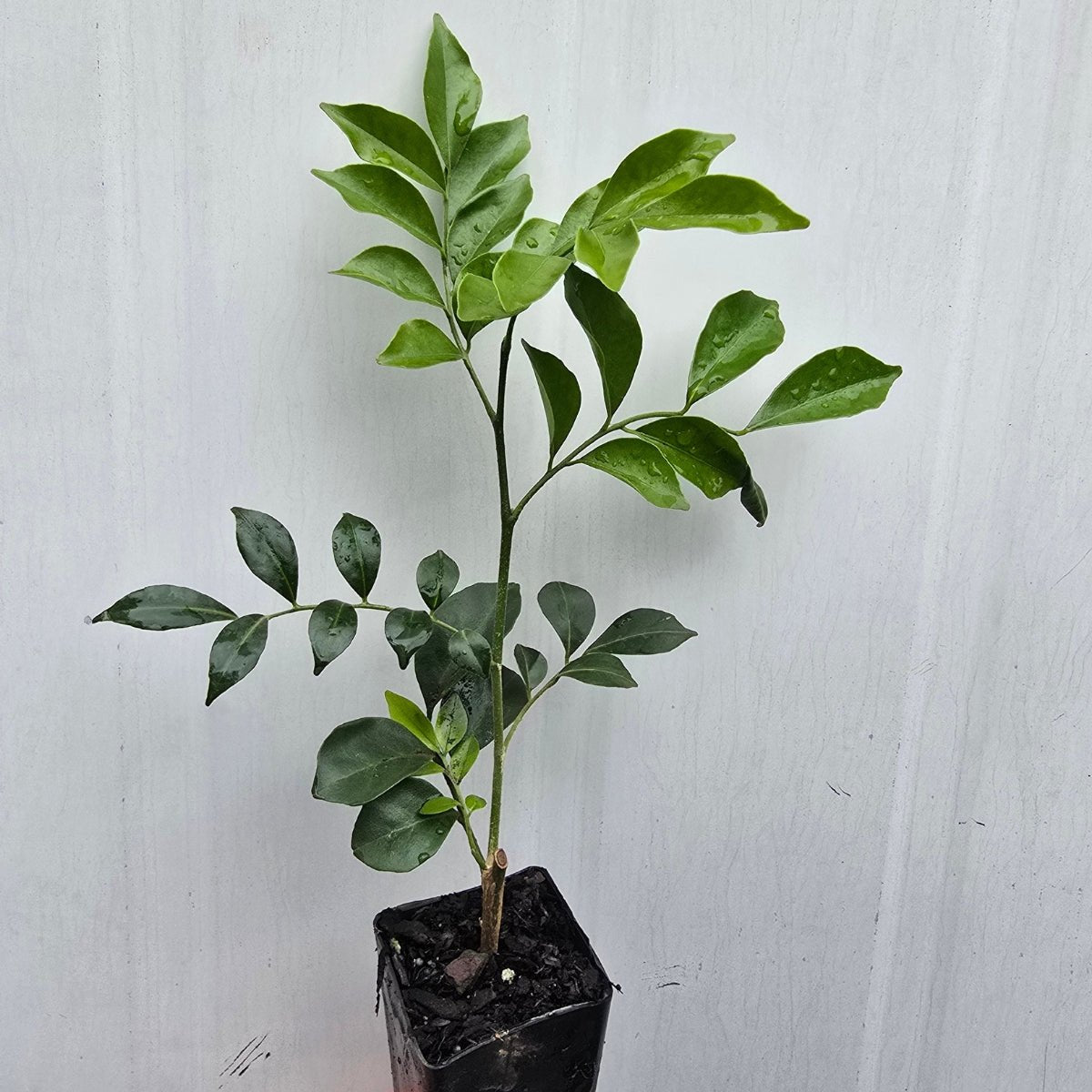
Supplied as a young plant in a 42mm tube.
Plants supplied in 42mm tubes are small starter plants and will require time to establish before reaching the mature size shown in example images.
Plants may not be flowering when dispatched. Height, branching, foliage and seasonal appearance will vary naturally between individual plants.
Features
- Botanical name: Murraya paniculata
- Also known as Mock Orange and Orange Jasmine
- Dense evergreen shrub
- Glossy dark green foliage
- Strongly fragrant white flowers
- Orange-blossom-style fragrance
- Suitable for formal and informal hedging
- Excellent for privacy screening
- Responds well to regular pruning
- Can be shaped as a feature shrub or topiary
- Small orange-red to red berries may follow flowering
- Suitable for full sun to part shade
- Supplied in a 42mm tube
Variety Note
This product is the standard Murraya paniculata.
It is not Sweet Privacy™, Lush & Thin™ or another named Plant Breeder’s Rights cultivar.
Standard Murraya naturally grows wider and may require more regular pruning when maintained as a narrow formal hedge.
Mature Size
When allowed to grow naturally, Murraya commonly reaches approximately:
- Height: 3–4m
- Width: 2–3m
Plants may grow larger under ideal conditions.
Regular pruning can maintain the plant at approximately 1–2.5m high for hedging and screening.
Planting & Care
Plant Murraya in full sun to part shade.
Full sun generally encourages denser growth and stronger flowering. Plants can tolerate part shade, although growth may be more open and flowering may be reduced in darker positions.
Choose fertile, free-draining soil enriched with organic matter. Murraya adapts to various soil types but should not be planted where water remains around the roots.
Water thoroughly after planting and maintain consistent moisture while the young plant establishes. A small plant supplied in a 42mm tube should not be allowed to dry out completely during its early growth.
Once established, water deeply during prolonged hot, dry or windy periods.
Apply mulch around the root zone to retain moisture and reduce weeds. Keep the mulch slightly away from the main stem.
Feed during spring with a suitable controlled-release fertiliser. Additional feeding may be beneficial during periods of active growth, following the fertiliser label directions.
Pruning
Tip prune young plants to encourage branching and dense growth from close to ground level.
Once established, trim the hedge as required to maintain the preferred height and width. Regular light trimming generally produces better results than allowing the plants to become excessively large before cutting them back.
Pruning after a flowering flush will help maintain shape while allowing time for fresh growth and future flowers.
Avoid constantly trimming all new growth if you want to enjoy the scented flowers.
Flowering Time
Fragrant white flowers generally appear most strongly from late winter through spring.
Further flowering may occur during summer and autumn, particularly in warm climates or following rain.
Flowering time and abundance will vary depending on climate, sunlight, pruning, plant maturity and seasonal conditions.
Hedge Spacing
For a dense hedge, plant approximately 50–80cm apart.
Use closer spacing where faster coverage is required. Wider spacing may be suitable where plants are allowed to develop into larger informal shrubs.
Allow sufficient room between the planting line and fences, pathways or buildings so the mature hedge can be accessed for pruning.
Landscape Uses
Murraya paniculata is suitable for:
- Privacy hedges
- Boundary screens
- Formal hedging
- Informal screening
- Driveway planting
- Entrance gardens
- Courtyards
- Garden dividers
- Fragrant gardens
- Feature shrubs
- Topiary
- Large containers
Growing in Pots
Murraya can be grown in a large container with regular pruning.
Transfer the young plant into a pot only slightly larger than its existing root system. Avoid planting a small 42mm-tube plant directly into an excessively large container, as the unused potting mix may remain wet for too long.
Use a premium free-draining potting mix and a container with clear drainage holes.
Container-grown plants require regular watering, feeding and pruning.
Responsible Growing Note
Murraya paniculata has naturalised and become an environmental weed in some parts of New South Wales. Seeds can be spread by birds after they eat the mature berries.
In areas close to bushland, waterways or other sensitive environments:
- Keep plants regularly trimmed
- Remove developing berries before they mature
- Dispose of prunings and fruit responsibly
- Check local council recommendations before planting
The introduced cultivar Murraya paniculata ‘Exotica’ is identified as an environmental weed in parts of NSW.
Biosecurity & Shipping
State, territory and regional biosecurity restrictions may apply to live plants.
Please check whether this plant can be sent to your delivery address before ordering. Orders for restricted destinations may need to be cancelled and refunded.
Biosecurity requirements may change without notice.
Product Details
Botanical Name: Murraya paniculata
Common Names: Murraya, Mock Orange, Orange Jasmine, Orange Jessamine
Plant Type: Evergreen flowering shrub or small tree
Supplied As: Young live plant in a 42mm tube
Cultivar: Standard species; no named cultivar specified
Flower Colour: White
Fragrance: Strong, sweet orange-blossom fragrance
Foliage: Glossy dark green
Fruit: Small orange-red to red berries may develop after flowering
Growth Habit: Dense, upright and spreading
Mature Height: Approximately 3–4m when unpruned
Mature Width: Approximately 2–3m when unpruned
Flowering Time: Mainly late winter through spring, with repeat flowering possible
Aspect: Full sun to part shade
Soil: Fertile and free-draining
Watering: Regular while establishing; deep watering during dry periods
Pruning: Regular trimming for formal hedging
Hedge Spacing: Approximately 50–80cm apart
Uses: Hedging, screening, topiary and feature planting
Important Note
Images show mature established plants and are provided as examples only.
You will receive a young starter plant in a 42mm tube. It may have limited branching and may not be flowering when dispatched.
Plant height, branching and foliage appearance will vary naturally. Plants may be trimmed before dispatch when required for safe transport or healthy future growth.
FAQ
Is this Sweet Privacy or Lush & Thin Murraya?
No. This listing is for standard Murraya paniculata and is not one of the named PBR-protected cultivars.
What size plant will I receive?
You will receive a young starter plant supplied in a 42mm tube.
Will it arrive in flower?
Not necessarily. Flowering depends on plant maturity, season and growing conditions.
How large does standard Murraya grow?
It commonly grows approximately 3–4m high and 2–3m wide when allowed to develop naturally.
Can it be kept smaller?
Yes. Regular pruning can maintain Murraya as a hedge approximately 1–2.5m high.
Are the flowers fragrant?
Yes. The white flowers have a strong, sweet fragrance similar to orange blossom.
When does it flower?
The main flowering period is generally from late winter through spring, with further flowers possible during the warmer months.
How far apart should Murraya be planted for a hedge?
Plant approximately 50–80cm apart, depending on the desired density and how quickly coverage is required.
Does it grow in full sun?
Yes. Full sun generally encourages denser growth and stronger flowering.
Can it grow in part shade?
Yes. It tolerates part shade, although flowering may be lighter.
Is Murraya frost tolerant?
Established plants may tolerate light frost, but young plants should be protected from severe frost and cold winds.
Is it suitable for subtropical gardens?
Yes. Murraya is particularly well suited to warm and subtropical climates.
Can it grow in a pot?
Yes, although it will require a large container and regular pruning as it matures.
Does Murraya produce berries?
Untrimmed plants may produce small orange-red to red berries following flowering.
Can Murraya spread into bushland?
Seeds can be dispersed by birds, and Murraya has naturalised in parts of NSW. Remove berries before they mature when planting near bushland or sensitive environments.
Does this variety need a PBR warning?
No named PBR-protected cultivar has been specified for this product.