


Nepenthes ‘Suki’ Tropical Pitcher Plant | 42mm Pot
- Regular price
-
$14.95 - Regular price
-
- Sale price
-
$14.95
Couldn't load pickup availability
Shipping information & Pickup
Shipped from Wardell, NSW. Shipping is calculated at checkout by weight, cubic weight and location.
Standard delivery is usually 2–8 business days. WA, NT and TAS may take 14–30 business days due to biosecurity inspection.
Free Local Pickup: Enter 1335 Wardell Road, Wardell NSW 2477 as the delivery address at checkout to display this option. Free delivery is available within 2 km. Travelling through or need something urgently? Contact us first, as some items may need to be ordered in.
Returns
If you aren't happy with your order. we accept returns.

Description
Add dramatic colour and unusual form to your carnivorous plant collection with Nepenthes ‘Suki’, an attractive tropical pitcher plant selected from the cross Nepenthes rafflesiana × Nepenthes sibuyanensis.
Established plants produce rounded, deep burgundy pitchers with contrasting yellow-green rims. Long tendrils suspend the pitchers beneath the foliage, creating an impressive display as the plant matures.
‘Suki’ is considered a relatively adaptable intermediate-growing Nepenthes and is suitable for collectors and newer growers who can provide bright filtered light, suitable water, warmth and humidity.
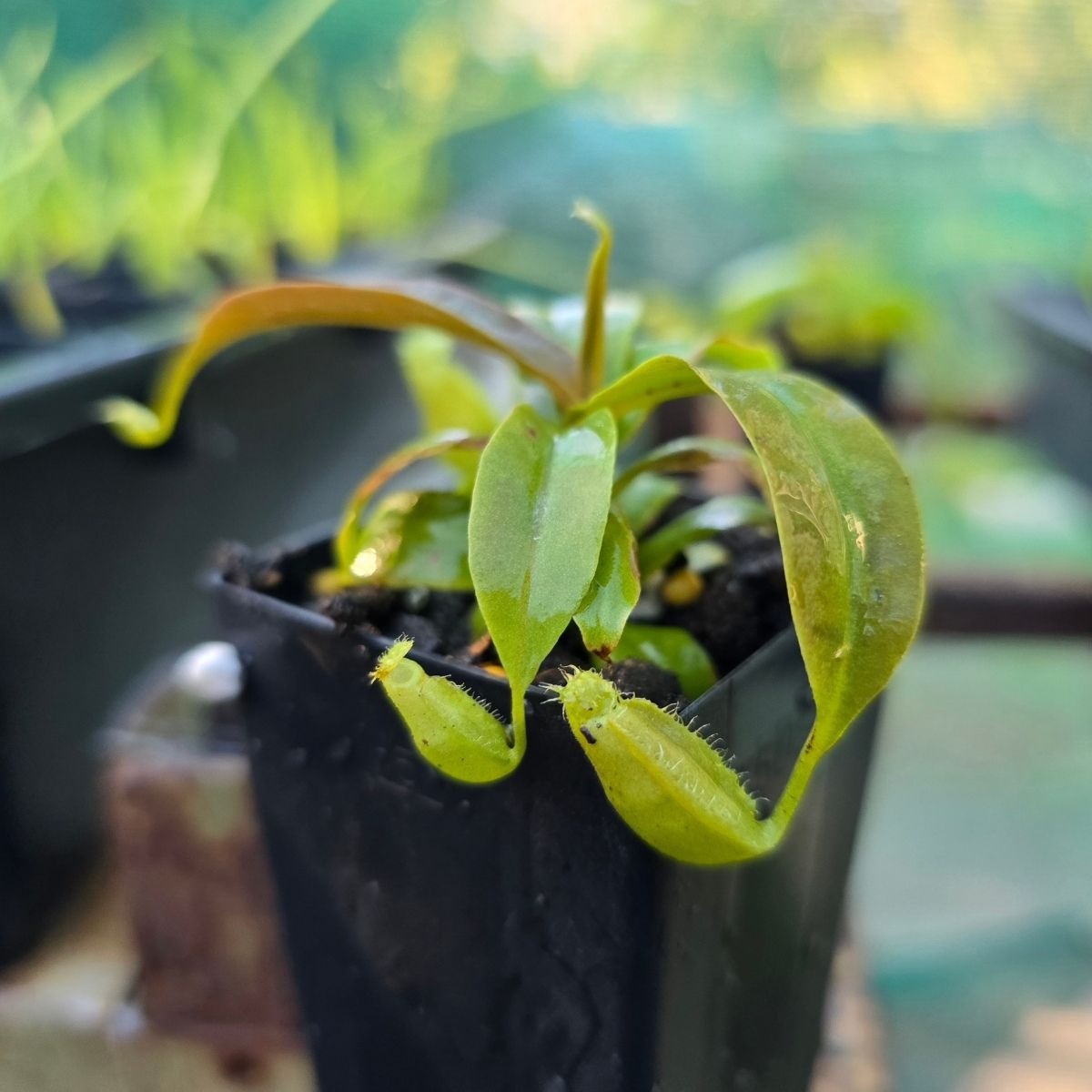
YOUNG PLANT – 42MM POT: Supplied as a young plant growing in a 42mm nursery pot. The pot measurement refers to the container—not the plant’s height or spread. The supplied plant will be considerably smaller than mature examples and may have juvenile pitchers or no pitchers at dispatch.
Pitcher and Foliage Characteristics
- Rounded to slightly elongated pitchers
- Rich red-to-deep-burgundy mature colouring
- Contrasting yellow-to-yellow-green peristome
- Decorative speckling or colour variation may develop
- Long tendrils carrying pitchers beneath the foliage
- Green foliage that may develop reddish tones under strong light
- Juvenile and mature pitchers may differ in shape and colour
- Climbing or vining growth habit as the plant matures
Supplied in a 42mm Pot
Supplied as a young live Nepenthes ‘Suki’ plant growing in a 42mm nursery pot.
Plant height, leaf number, pitcher development and root growth will vary naturally. Young plants may have small juvenile pitchers, developing tendrils or foliage only.
Existing pitchers can dry or brown following transport or a change in growing conditions. This is a normal acclimatisation response and does not necessarily indicate that the plant is unhealthy. Suitable new pitchers should develop as the plant adjusts and produces fresh leaves.
Key Features
- Named Nepenthes ‘Suki’ hybrid
- Parentage of N. rafflesiana × N. sibuyanensis
- Attractive deep-burgundy mature pitchers
- Contrasting yellow-green pitcher rims
- Intermediate-growing tropical pitcher plant
- Relatively adaptable hybrid
- Carnivorous plant that captures small insects
- No winter dormancy required
- Suitable for warm greenhouses and shade houses
- Can be grown indoors with sufficient light and humidity
- Suitable for hanging baskets as it matures
- Supplied as a young plant in a 42mm pot
Suitable Uses
- Carnivorous plant collections
- Nepenthes collections
- Tropical plant displays
- Warm greenhouses
- Humid shade houses
- Protected patios and verandahs
- Bright indoor growing positions
- Large, well-ventilated terrariums while young
- Hanging baskets as the plant matures
- Unusual living gifts for plant collectors
Care Instructions
Light
Grow Nepenthes ‘Suki’ in bright, filtered light.
Gentle morning sunlight can encourage stronger growth and richer pitcher colour. Protect the plant from harsh midday and afternoon sun, particularly when young or recently received.
Plants grown in insufficient light may produce weak growth or fail to develop pitchers. Gradually acclimatise the plant before increasing its light exposure.
Watering
Use rainwater, distilled water or reverse-osmosis water whenever possible.
Water thoroughly from above and allow excess water to drain freely. Keep the growing medium consistently moist, but do not leave the pot permanently standing in deep water.
Unlike many bog-growing carnivorous plants, Nepenthes require an airy root environment and can decline when continually waterlogged.
Humidity and Airflow
Moderate to high humidity encourages healthy pitcher development.
Provide good air circulation around the plant, especially in enclosed growing areas. Humidity is most effective when maintained consistently; occasional misting alone will not replace a suitably humid growing environment.
New pitchers may fail to inflate when the plant is exposed to very dry air, insufficient light or rapidly changing conditions.
Potting Mix
Use an airy, nutrient-poor carnivorous plant mix that retains moisture while draining freely.
Suitable materials may include:
- Long-fibre sphagnum moss
- Perlite without added fertiliser
- Fine orchid bark
- Other low-nutrient, free-draining carnivorous plant media
Do not use ordinary garden soil, compost-rich potting mix or products containing controlled-release fertiliser.
Temperature and Climate
Nepenthes ‘Suki’ is an intermediate tropical hybrid that prefers warm, protected and frost-free conditions.
Protect the plant from:
- Frost
- Cold winter winds
- Temperatures below approximately 10°C
- Sudden temperature changes
- Extreme heat and drying conditions
In subtropical climates, it may be grown outdoors in a sheltered, humid position during suitable weather. Provide indoor, greenhouse or other protection during cold periods.
Feeding
Nepenthes obtain most of their energy through photosynthesis. Captured insects provide supplementary nutrients but are not required in large quantities.
Plants grown outdoors or in an open greenhouse will generally catch their own prey. Do not place meat, pet food or large insects inside the pitchers.
Avoid strong fertilisers, which can damage the roots and foliage.
Dormancy
Nepenthes ‘Suki’ does not require winter dormancy.
Continue providing suitable light, warmth and moisture throughout the year. Growth may slow during cooler or darker periods.
Repotting
Repot when the growing medium begins breaking down or the root system has filled the container.
Move the plant into a pot only slightly larger than its existing container. Handle the roots carefully and use fresh, low-nutrient Nepenthes growing medium.
Training and Pruning
As the plant matures, its stems may begin climbing or trailing. Provide a support, trellis or hanging basket if required.
Old pitchers can be trimmed away once they have completely browned. Retain healthy leaves, even if their pitchers have dried, because the leaves continue supporting the plant.
Product Details
Botanical Name: Nepenthes ‘Suki’
Hybrid Parentage: Nepenthes rafflesiana × Nepenthes sibuyanensis
Common Name: Suki Tropical Pitcher Plant
Family: Nepenthaceae
Product Type: Live carnivorous plant
Growth Classification: Intermediate tropical Nepenthes
Supply Format: Young plant in a 42mm nursery pot
Pitcher Colour: Red to deep burgundy with a yellow-to-yellow-green peristome
Growth Habit: Climbing or vining tropical perennial
Light: Bright, filtered light
Water: Rainwater, distilled water or reverse-osmosis water
Growing Medium: Airy, nutrient-poor carnivorous plant mix
Humidity: Moderate to high humidity with good airflow
Dormancy: None
Climate: Tropical, subtropical and protected warm-temperate conditions
Frost Tolerance: Frost sensitive
End Use: Carnivorous plant collections, greenhouses, protected patios and bright indoor positions
Important Information
- Supplied as a young plant in a 42mm nursery pot
- The 42mm measurement refers to the pot—not the plant’s height
- Plant size, foliage and pitcher development will vary naturally
- Pitchers are not guaranteed to be present at dispatch
- Juvenile pitchers will differ from mature pitchers
- Existing pitchers may dry following transport or environmental change
- Mature pitcher colour depends on light, temperature and plant maturity
- Use rainwater, distilled water or reverse-osmosis water
- Do not use ordinary fertilised potting mix
- Do not leave the pot permanently standing in deep water
- Mature-plant images show the variety’s potential appearance only
FAQ
What size plant will I receive?
You will receive a young Nepenthes ‘Suki’ growing in a 42mm nursery pot. The pot size does not indicate the plant’s height or overall spread.
Will the plant arrive with pitchers?
Pitchers are not guaranteed. Young plants may have juvenile pitchers, developing tendrils or foliage only when dispatched.
Why are the pitchers drying after delivery?
Existing pitchers can dry as the plant adjusts to transport and a new environment. Maintain suitable light, warmth, moisture and humidity while fresh growth develops.
What type of water should I use?
Rainwater, distilled water or reverse-osmosis water is recommended. Mineral-rich water can gradually damage sensitive carnivorous plants.
Can Nepenthes ‘Suki’ be grown indoors?
Yes, provided it receives bright filtered light, warmth, suitable humidity and good airflow. A dim or air-conditioned position is unlikely to support consistent pitcher production.
Can I use ordinary potting mix?
No. Use a nutrient-poor, free-draining Nepenthes mix containing materials such as long-fibre sphagnum moss, perlite and fine orchid bark.
Does it need to catch insects?
No. The plant obtains energy from light through photosynthesis. Insects provide supplementary nutrients, and plants grown outdoors will generally catch enough prey naturally.
Does it need a hanging basket?
Not while it is young. As the plant develops longer vines and hanging pitchers, it can be transferred to a suitable hanging basket or provided with climbing support.