


Variegated Kumquat Citrus | Citrus japonica ‘Variegata’
- Regular price
-
$8.75 - Regular price
-
$10.00 - Sale price
-
$8.75
Couldn't load pickup availability
Shipping information
Shipped from Wardell, NSW. Shipping is calculated at checkout by weight, cubic weight and location.
Standard delivery is usually 2–8 business days. WA, NT and TAS may take 14–30 business days due to biosecurity inspection.
Free local pickup is available from 1335 Wardell Road, Wardell NSW for eligible postcodes within 50km. Travelling through or need something urgently? Please contact us before ordering, as some items may need to be ordered in.
Returns
If you aren't happy with your order. we accept returns.

Description
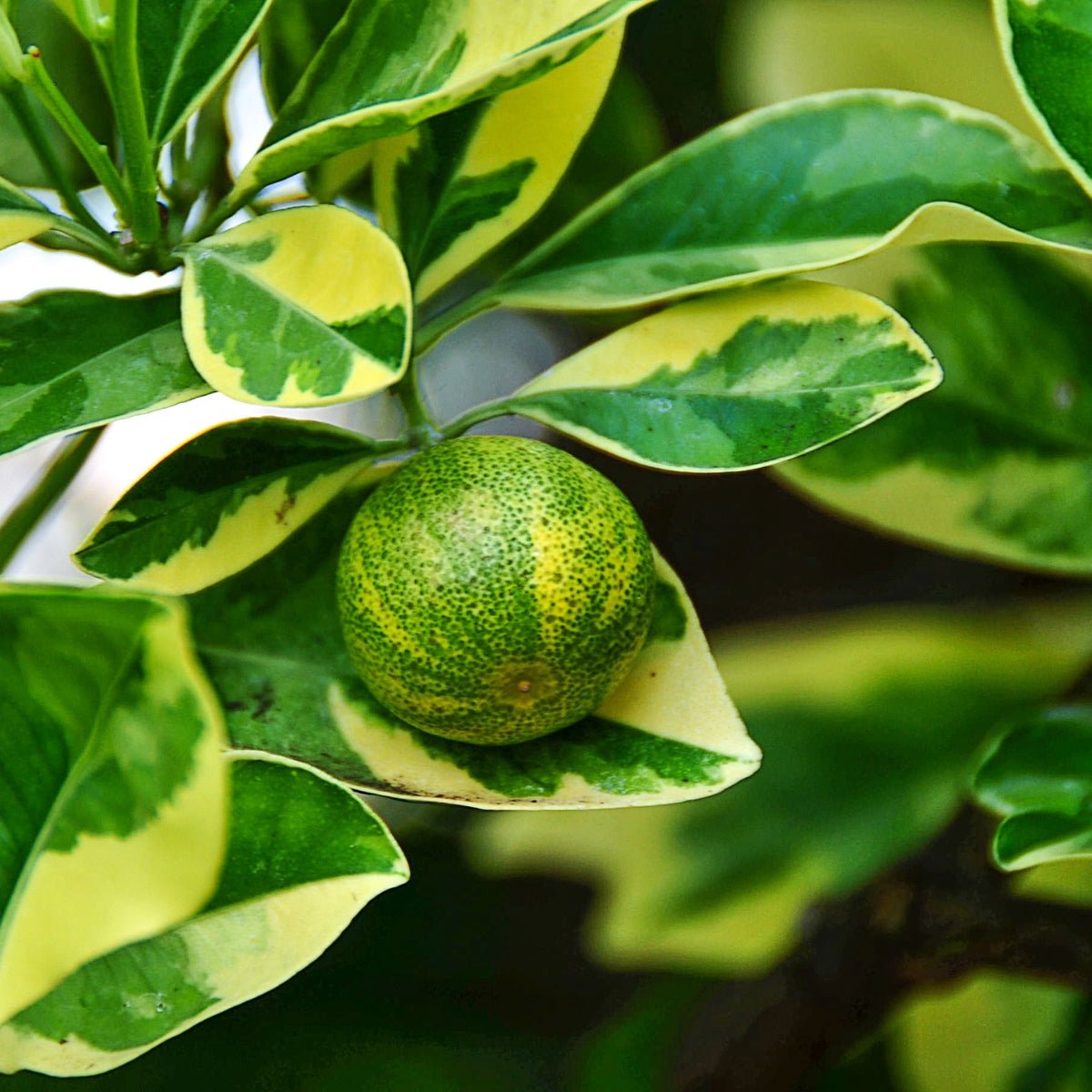
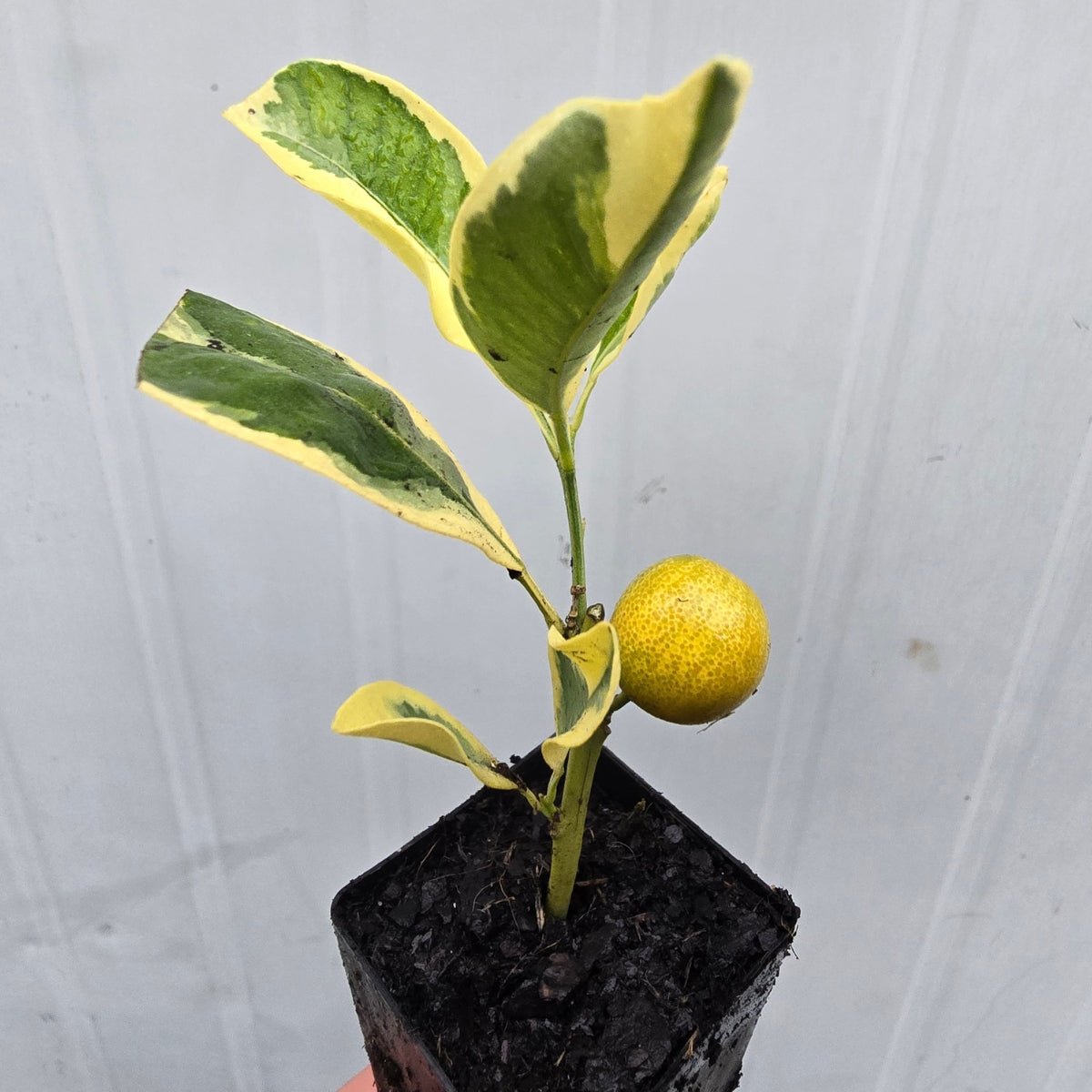
Add year-round colour and edible interest to the garden with Variegated Kumquat Citrus, an attractive evergreen citrus prized for its green-and-cream foliage, fragrant white flowers and small edible fruit.
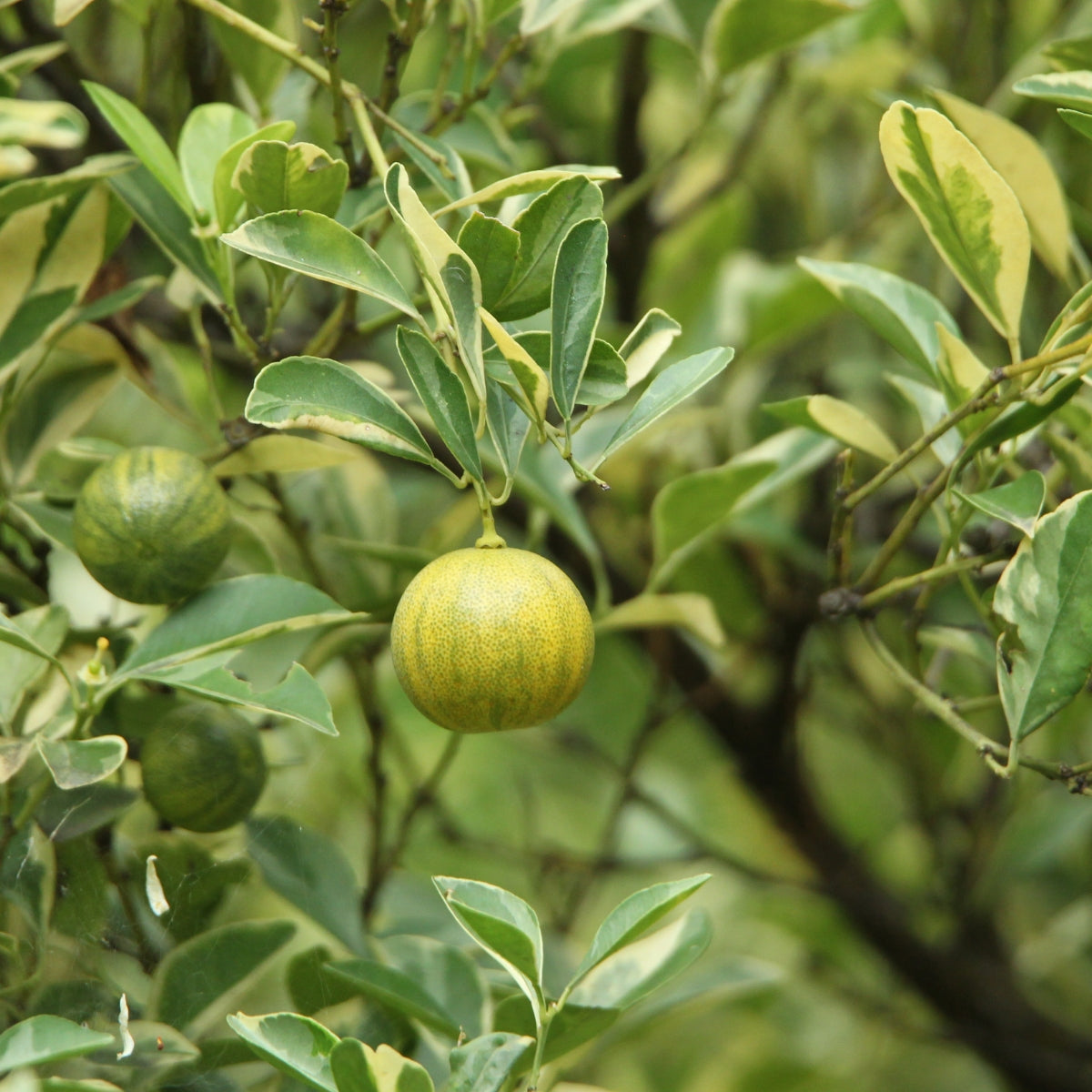
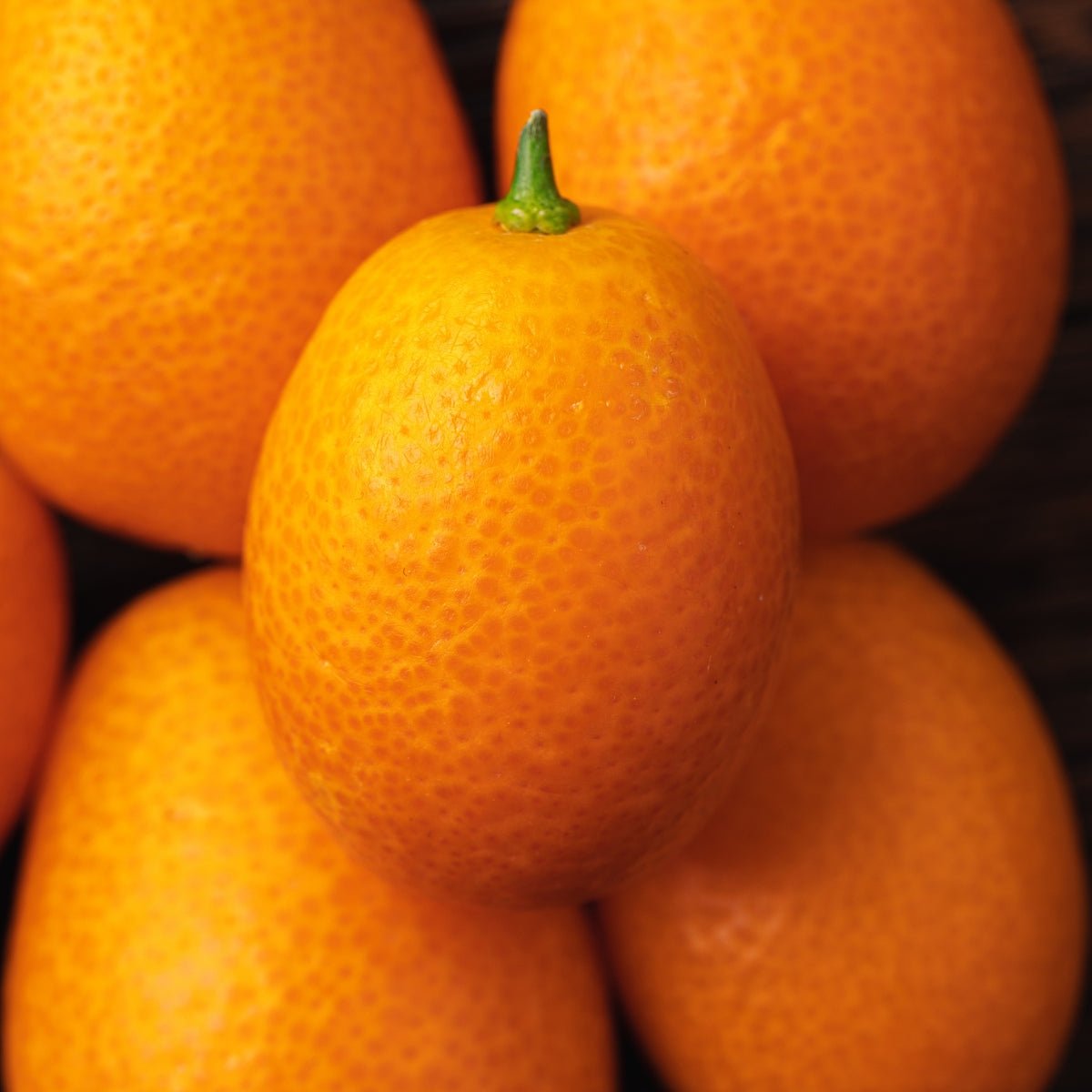
The developing fruit can display green and yellow striping before ripening towards yellow-orange or orange tones. This creates a striking contrast against the variegated leaves and makes the plant decorative even before the fruit is ready to harvest.
The fruit has a sweet edible rind surrounding tangy flesh and can generally be eaten whole. It is also well suited to marmalade, preserves, candied fruit, sauces, desserts, drinks and liqueurs.
Naturally compact and responsive to pruning, Variegated Kumquat is suitable for home orchards, edible gardens, courtyards and large containers.
Plant Size Note
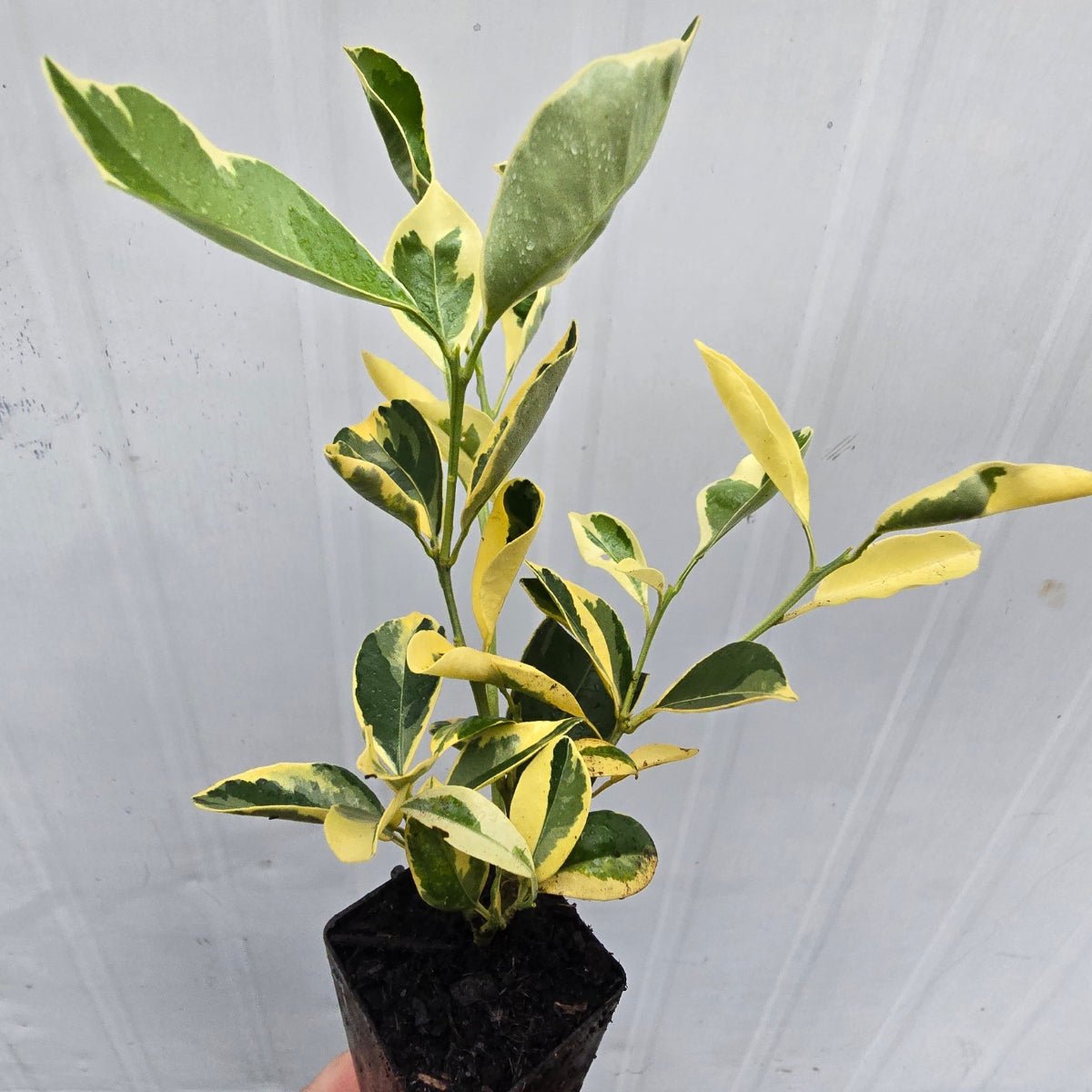
Supplied as a young plant in a 42mm tube.
Plants in 42mm tubes are small starter plants and will require growing time before reaching flowering or fruiting maturity.
Plants are unlikely to be flowering or carrying mature fruit when dispatched. Height, branching, variegation and seasonal appearance will vary naturally between individual plants.
Features
- Variegated Kumquat Citrus
- Botanical name: Citrus japonica ‘Variegata’
- Older classification: Fortunella japonica ‘Variegata’
- Compact evergreen citrus shrub or small tree
- Attractive green-and-cream variegated foliage
- Fragrant white citrus flowers
- Developing fruit may display green and yellow striping
- Fruit ripens towards yellow-orange or orange
- Small edible fruit with sweet rind and tangy flesh
- Fruit can generally be eaten whole
- Suitable for marmalade, preserves, desserts and drinks
- Self-fertile and capable of fruiting as a single plant
- Suitable for gardens, courtyards and large pots
- Can be maintained at a compact size through pruning
- Supplied in a 42mm tube
Variety Note
This product is supplied as Citrus japonica ‘Variegata’, also historically classified under the genus Fortunella.
Fruit colour, striping, shape, seed content and flavour may vary slightly with plant maturity, seasonal conditions and growing environment.
Young foliage and fruit may display stronger variegation at different times of the year. Some fruit may lose part of its striping as it reaches full ripeness.
Planting & Care
Plant Variegated Kumquat in full sun to light part shade.
A bright position encourages healthy growth, flowering and fruiting. In particularly hot or exposed subtropical locations, morning sun with some protection from harsh afternoon heat can help reduce leaf scorch and moisture stress.
Choose fertile, slightly acidic and free-draining soil. Avoid positions where water remains around the roots after rain.
Plant at approximately the same depth as the plant was growing in its tube. Do not bury the stem or place a heavy layer of soil over the top of the root ball.
Water thoroughly after planting and maintain even moisture while the young plant establishes. Allow excess water to drain freely and avoid keeping the soil constantly saturated.
Established plants still benefit from regular deep watering during prolonged hot, dry or windy conditions, particularly while flowering or developing fruit.
Apply mulch around the root zone to help conserve moisture and reduce weeds. Keep mulch several centimetres away from the stem.
Feed during the active growing season with a fertiliser formulated for citrus and fruit trees. Follow the product directions carefully, particularly while the plant is young.
Only light pruning is normally required. Remove dead, damaged or crossing growth and lightly shape the tree after fruiting if needed.
Flowering & Fruiting
Variegated Kumquat produces small, fragrant white citrus flowers, generally during the warmer growing months.
Fruit often develops through the warmer seasons before ripening from autumn into winter, although timing will depend on climate, plant maturity and seasonal conditions.
The immature fruit may show green and yellow striping before becoming increasingly yellow-orange or orange as it ripens.
A plant supplied in a 42mm tube will need time to establish before producing a useful crop.
Fruit & Harvest
Harvest the fruit once it has developed its mature colour and feels firm.
Kumquats are unusual because the rind is generally sweeter than the flesh. They are commonly eaten whole, allowing the sweet rind and tangy centre to balance one another.
The fruit can be used for:
- Fresh eating
- Marmalade
- Preserves
- Candied fruit
- Cakes and desserts
- Sauces and chutneys
- Drinks and cocktails
- Liqueurs
- Garnishes
Wash fruit thoroughly before eating or cooking.
Growing in Pots
Variegated Kumquat is an excellent citrus choice for pots, patios and courtyards.
Begin by transferring the young plant into a container only slightly larger than its existing root system. Avoid placing a small starter plant directly into an excessively large pot, as the unused potting mix may remain wet for too long.
Use a premium free-draining potting mix suitable for citrus and fruit trees. Choose a container with clear drainage holes.
Position the pot in a sunny location and water when the upper layer of potting mix begins to dry.
Container-grown citrus requires regular feeding and may need more frequent watering during hot or windy weather.
Move the plant gradually into larger containers as the root system develops.
Mature Size
Variegated Kumquat commonly grows approximately 2–3m high and 2–3m wide under suitable garden conditions.
Its final size will depend on climate, growing conditions, propagation method, available space and pruning.
Plants grown in containers or regularly pruned can be maintained at a smaller size.
Biosecurity & Shipping Restrictions
This live citrus plant cannot be shipped to Victoria.
Additional state, territory and regional biosecurity restrictions may also apply.
Please check whether live citrus plants can be sent to your delivery address before ordering. Orders placed for restricted destinations may need to be cancelled and refunded.
Biosecurity requirements can change without notice.
Product Details
Botanical Name: Citrus japonica ‘Variegata’
Synonym: Fortunella japonica ‘Variegata’
Common Name: Variegated Kumquat, Variegated Cumquat
Plant Type: Evergreen fruiting citrus shrub or small tree
Supplied As: Young live plant in a 42mm tube
Foliage: Green and cream variegated leaves
Flower Colour: White
Fragrance: Fragrant flowers
Fruit Colour: Green and yellow striped when immature, ripening towards yellow-orange or orange
Fruit Flavour: Sweet edible rind with tangy flesh
Pollination: Self-fertile
Growth Habit: Compact, dense and bushy
Mature Height: Approximately 2–3m
Mature Width: Approximately 2–3m
Flowering Time: Mainly during the warmer growing months
Fruiting Time: Commonly ripens from autumn into winter
Aspect: Full sun to light part shade
Soil: Fertile, slightly acidic and free-draining
Watering: Regular while establishing and during fruit development
Frost Tolerance: Tolerates light frost once established; protect young plants
Uses: Edible gardens, home orchards, courtyards, feature planting and large pots
Shipping Restriction: Cannot be shipped to Victoria; other restrictions may apply
Important Note
Images show mature plants with developed foliage and fruit and are provided as examples only.
You will receive a young starter plant in a 42mm tube. It may have limited branching and is unlikely to be flowering or fruiting when dispatched.
The strength and pattern of the foliage variegation may differ between individual plants and may change with the season and growing conditions.
The time required to flower and fruit will depend on plant maturity, climate and care.
Citrus Care Note
Variegated foliage contains less chlorophyll than completely green foliage, so growth may be slightly slower than on an ordinary green Kumquat.
Provide good light, appropriate citrus fertiliser and consistent moisture without waterlogging.
If completely green shoots appear, prune them back to the variegated growth so they do not dominate the plant.
Monitor for common citrus pests including scale, aphids, leaf miner, mites and citrus gall wasp where present in your region.
FAQ
What makes this Kumquat variegated?
Its leaves display a mixture of green and cream colouring rather than being completely green.
Is Variegated Kumquat fruit edible?
Yes. The fruit is edible and can generally be eaten whole, including the rind.
What does the fruit taste like?
The rind is usually sweet, while the inner flesh is tangy to tart.
Is the fruit also variegated?
Developing fruit may show green and yellow striping. The colour generally becomes more yellow-orange or orange as the fruit ripens.
Does the fruit remain striped when ripe?
Some striping may remain, but fruit can lose much of its green colouring as it reaches full maturity.
What size plant will I receive?
You will receive a young starter plant supplied in a 42mm tube.
Will it arrive with fruit?
It is unlikely. Plants supplied in 42mm tubes are young and require time to reach fruiting maturity.
How long will it take to fruit?
The time to fruit depends on plant maturity, climate and care. A small starter plant may require several growing seasons before producing a useful crop.
How large does it grow?
It commonly reaches approximately 2–3m high and wide, although it can be kept smaller through pruning or container growing.
Does it need full sun?
Full sun is recommended for the strongest flowering and fruiting. In very hot areas, protection from intense afternoon sun may be helpful.
Can it grow in a pot?
Yes. Variegated Kumquat is well suited to large pots, courtyards and patios.
Is it self-pollinating?
Yes. A single plant can produce fruit once it reaches maturity, although bees and other pollinators may improve fruit set.
What soil does it prefer?
Use fertile, slightly acidic and free-draining soil or a quality citrus potting mix.
How often should it be watered?
Water regularly while establishing. Mature plants require consistent moisture during hot weather, flowering and fruit development, but should never remain waterlogged.
What fertiliser should I use?
Use a fertiliser formulated for citrus and fruit trees, following the label directions.
Is it frost tolerant?
Established Kumquats can tolerate light frost, but young plants should be protected from severe frost and cold winds.
Can it grow in subtropical gardens?
Yes. It grows well in warm and subtropical climates when given good drainage, regular moisture and protection from extreme heat while young.
Should green shoots be removed?
Yes. If a shoot produces completely green foliage, prune it back to variegated growth so it does not become more vigorous and overtake the decorative portion of the plant.
Can this plant be shipped to Victoria?
No. This live citrus plant is not available for delivery to Victoria.
Are there restrictions for other destinations?
Possibly. State, territory and regional biosecurity rules can vary. Please check the requirements for your destination before ordering.