


Viridi Rascal Hippeastrum Bulb | Sonatini Amaryllis – Creamy White, Red & Green Blooms
- Regular price
-
$24.95 - Regular price
-
- Sale price
-
$24.95
Couldn't load pickup availability
-
Hurry, only 10 items left in stock!
Shipping information
Shipped from Wardell, NSW. Shipping is calculated at checkout by weight, cubic weight and location.
Standard delivery is usually 2–8 business days. WA, NT and TAS may take 14–30 business days due to biosecurity inspection.
Free local pickup is available from 1335 Wardell Road, Wardell NSW for eligible postcodes within 50km. Travelling through or need something urgently? Please contact us before ordering, as some items may need to be ordered in.
Returns
If you aren't happy with your order. we accept returns.

Description
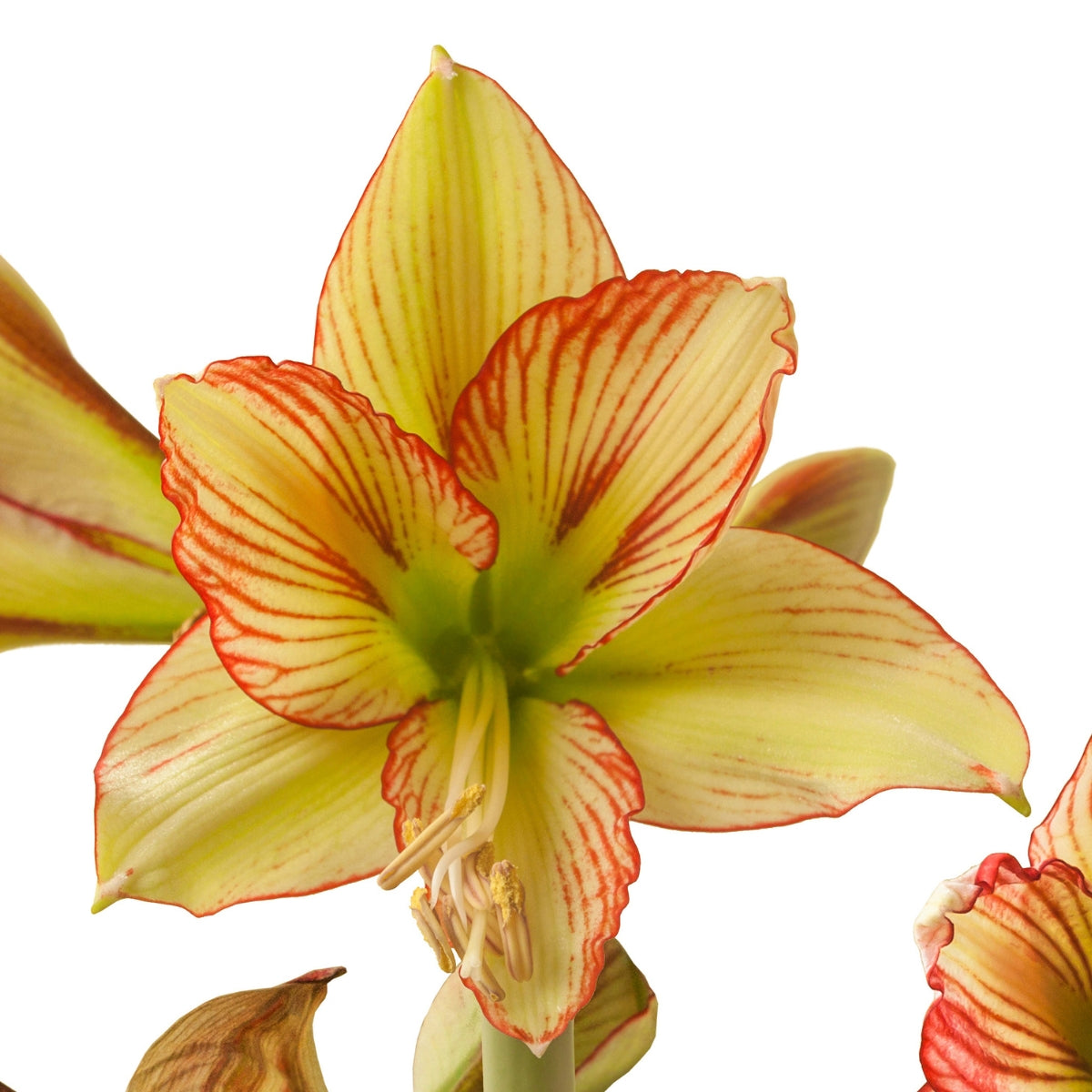
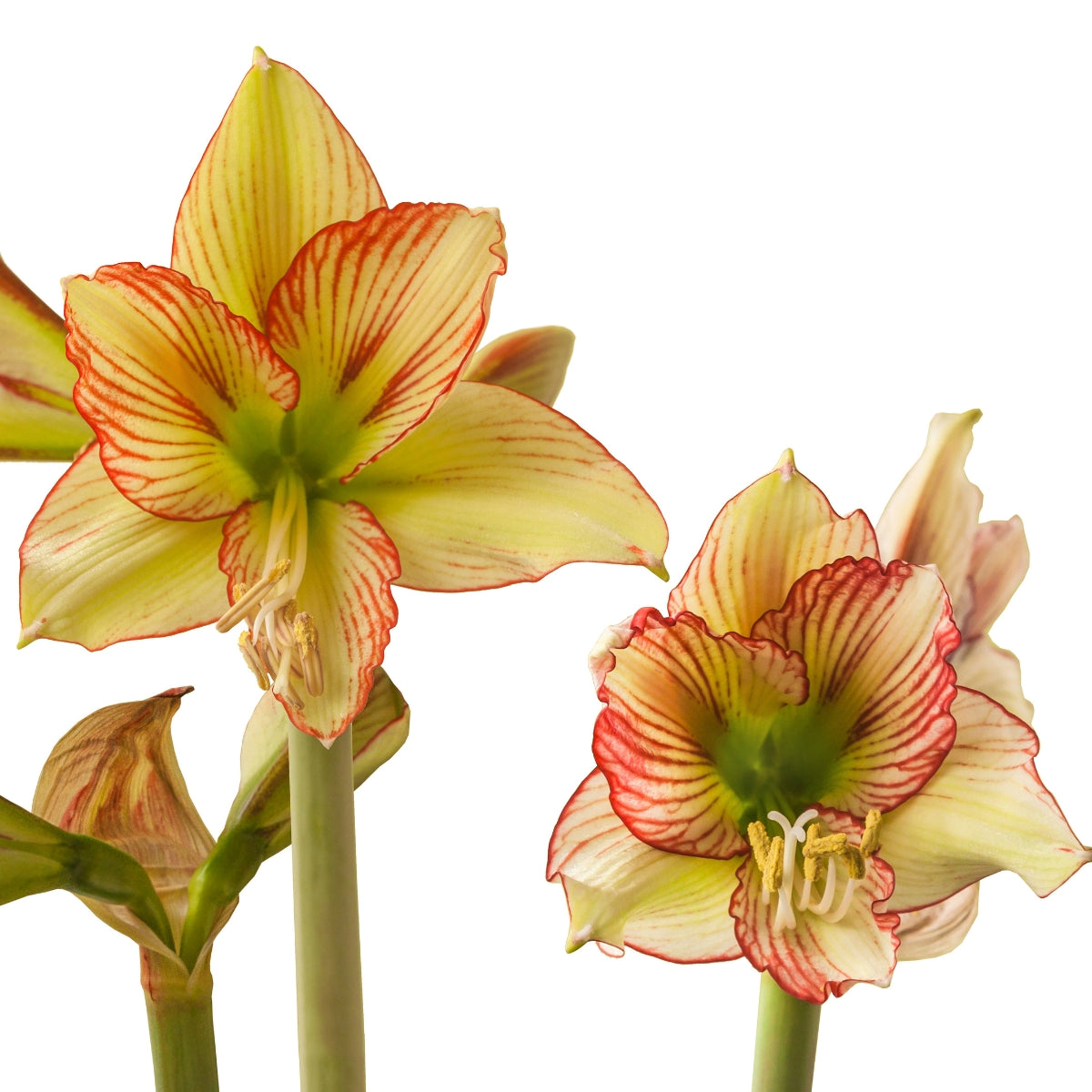
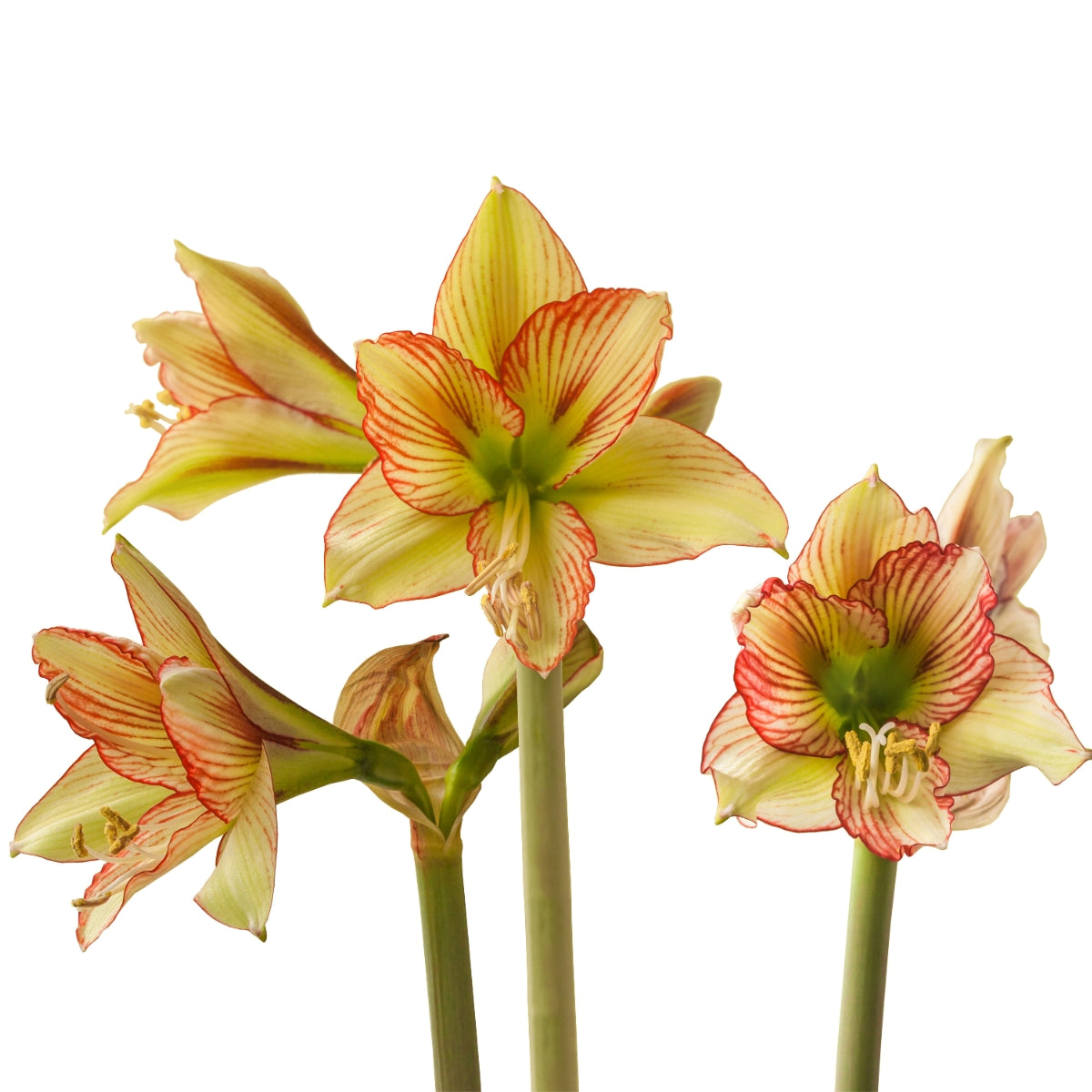
Add something a little different to your Hippeastrum collection with ‘Viridi Rascal’, a distinctive Sonatini variety producing elegant creamy-white to pale green flowers with scarlet-red markings and a fresh green centre.
Sonatini Hippeastrums are more compact than many traditional large-flowered Hippeastrums, while still producing an impressive floral display. ‘Viridi Rascal’ develops strong flower stems and is well suited to garden beds, pots and containers.
Its unusual combination of cream, green and red makes it an excellent choice for collectors or gardeners wanting a Hippeastrum that stands apart from the more traditional red, pink and white varieties.
Key Features
- Distinctive Sonatini Hippeastrum variety
- Creamy-white to pale green flowers
- Scarlet-red streaks and markings
- Fresh green flower centre
- Compact growth habit
- Approximately 45–60cm tall when flowering
- Can produce multiple flower stems from established bulbs
- Excellent for pots, containers and garden beds
- Suitable as a cut flower
- Summer flowering under typical Australian growing conditions
Bulb & Plant Details
- Botanical Name: Hippeastrum × hybridum ‘Viridi Rascal’
- Common Name: Amaryllis / Hippeastrum
- Series: Sonatini
- Plant Type: Perennial flowering bulb
- Flower Colour: Creamy white to pale green with scarlet-red markings and a green centre
- Mature Height: Approximately 45–60cm
- Position: Full sun to part shade
- Flowering Period: Summer
- Planting Time: Spring onwards
- Soil: Fertile, free-draining soil
- Water Needs: Moderate during active growth
- Suitable For: Pots, containers, garden beds and cut flowers
How to Plant
Choose a position in full sun to part shade with excellent drainage.
Plant the bulb with the neck and upper portion of the bulb remaining above the soil surface. When growing in a pot, leave approximately 3–4cm of growing space around the bulb.
Water after planting and then avoid keeping the bulb excessively wet. Hippeastrums dislike waterlogged conditions, particularly around the neck of the bulb.
Once active growth begins, water as required and feed periodically with a suitable bulb fertiliser.
Growing in Pots
‘Viridi Rascal’ is particularly well suited to container growing because of its more compact Sonatini habit.
Choose a pot with good drainage and use a quality free-draining potting mix. Avoid using an excessively large pot, as Hippeastrums generally perform well when reasonably snug in their container.
Position the pot somewhere with plenty of bright light or morning sun.
After Flowering
Once flowering has finished, remove the spent flower stem but leave the foliage attached.
The leaves continue to photosynthesise and replenish the bulb's stored energy for the following flowering season.
Continue watering and feeding while the foliage remains actively growing. Reduce watering as the plant naturally enters dormancy.
Important Bulb Note
Bulb size, shape and outer skin can naturally vary between individual bulbs and varieties.
Hippeastrum bulbs may arrive dormant, beginning to shoot, or occasionally already producing a flower scape depending on the time of year. This does not affect their suitability for planting.
Safety
Hippeastrum bulbs and plant material are harmful if eaten. Keep away from children and pets that may chew plants or bulbs. Plant material may also cause skin or eye irritation in sensitive individuals.
FAQs
What colour is Hippeastrum ‘Viridi Rascal’?
It produces unusual creamy-white to pale green flowers with scarlet-red markings and a green centre.
Is ‘Viridi Rascal’ a large Hippeastrum?
It belongs to the Sonatini series, which generally has a more compact growth habit than many traditional large-flowered Hippeastrums. Flowering stems are typically around 45–60cm tall.
Can it be grown in a pot?
Yes. Its compact growth habit makes it an excellent Hippeastrum for pots and containers.
Where should I plant it?
Grow in full sun to part shade in free-draining soil. Good drainage is particularly important around the bulb.
How deep should I plant the bulb?
Plant with the neck and upper portion of the bulb remaining above soil level rather than burying the entire bulb.
When will it flower?
In Australian conditions, flowering is generally expected during summer, although exact timing can vary according to climate, planting time and the individual bulb.
Should I remove the leaves after flowering?
No. Leave healthy foliage attached after flowering so it can continue feeding the bulb for the following season.
Will my bulb arrive flowering?
Not necessarily. Bulbs may be dormant, actively shooting or developing a flower stem depending on the season and stage of growth.